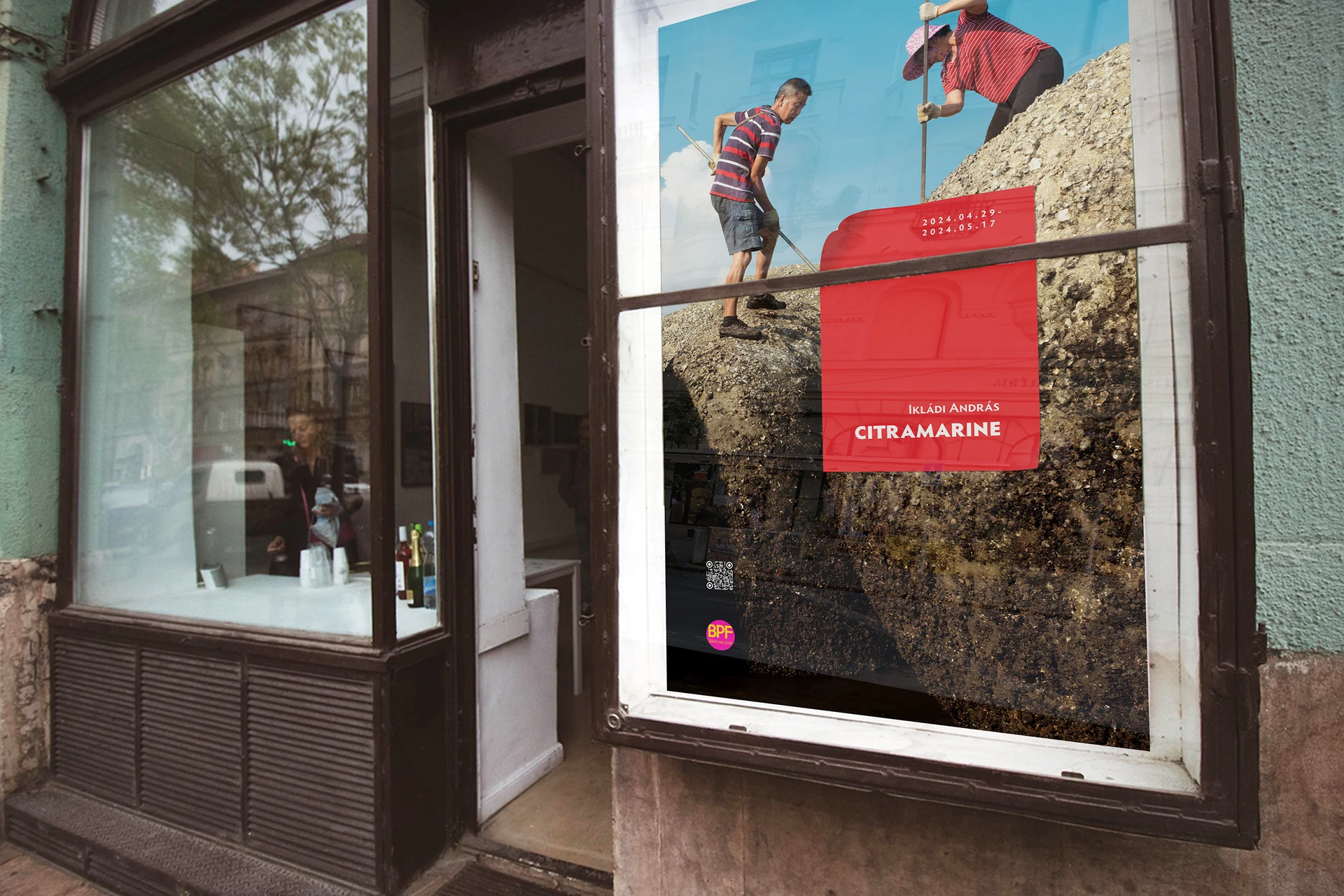
Citramarine @ RANDOM Gallery
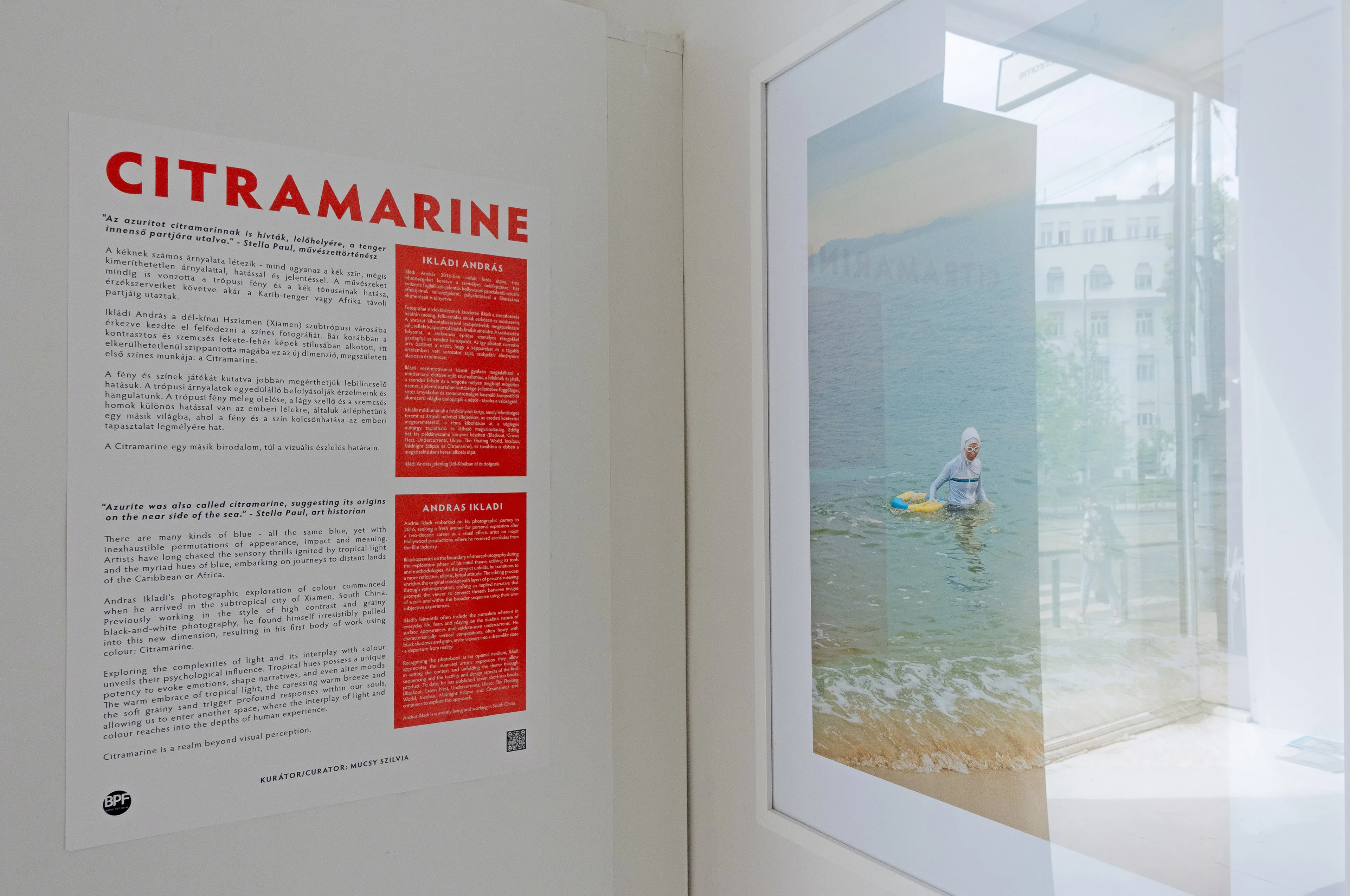
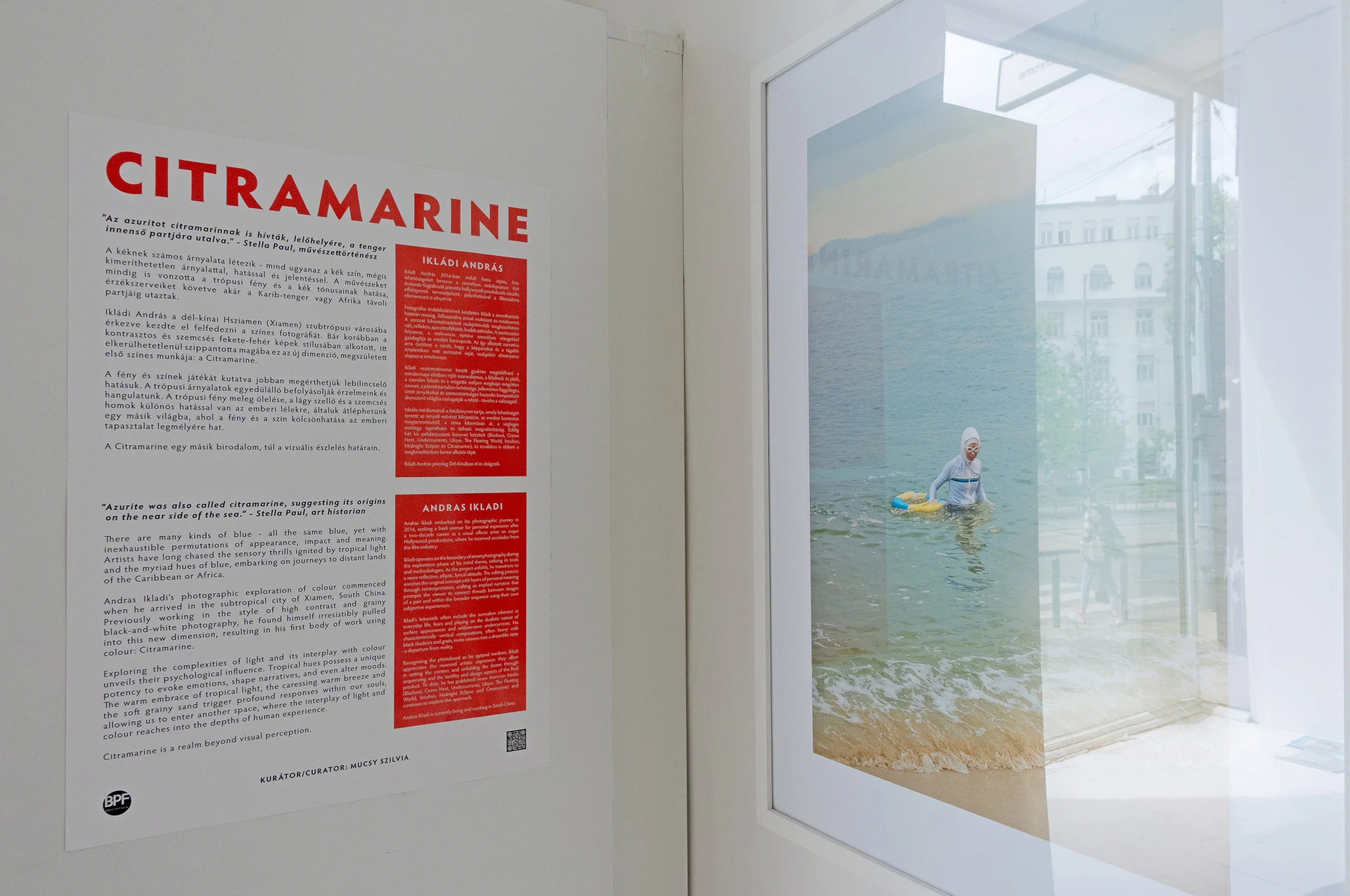
“Azurite was also called citramarine, suggesting its origins on the near side of the sea.” — Stella Paul, art historian
There are many kinds of blue — all the same blue, yet with inexhaustible permutations of appearance, impact and meaning. Artists have long chased the sensory thrills ignited by tropical light and the myriad hues of blue, embarking on journeys to distant lands of the Caribbean or Africa.
Andras Ikladi’s photographic exploration of colour commenced when he arrived in the subtropical city of Xiamen, South China. Previously working in the style of high contrast and grainy black-and-white photography, he found himself irresistibly pulled into this new dimension, resulting in his first body of work using colour: Citramarine.
Exploring the complexities of light and its interplay with colour unveils their psychological influence. Tropical hues possess a unique potency to evoke emotions, shape narratives, and even alter moods. The warm embrace of tropical light, the caressing warm breeze and the soft grainy sand trigger profound responses within our souls, allowing us to enter another space, where the interplay of light and colour reaches into the depths of human experience.
Citramarine is a realm beyond visual perception.
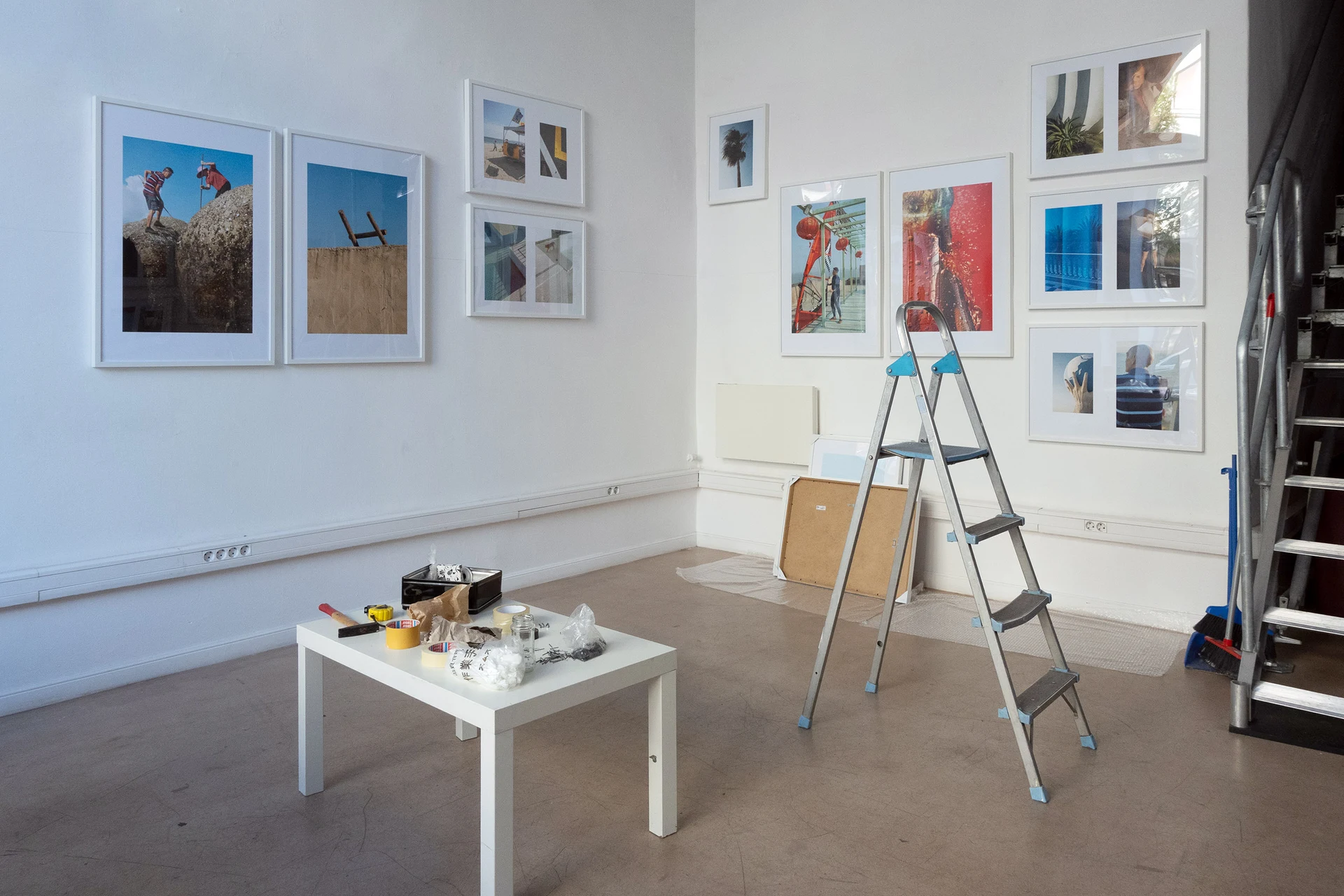
Installation views
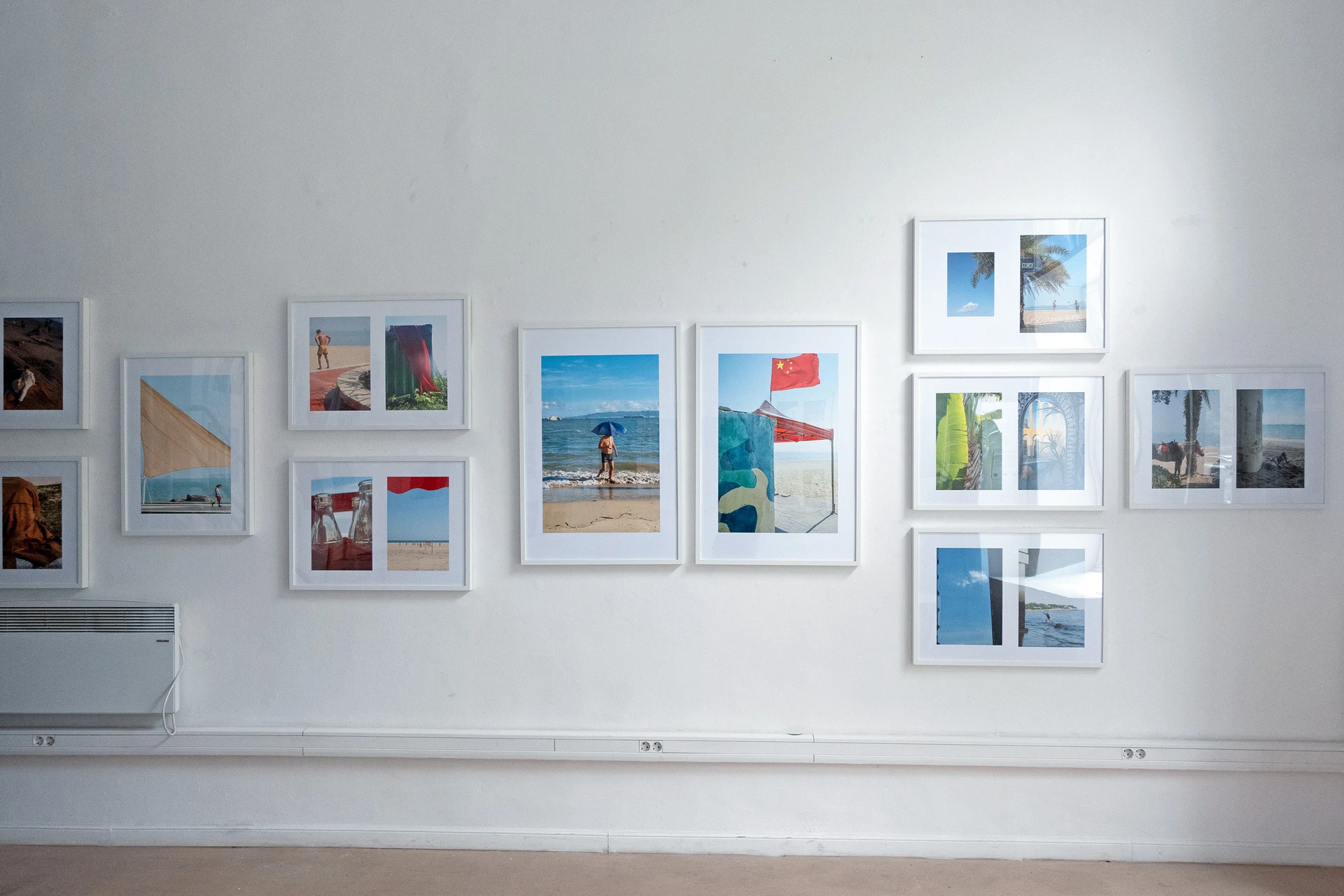
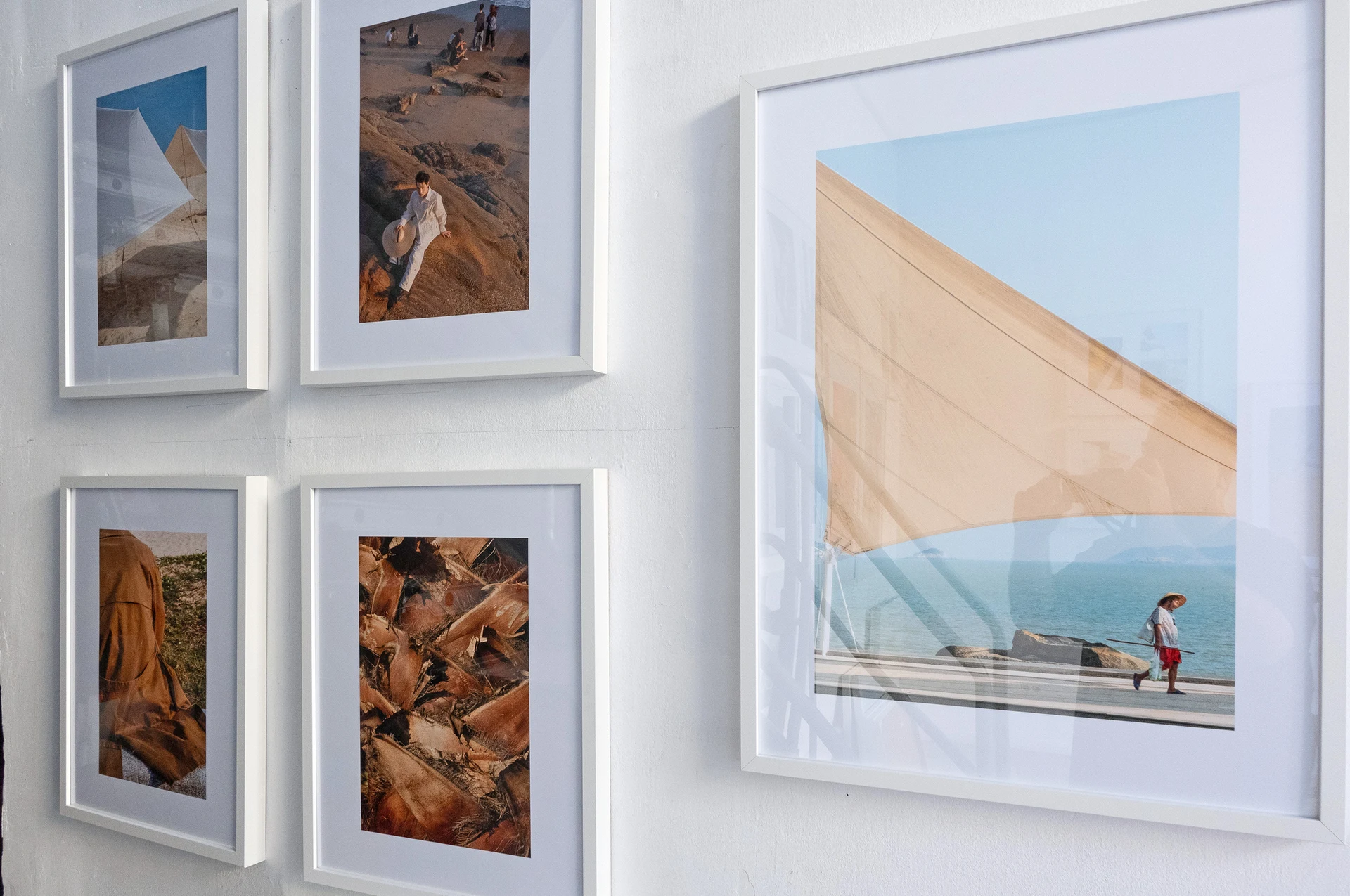
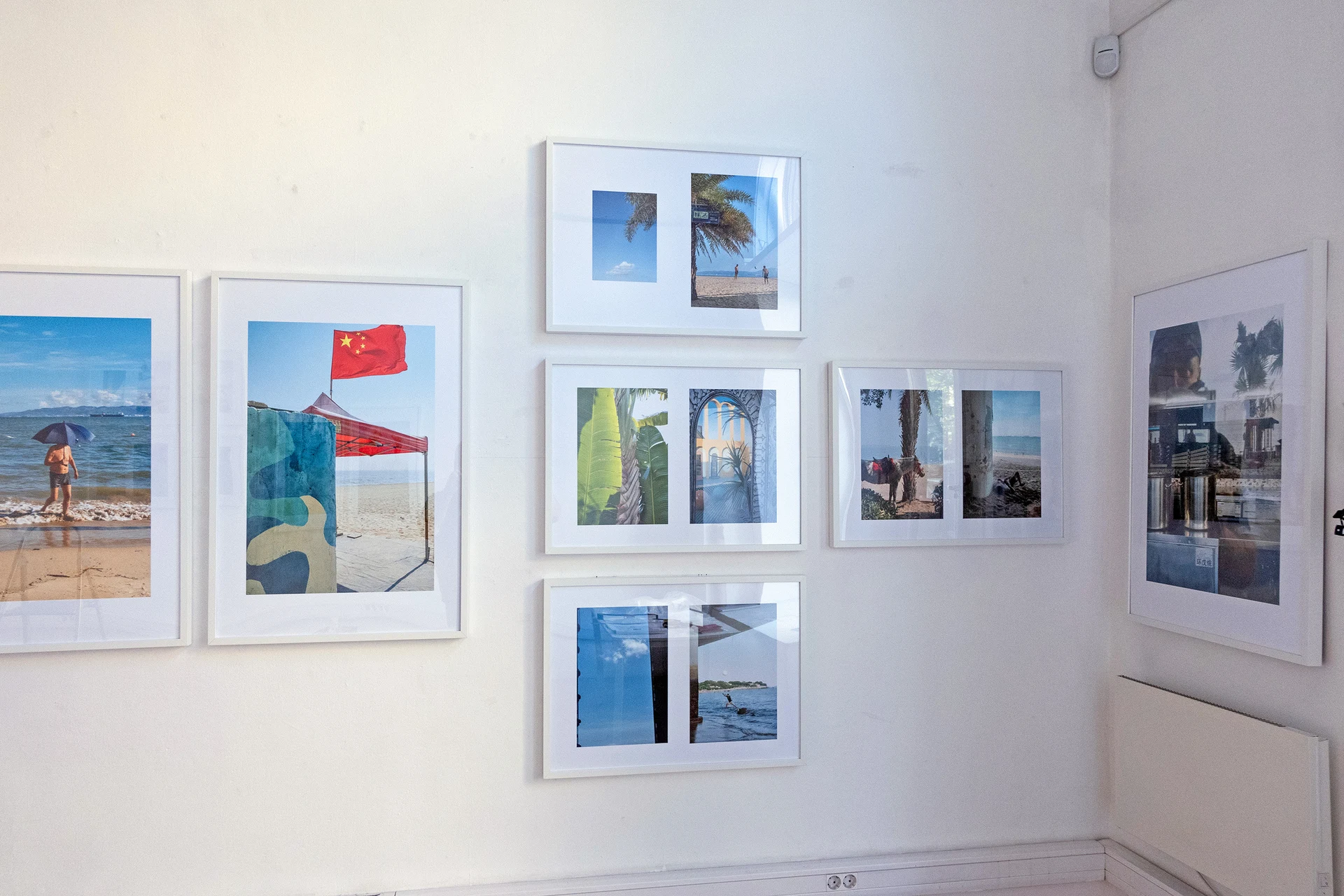
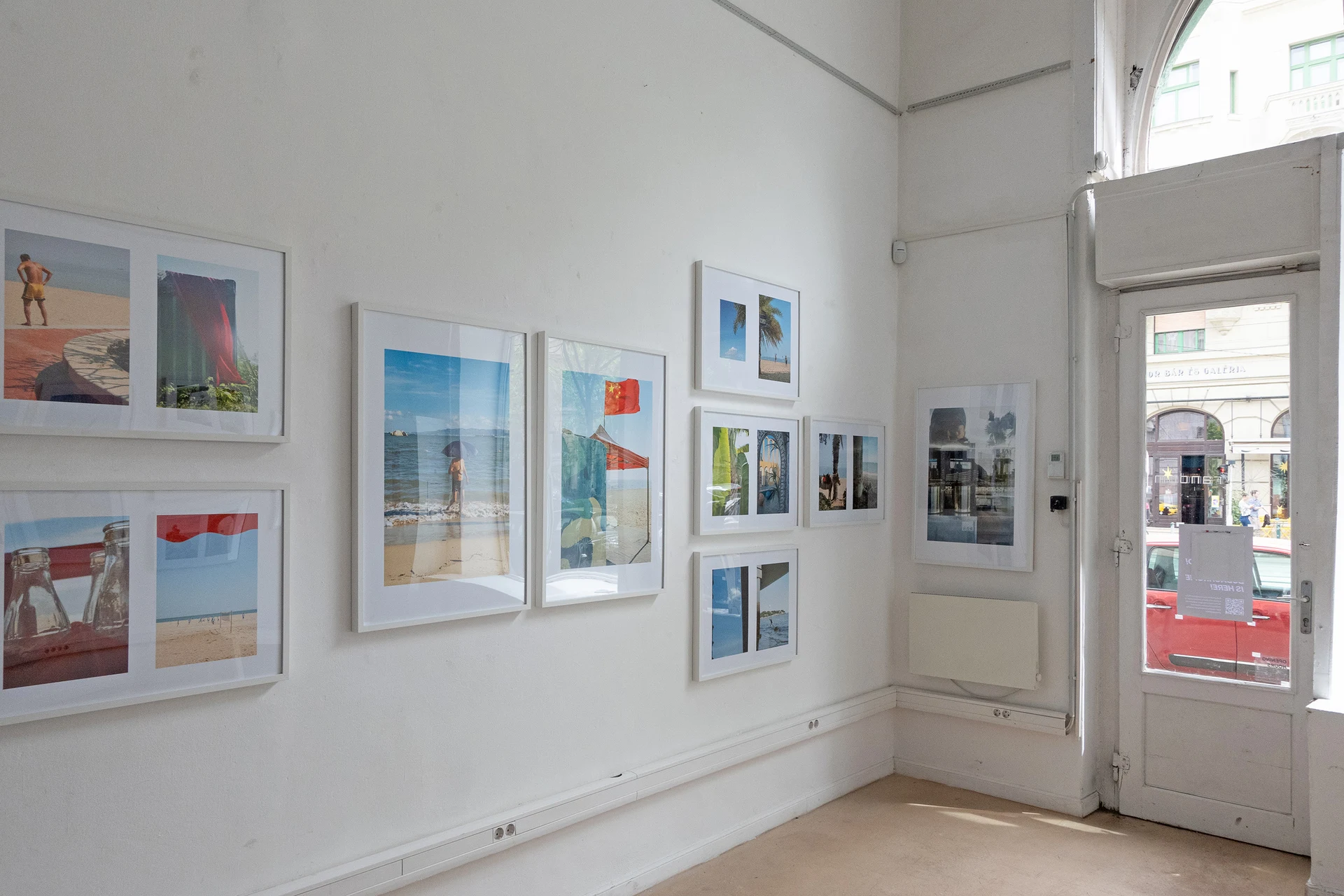
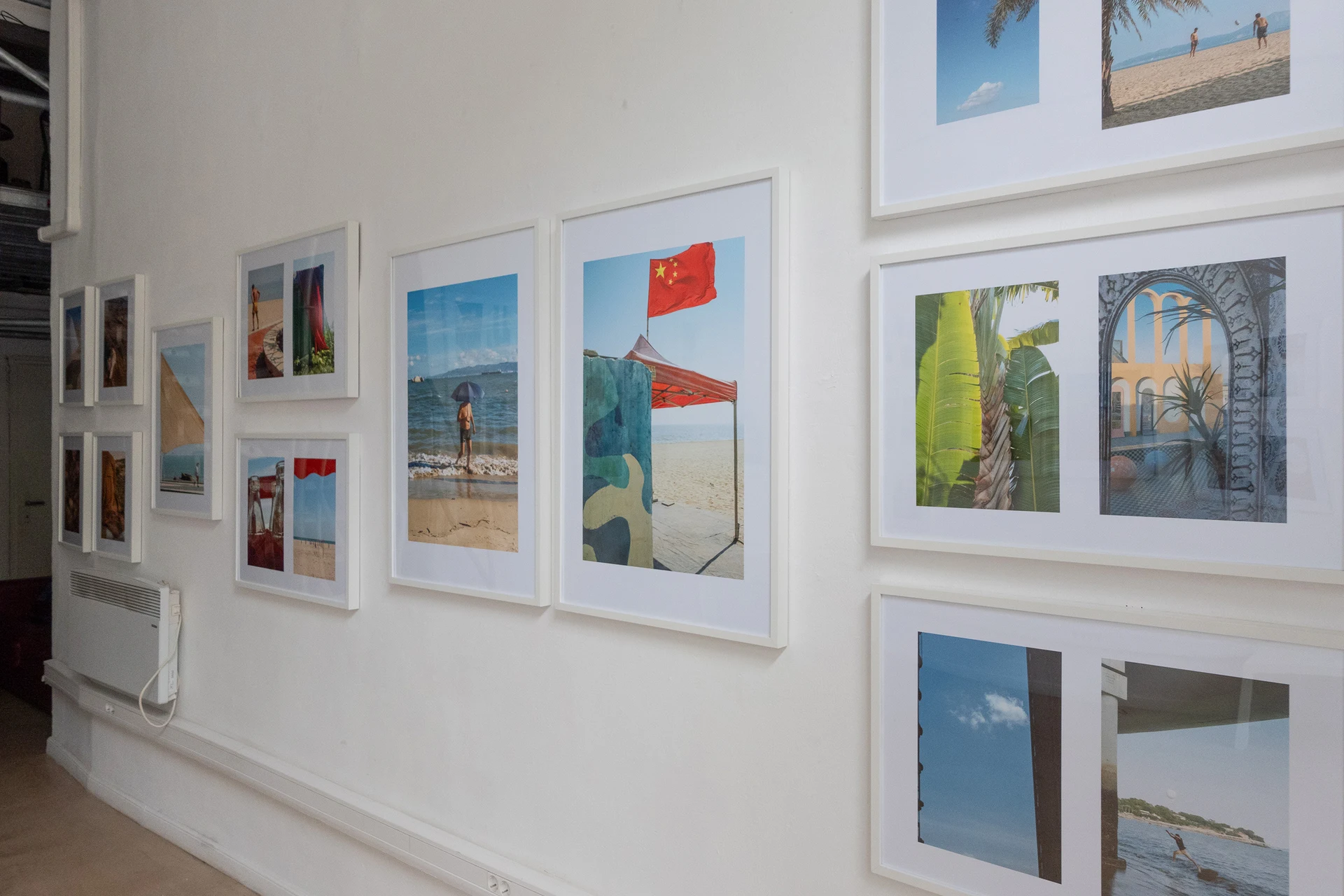
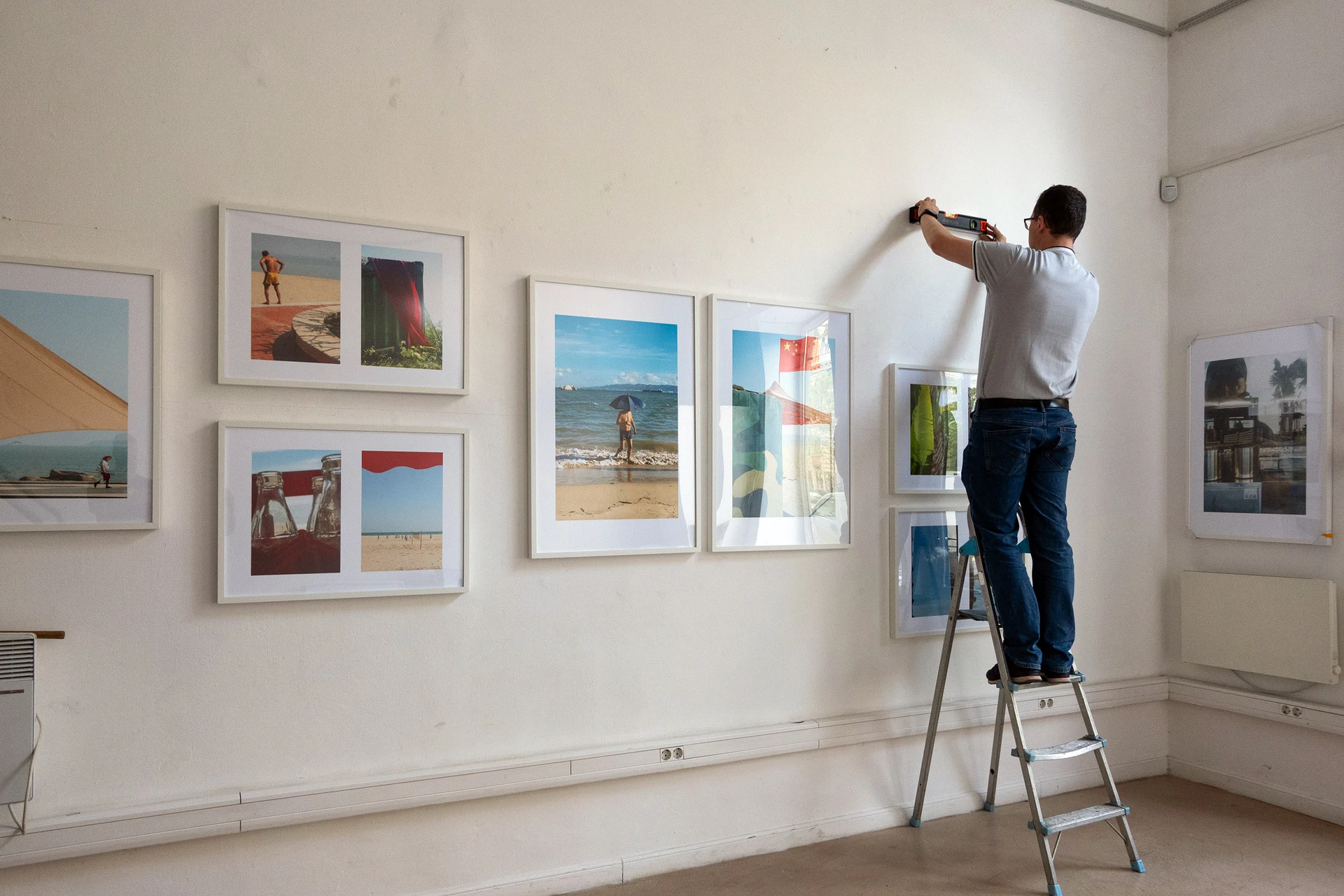
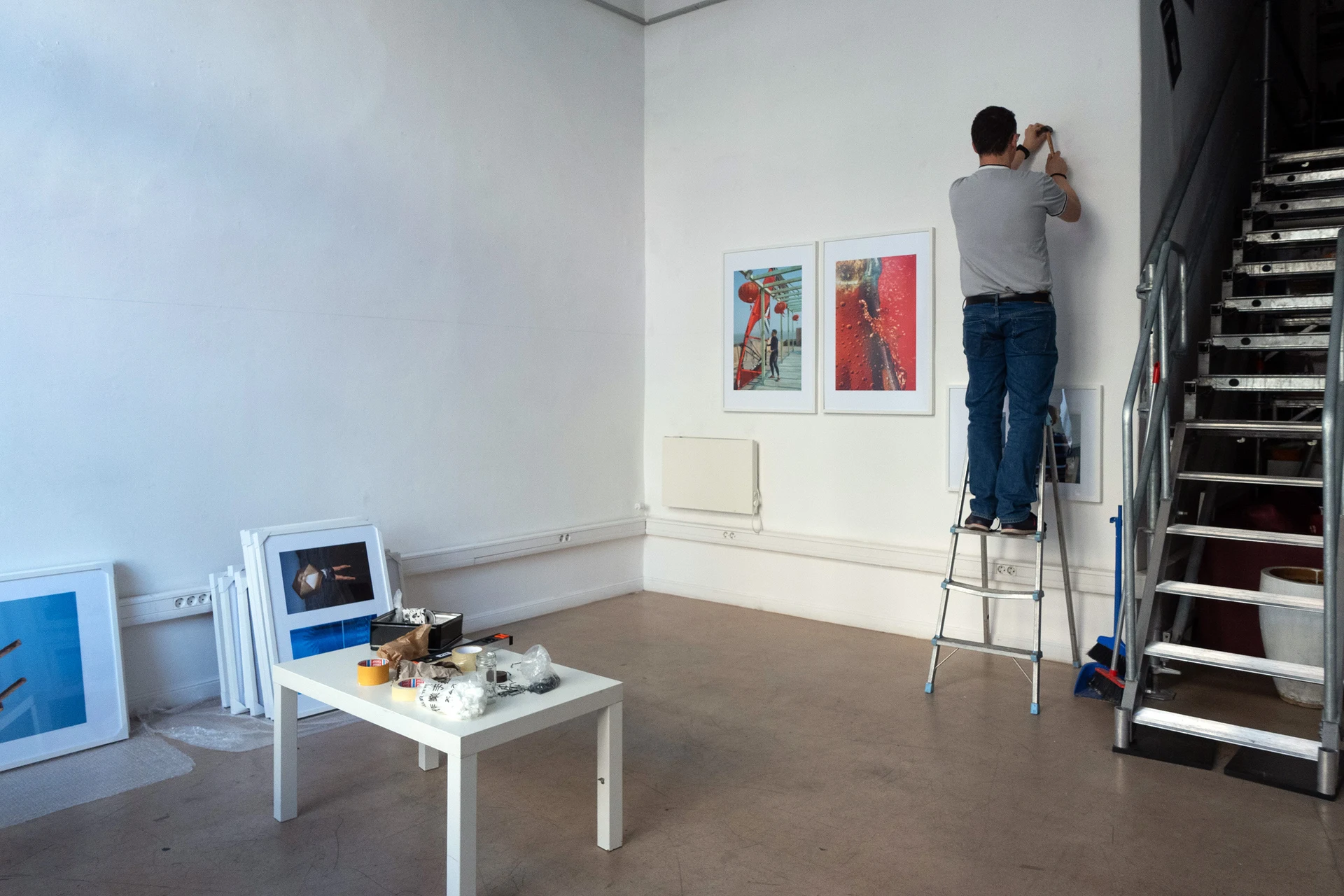
Hang in progress
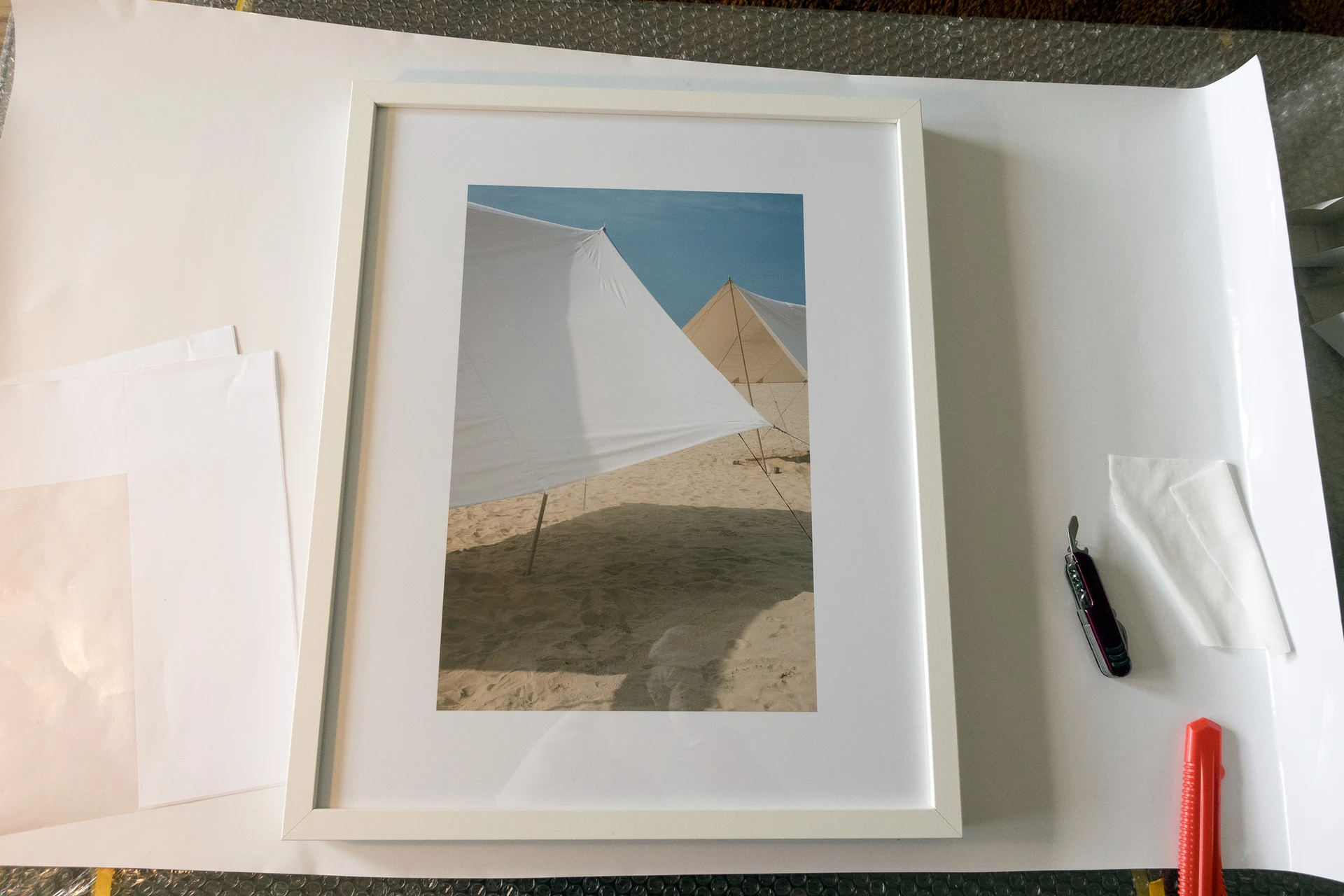
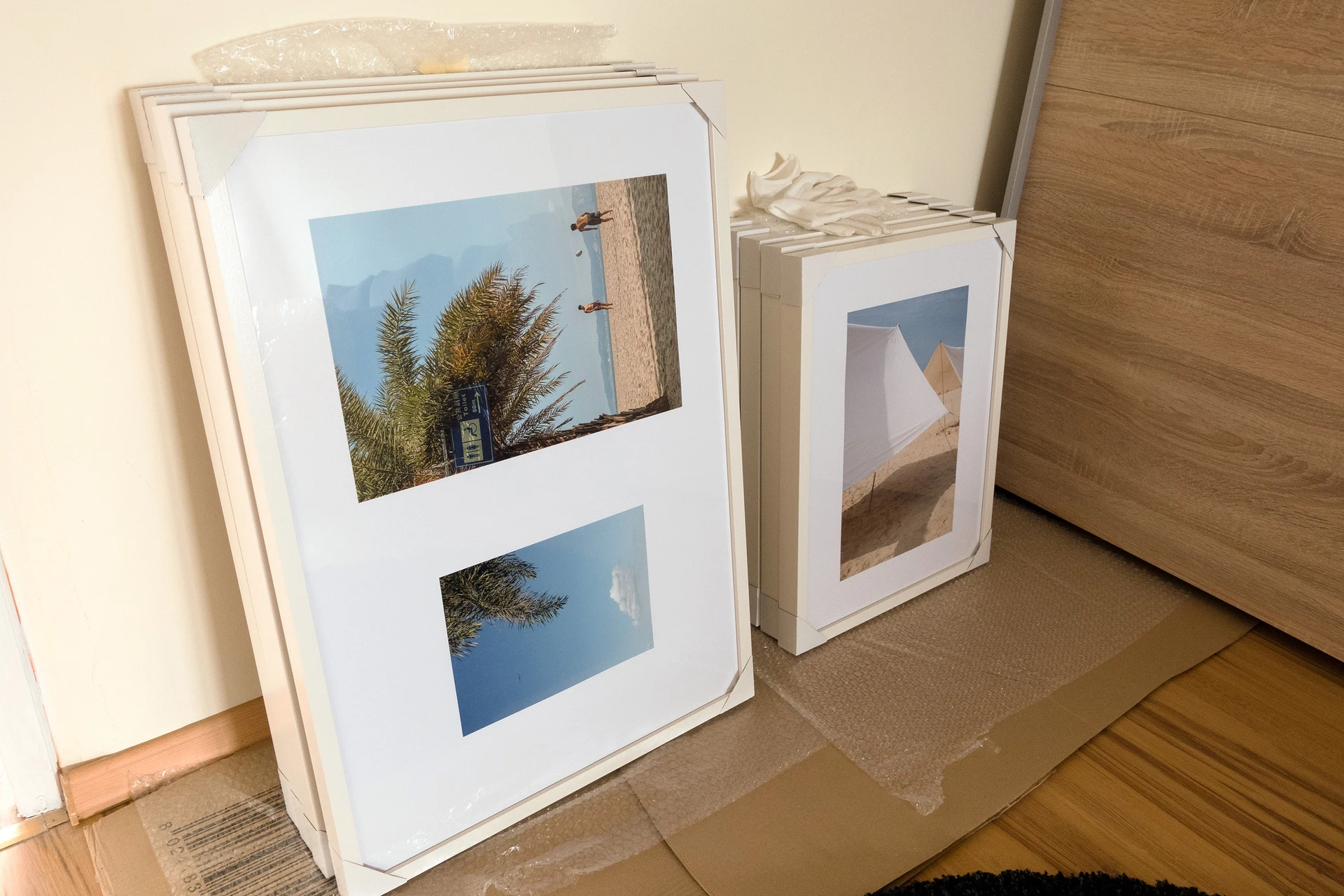
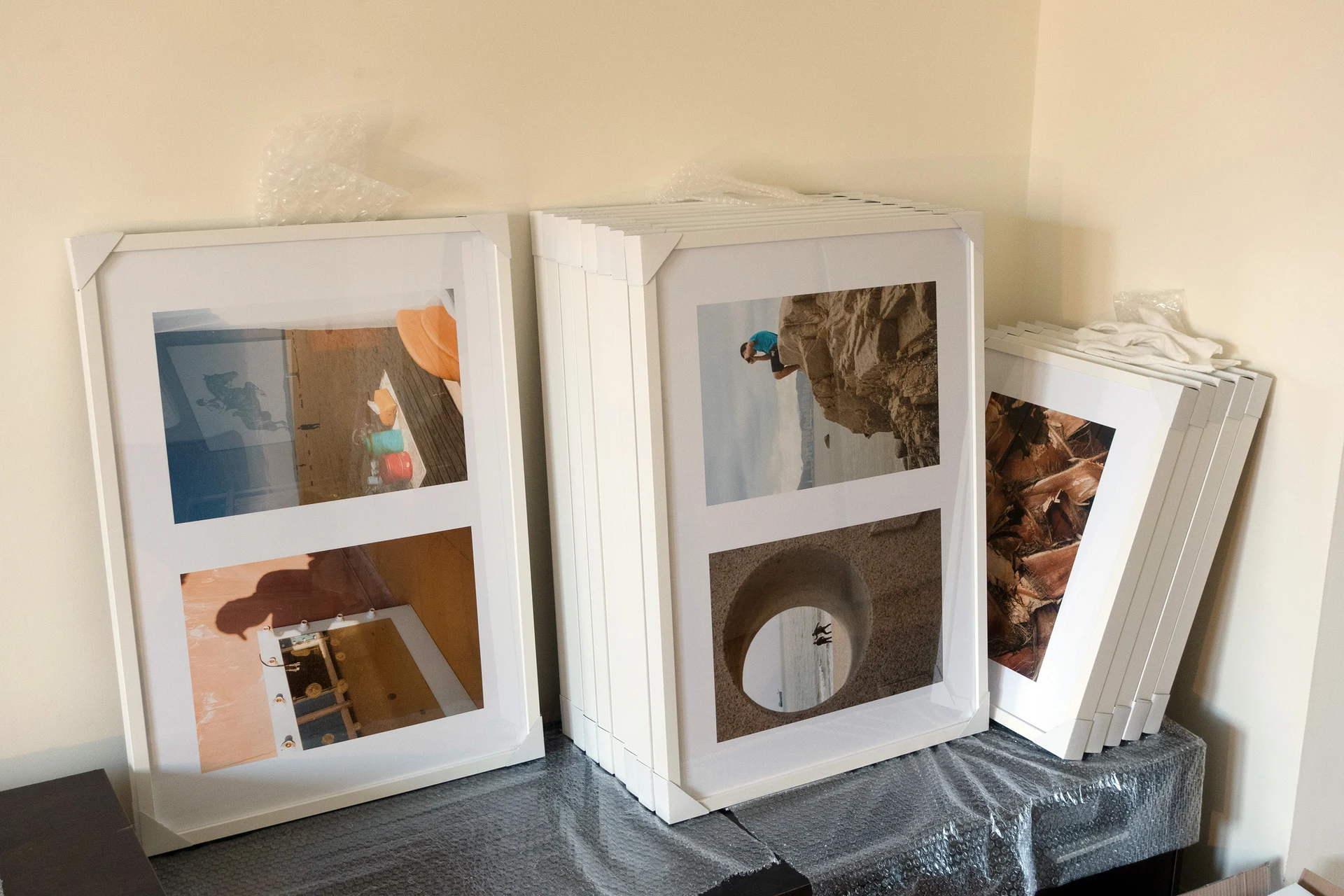
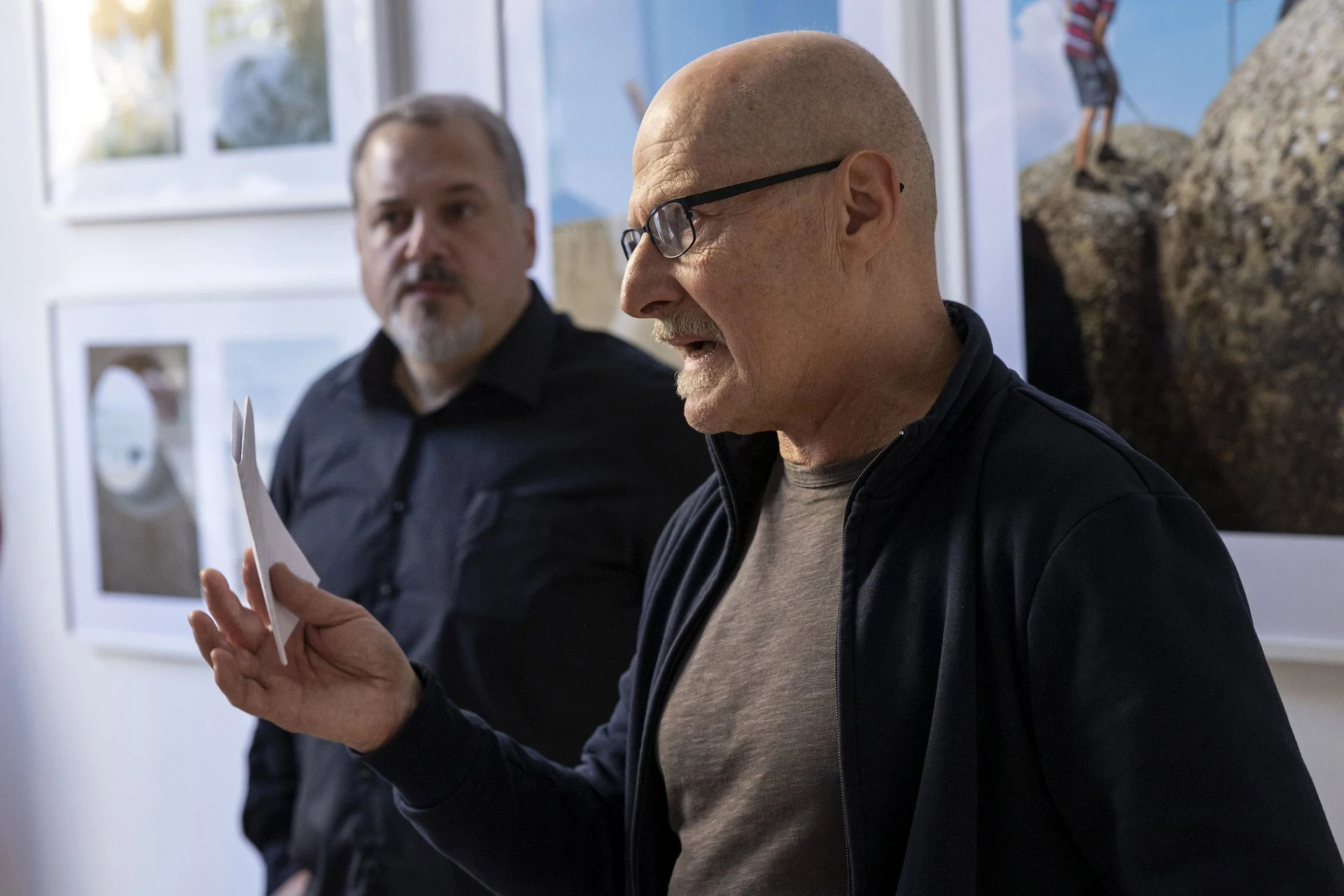
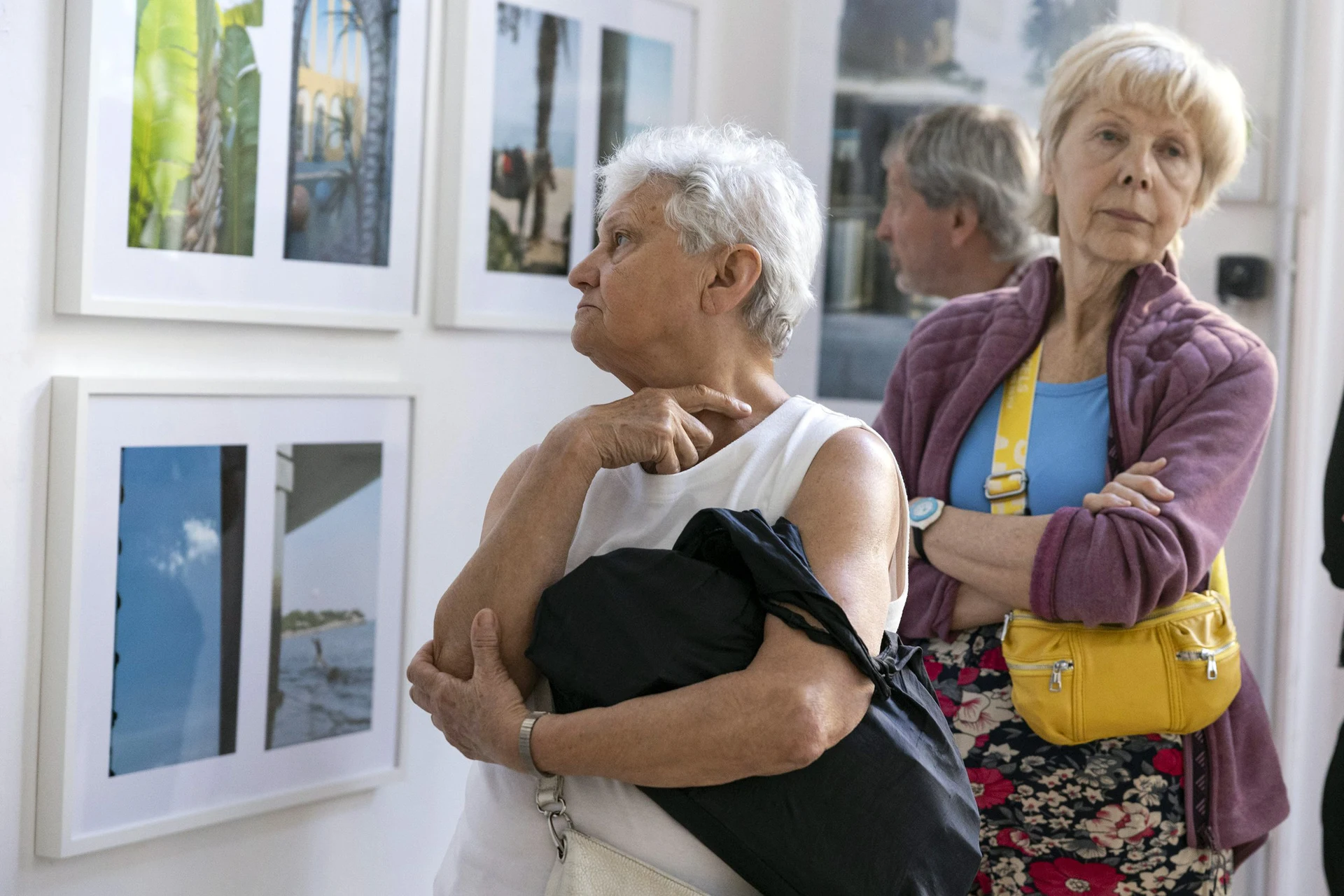
Vernissage
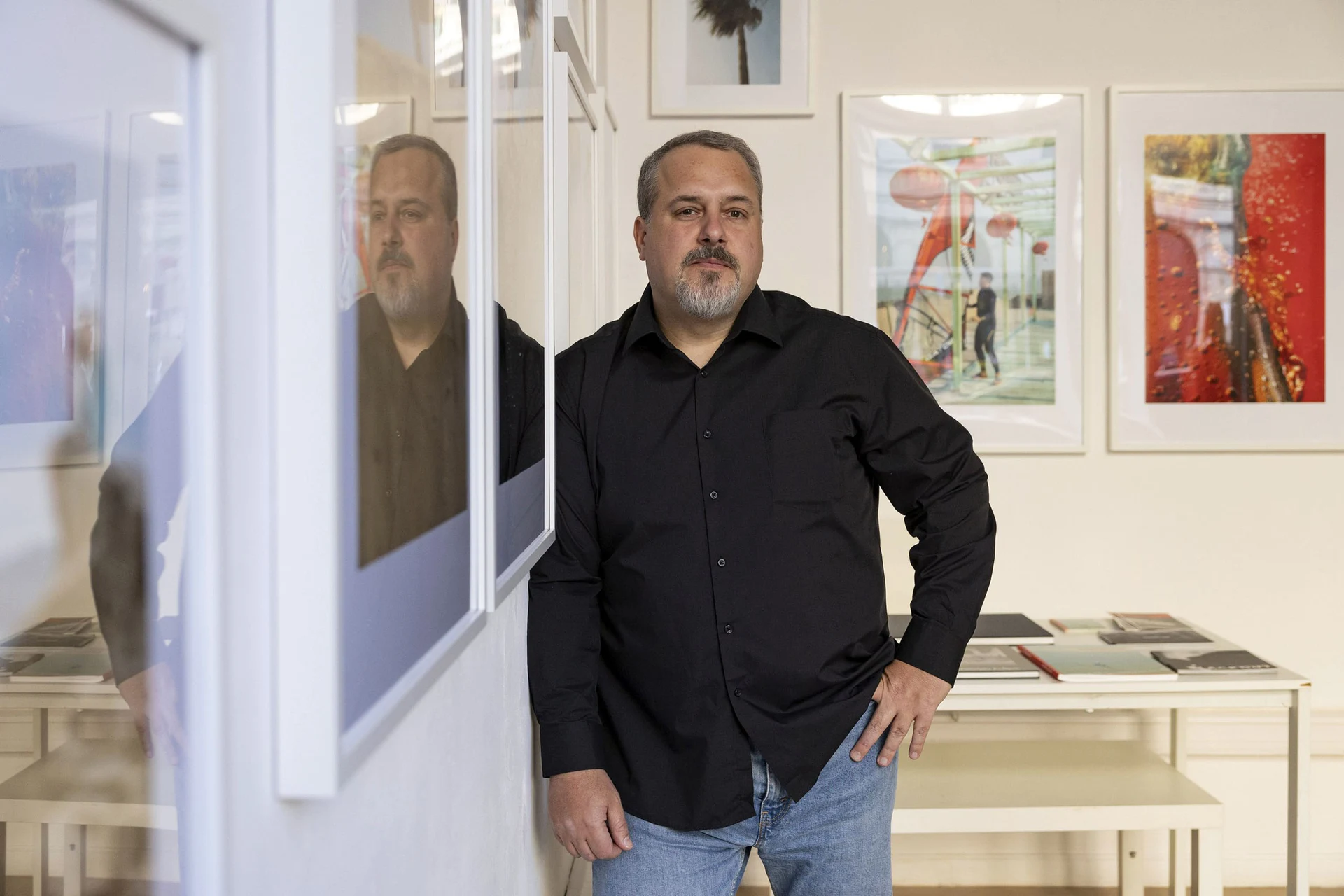
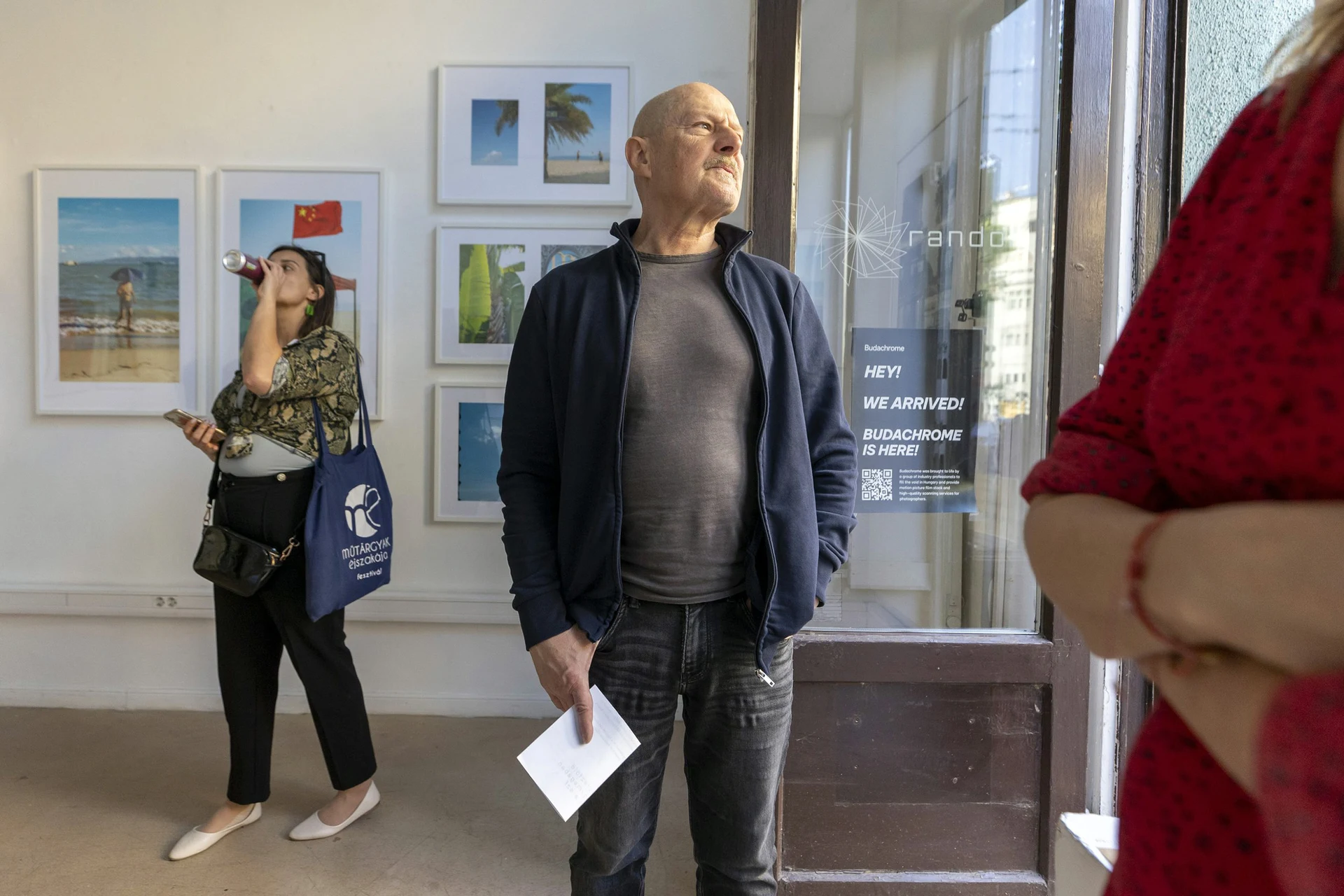
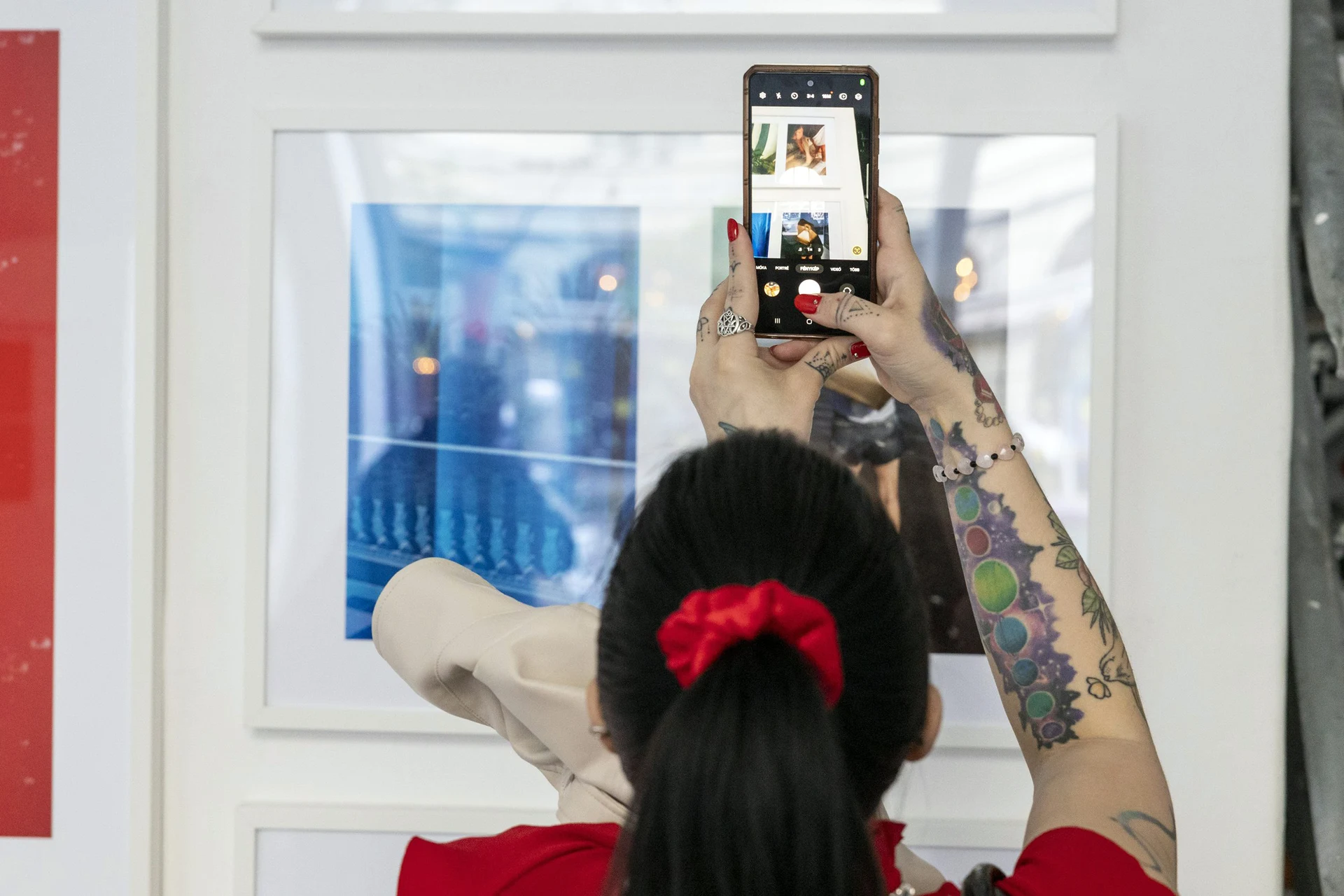
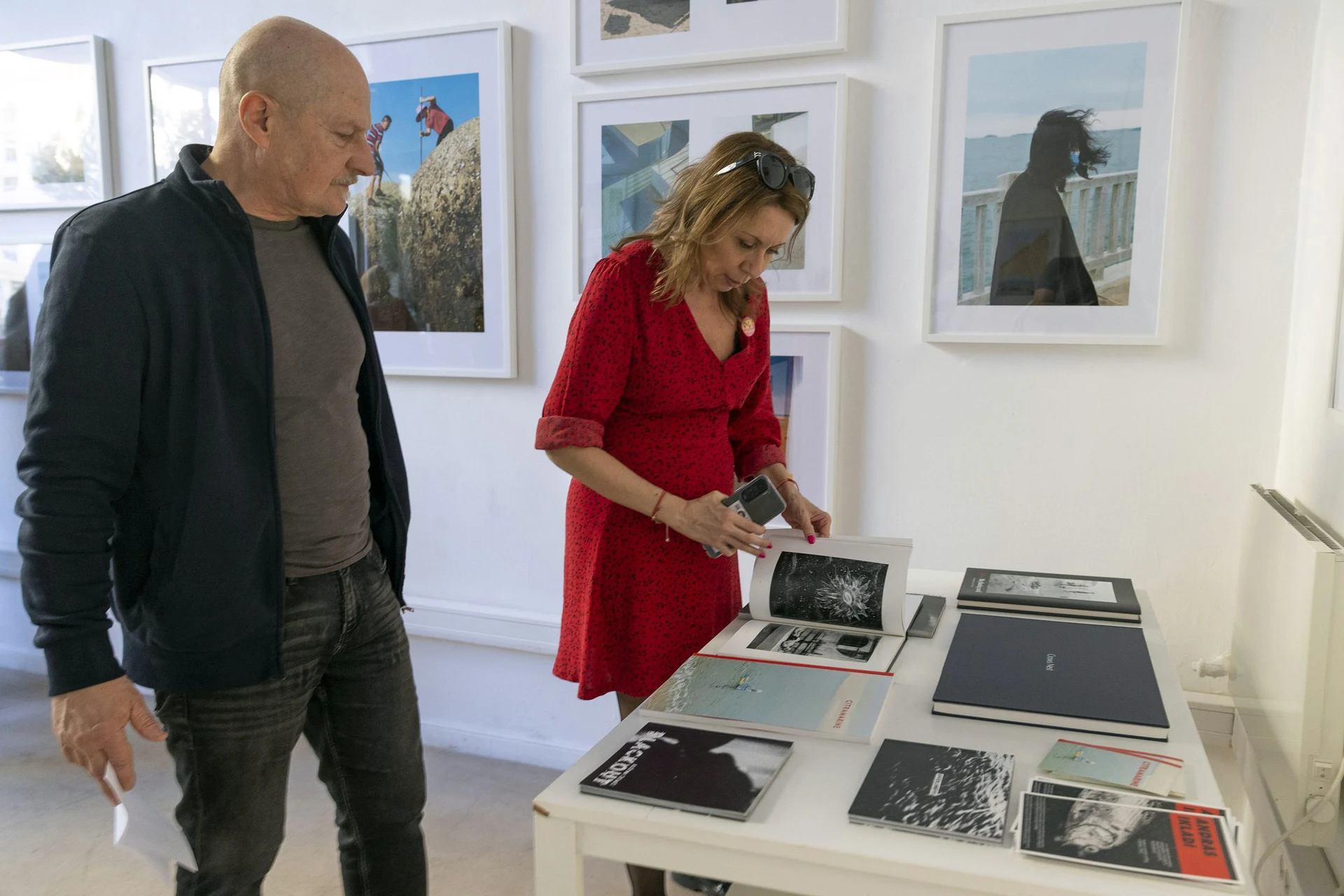
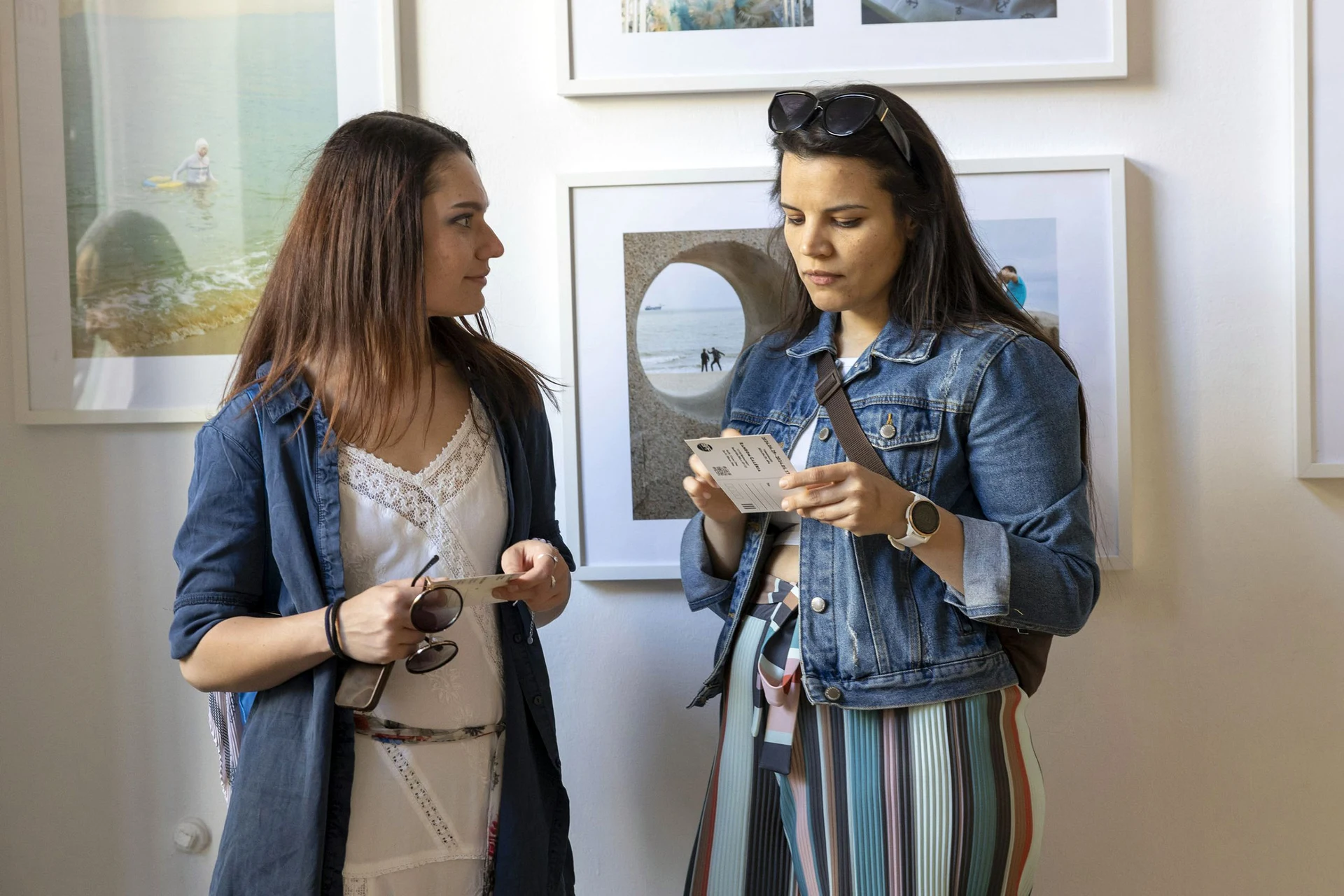
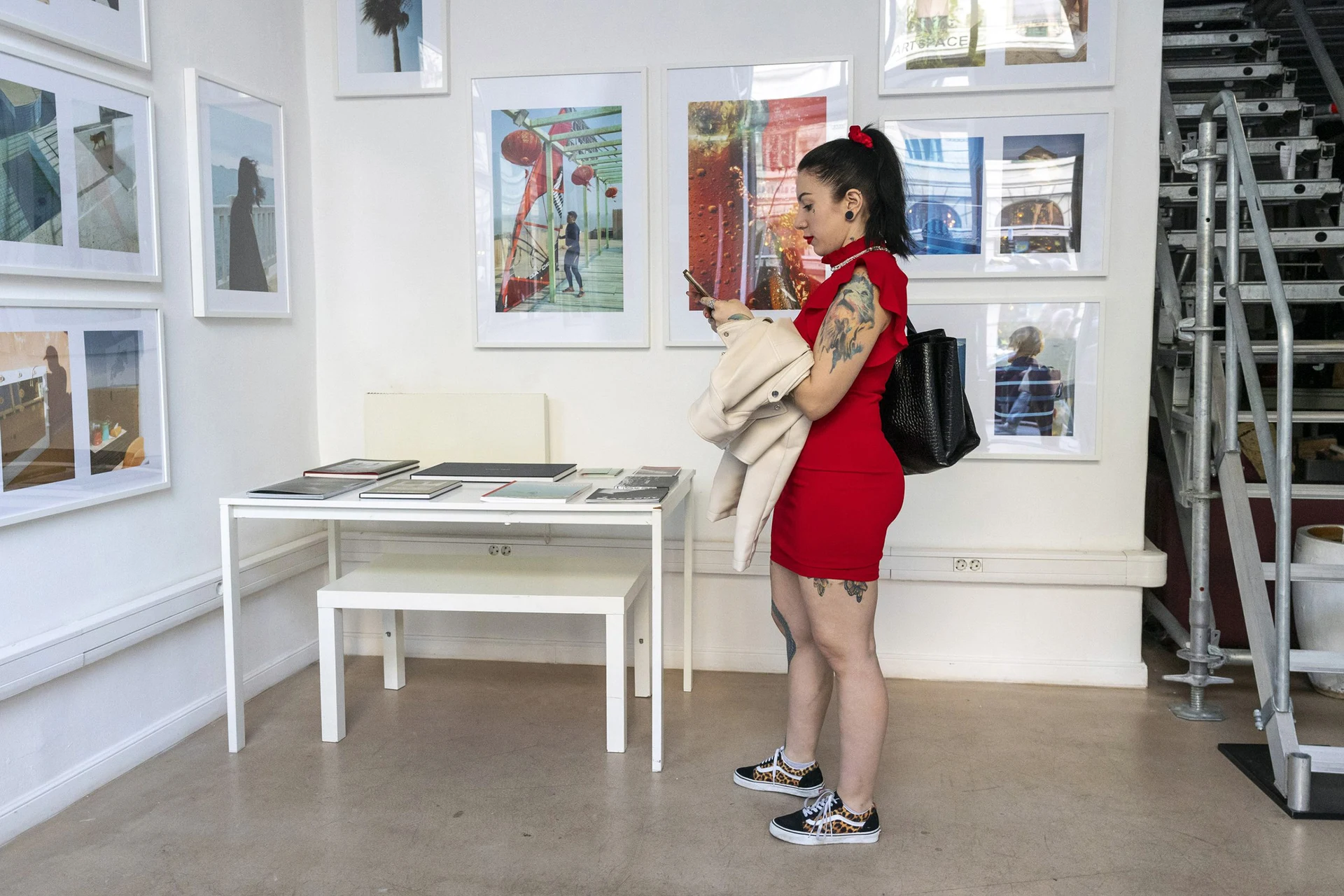
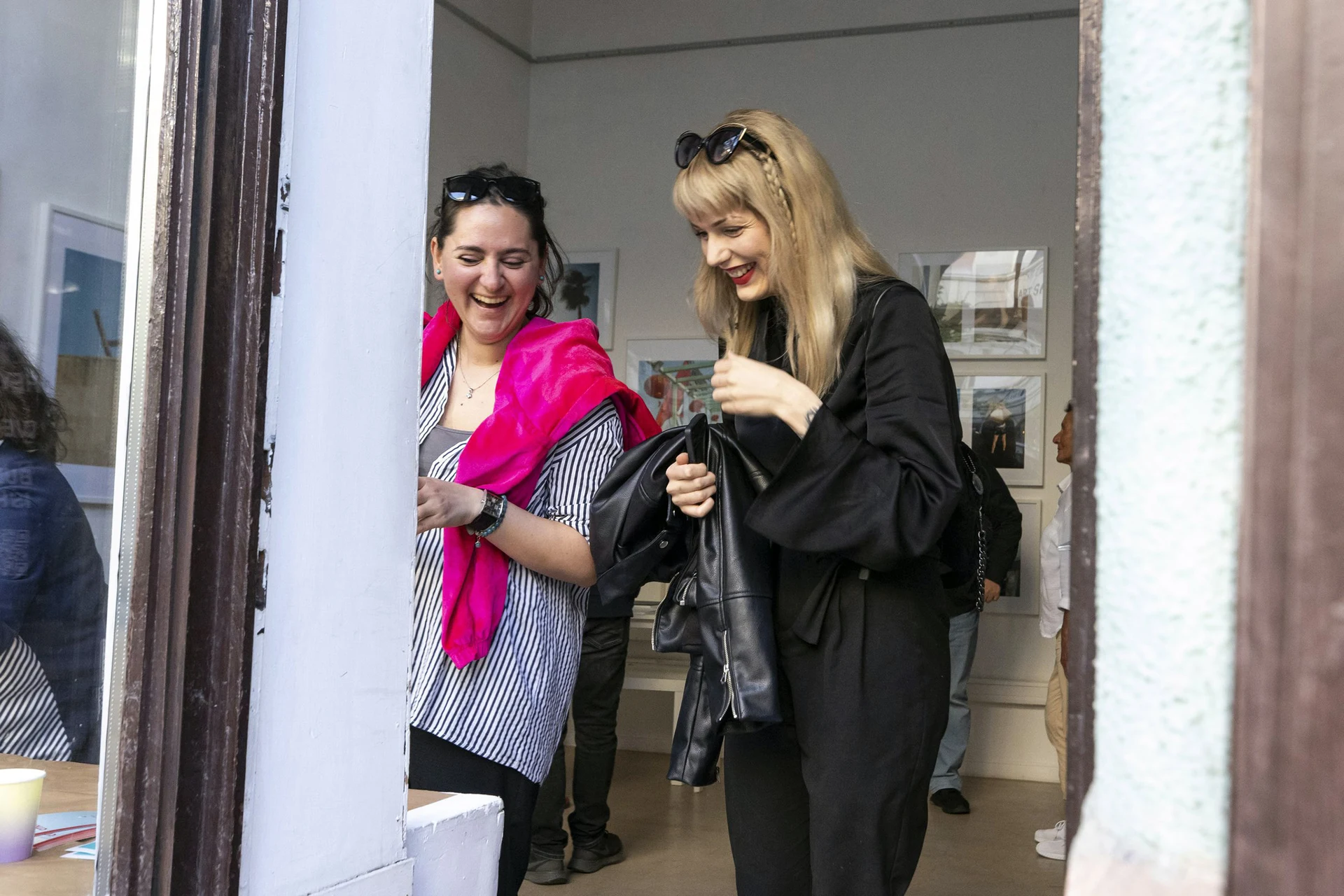
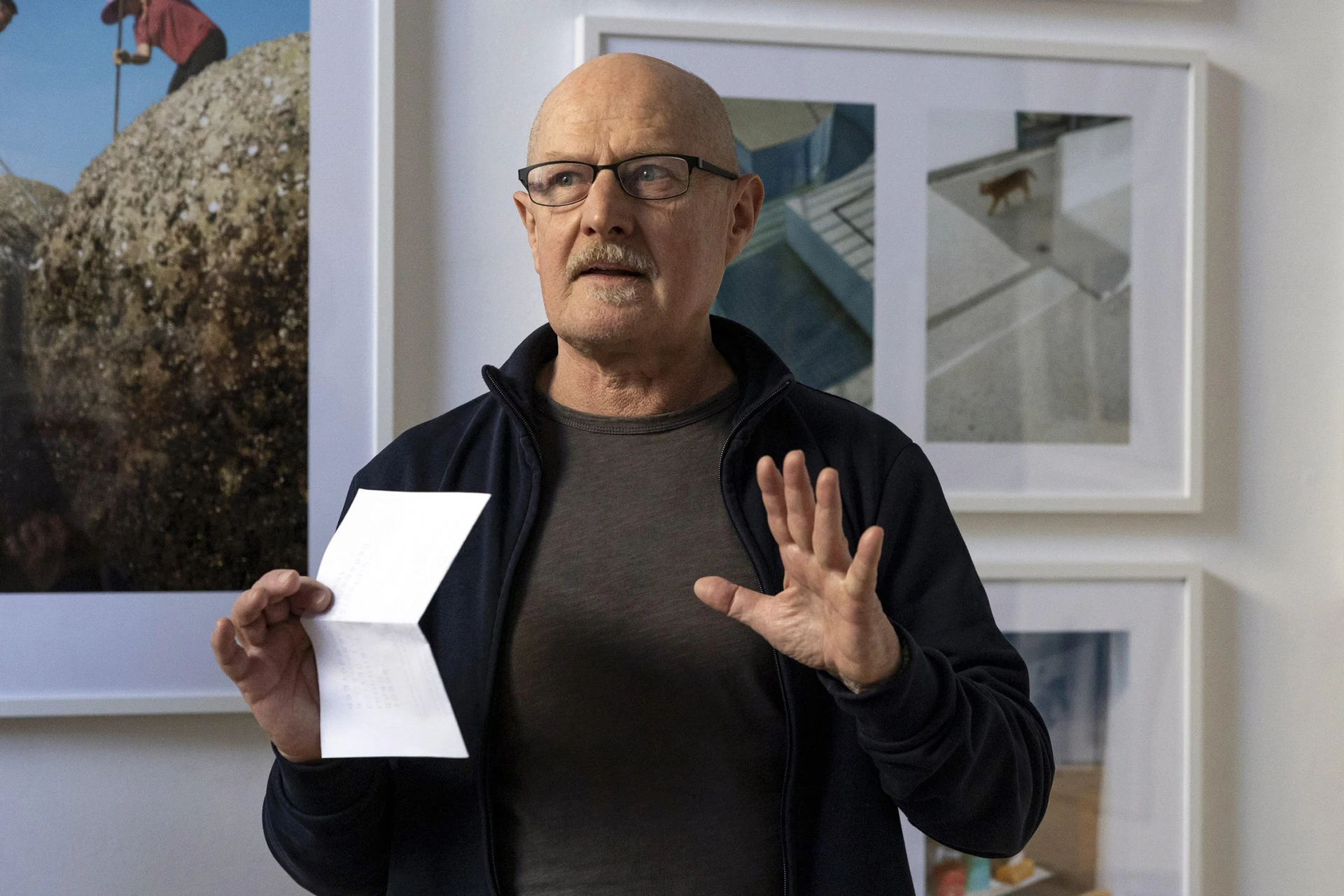
Exhibition Report
There is a specific kind of blue that exists only in subtropical light. Not the blue of the Mediterranean, which is ancient and mythological. Not the blue of northern seas, which is cold and mythical. This is a different blue entirely: warmer, more visceral. It's the blue you find when sunlight passes through water at a particular latitude, reflecting from the sand bank below, when heat softens the edges of things, when the air itself seems to shimmer with colour.
I spent my first few years as a photographer working in black and white. High contrast, grainy, deep shadows. It was what felt right, either visually or thematically. And then I arrived in Xiamen, on the southeast coast of China, and something shifted. The subtropical light there doesn't allow for monochrome thinking. It insists on itself. It penetrates everything, the skin, the eyes, the psyche. I found myself reaching for colour as a necessity. This is how Citramarine began.
The Word
"Citramarine" is a historical term for azurite, a blue pigment. The name suggests its origins: citra mare — on the near side of the sea, from the Latin. The far side was ultramarine, from lapis lazuli, carried across oceans from Afghanistan. Citramarine was closer, more accessible, but no less precious. Stella Paul, the art historian, notes this etymology, and it felt immediately right for what I was trying to name. This work is about the blue you find on this side of the sea, the side you can touch, the side that touches you back, the side that touched me.
RANDOM Gallery
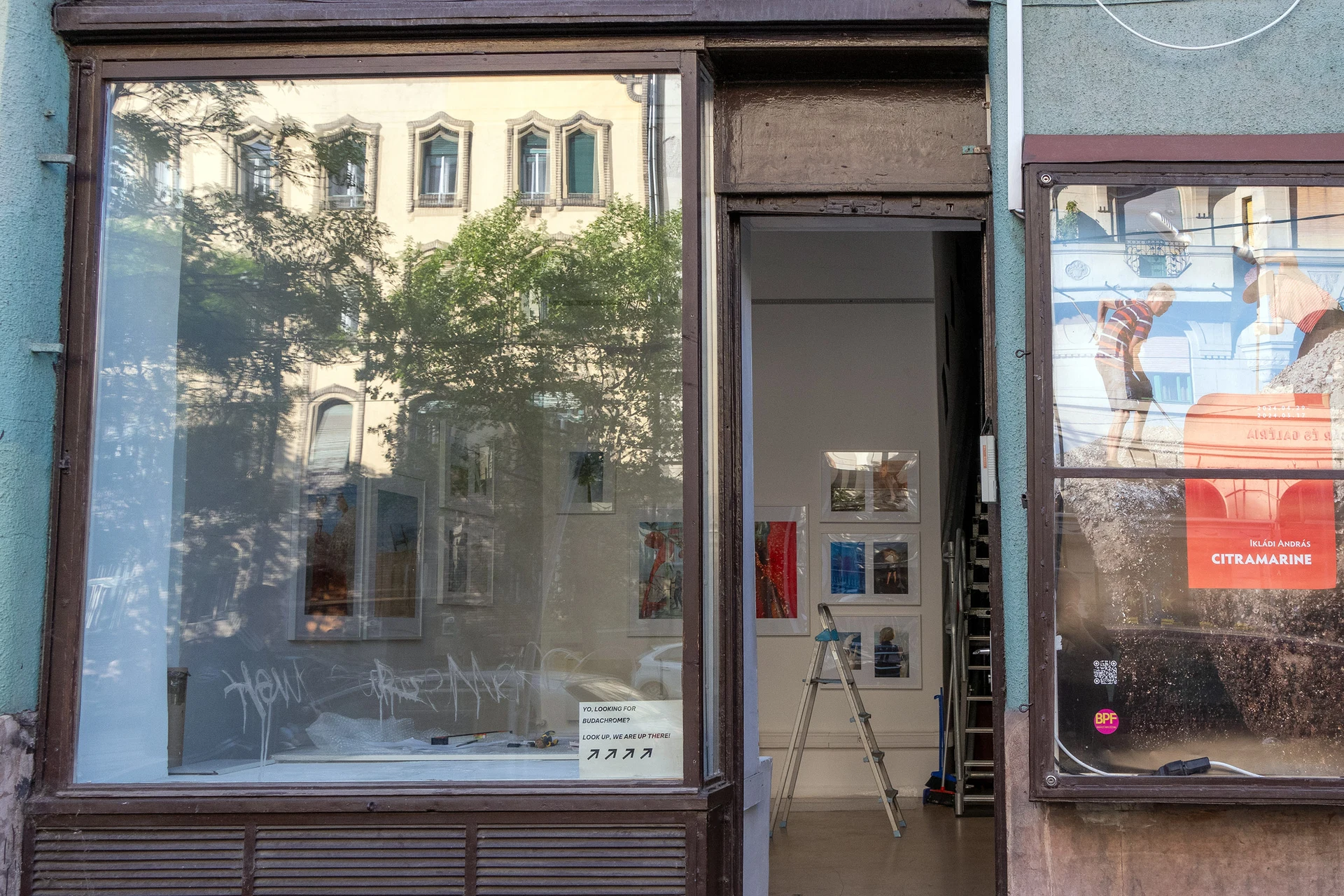
The exhibition opened at RANDOM Gallery in Budapest on 22 April 2024, running through 17 May. For those unfamiliar with the Budapest photography scene: RANDOM is not just a gallery space. It's part of the connective tissue of the city's photographic culture, closely linked with the Budapest Photo Festival through Szilvia Mucsy, who serves as both festival director and a central figure at RANDOM collective. This overlap creates something productive: a dialogue between the gallery's independent, artist-driven platform and the wider international framework of the festival.
Szilvia curated the show. Miklós Gulyás, a photographer whose work I respect deeply, gave the opening speech. There was something significant about showing this work in Budapest, in the vicinity of my old university, in Hungary, where I was born, but which I had left decades before. Returning with a body of work made in China, about light that doesn't exist in Central Europe, felt like bringing back evidence from another world. Which, in a sense, it was.
Transition
The shift from black and white to colour was disorienting. In black and white photography, you are working with light and shadow, with form and texture, with what remains when colour is stripped away. It's a process of reduction, abstraction. You are already one step removed from reality, beyond scale and dimensionality.
But this directness carries a risk of photographs becoming too descriptive, too literal. They threaten to collapse into mere documentation. By pairing images — either formally in diptychs or spatially through layout — I attempted to create another layer of abstraction. Not the reduction of black and white, but an expansion into relationship, where the content lives as much between the images. The space between images becomes as important as, if not more important than, what's inside the frame. This was the conceptual foundation that shaped how the exhibition was installed at RANDOM.
What pulled me into colour, specifically, was blue. The blues of the South China coast. The blues of swimming pools and painted walls and tropical skies. The way blue behaves differently at different times of day. The way it looks when filtered through humidity. I became obsessed with photographing blue, and through blue, with photographing the emotional temperature of a place, an almost fever-like quality.
The Work in the Room
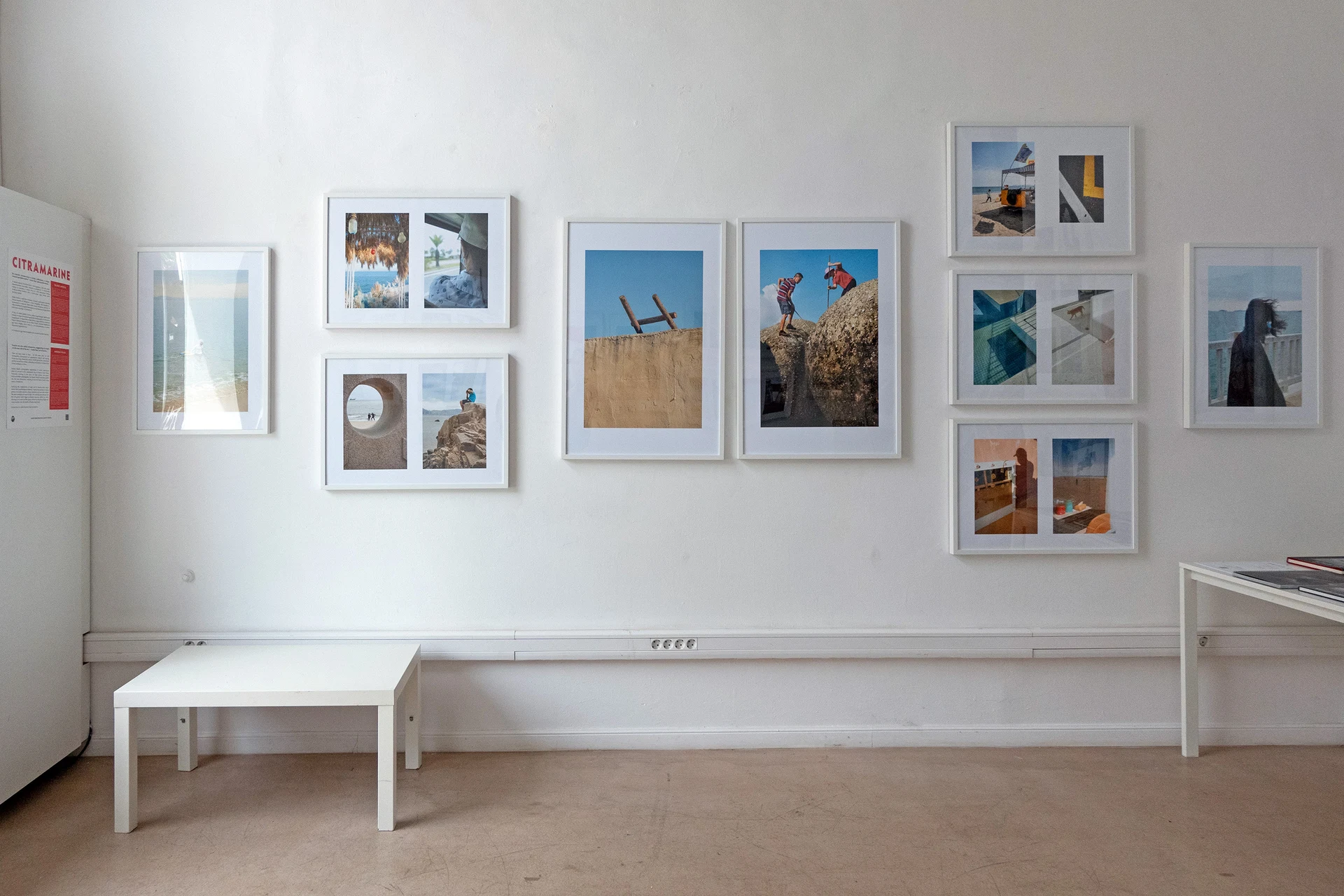
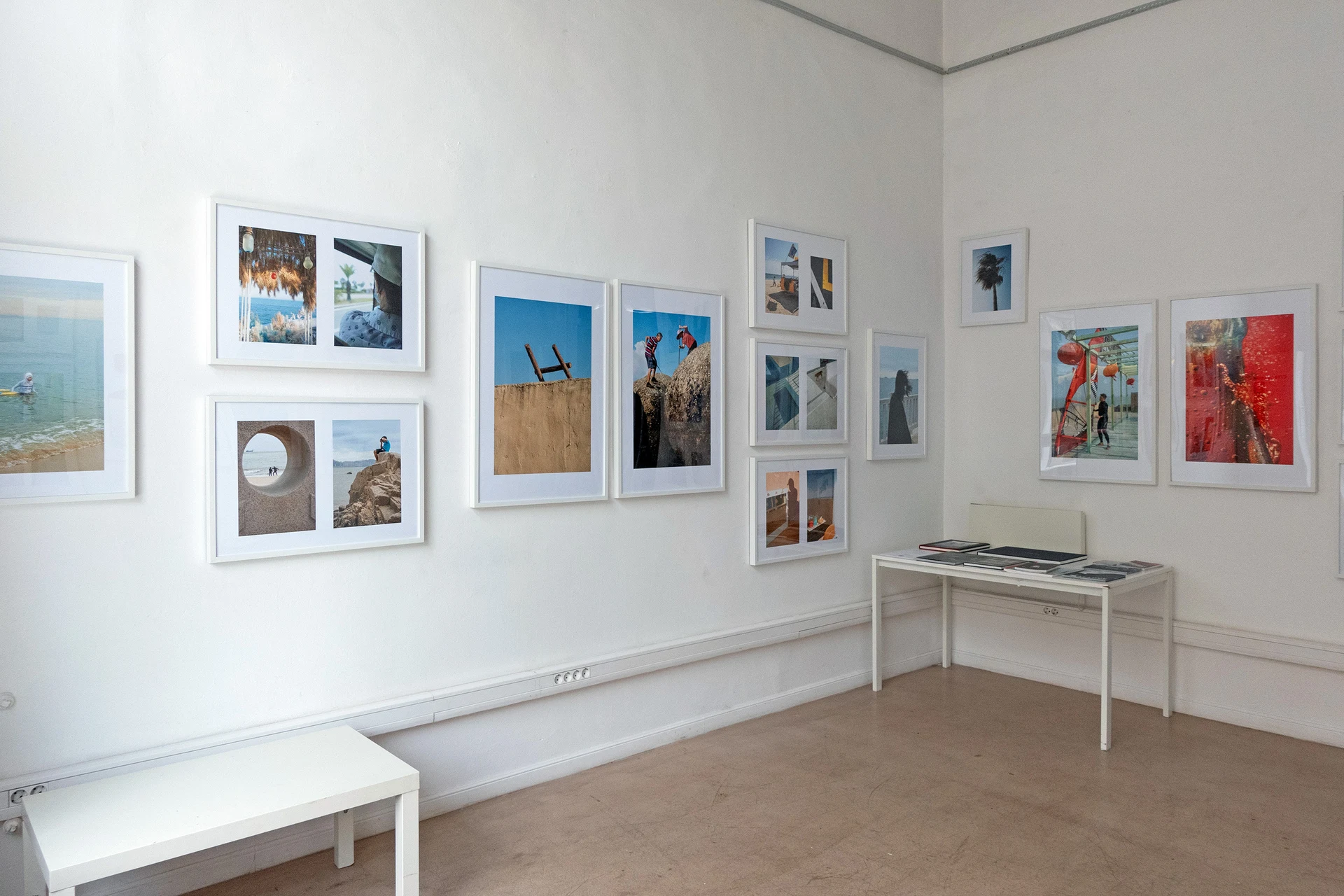
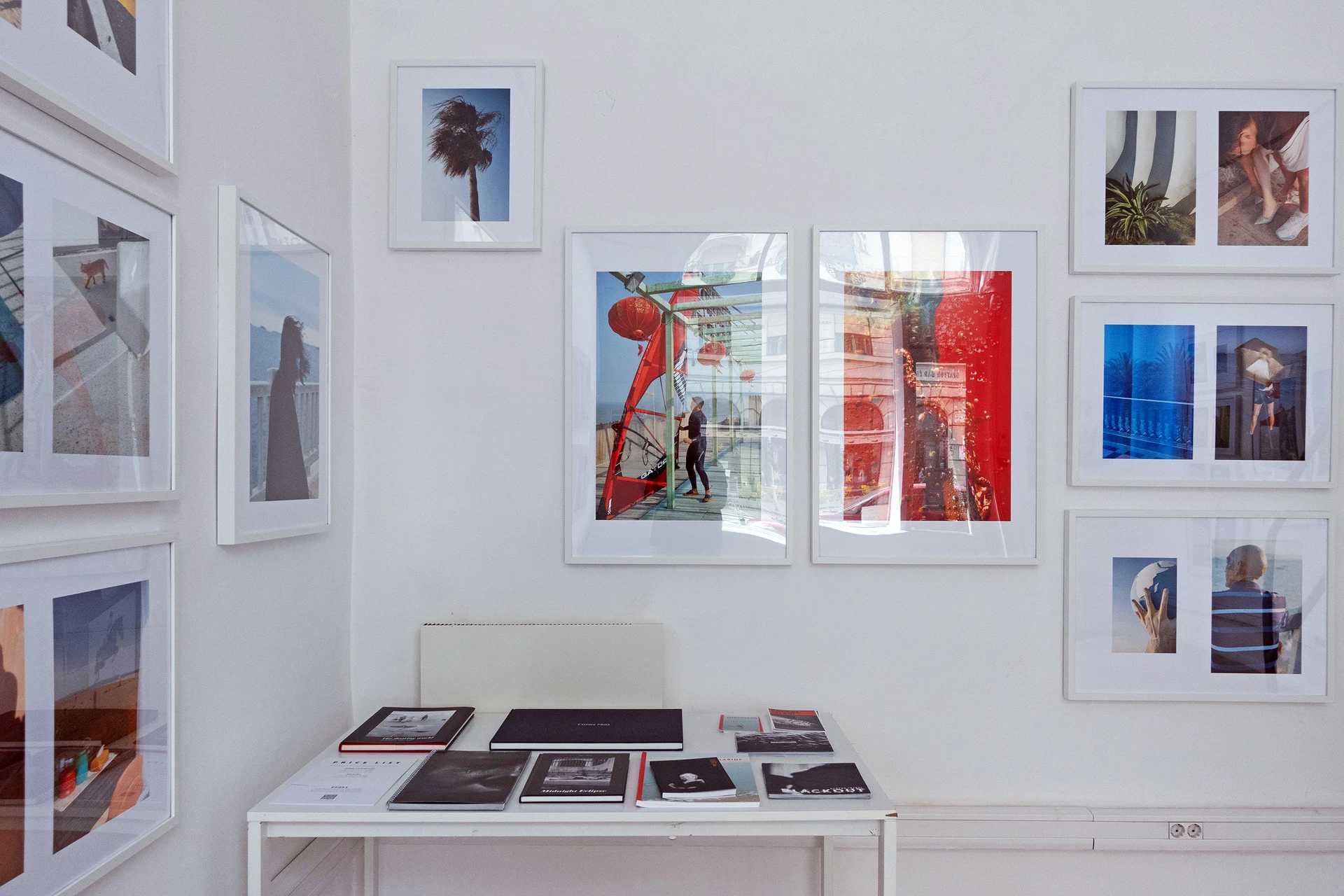
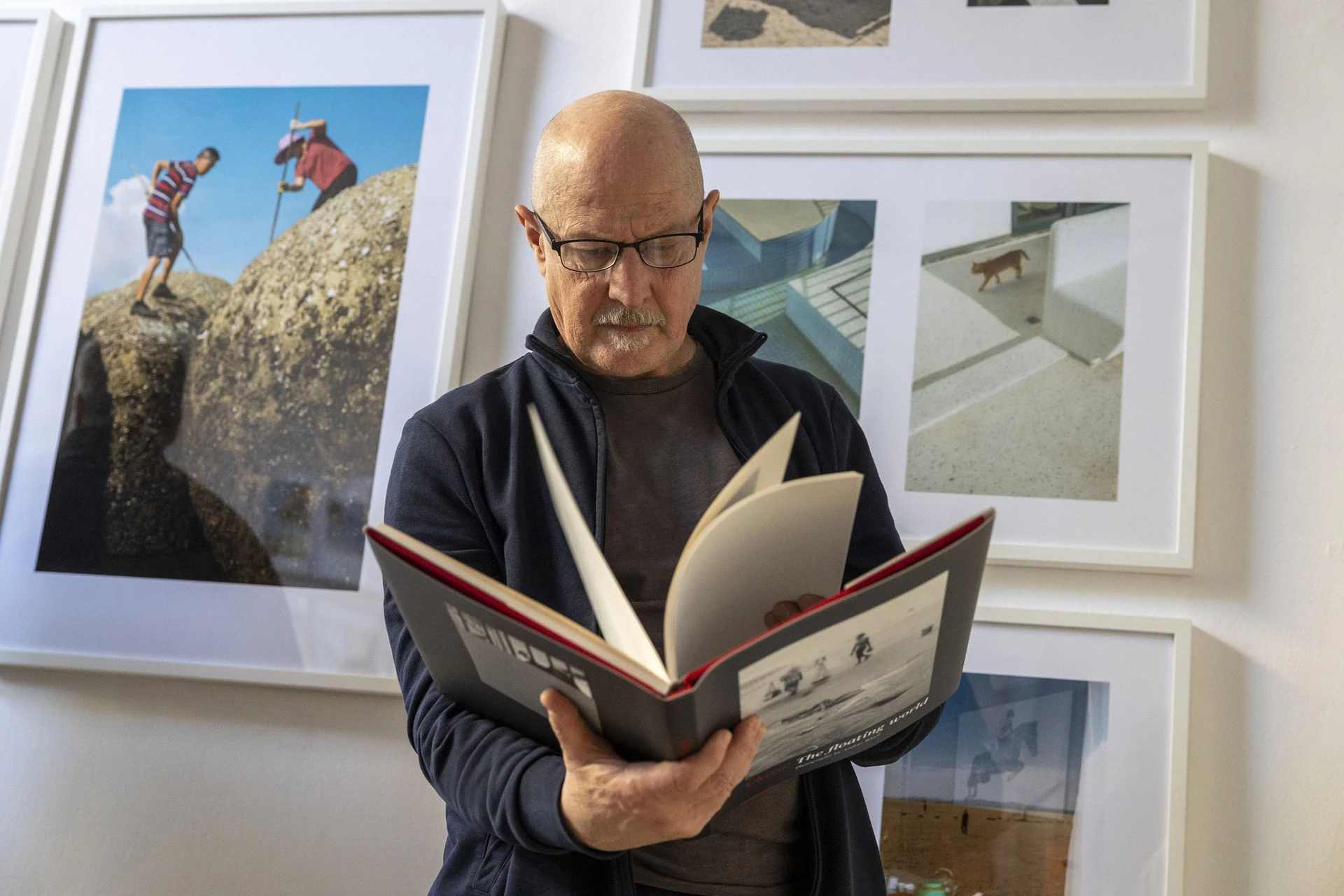
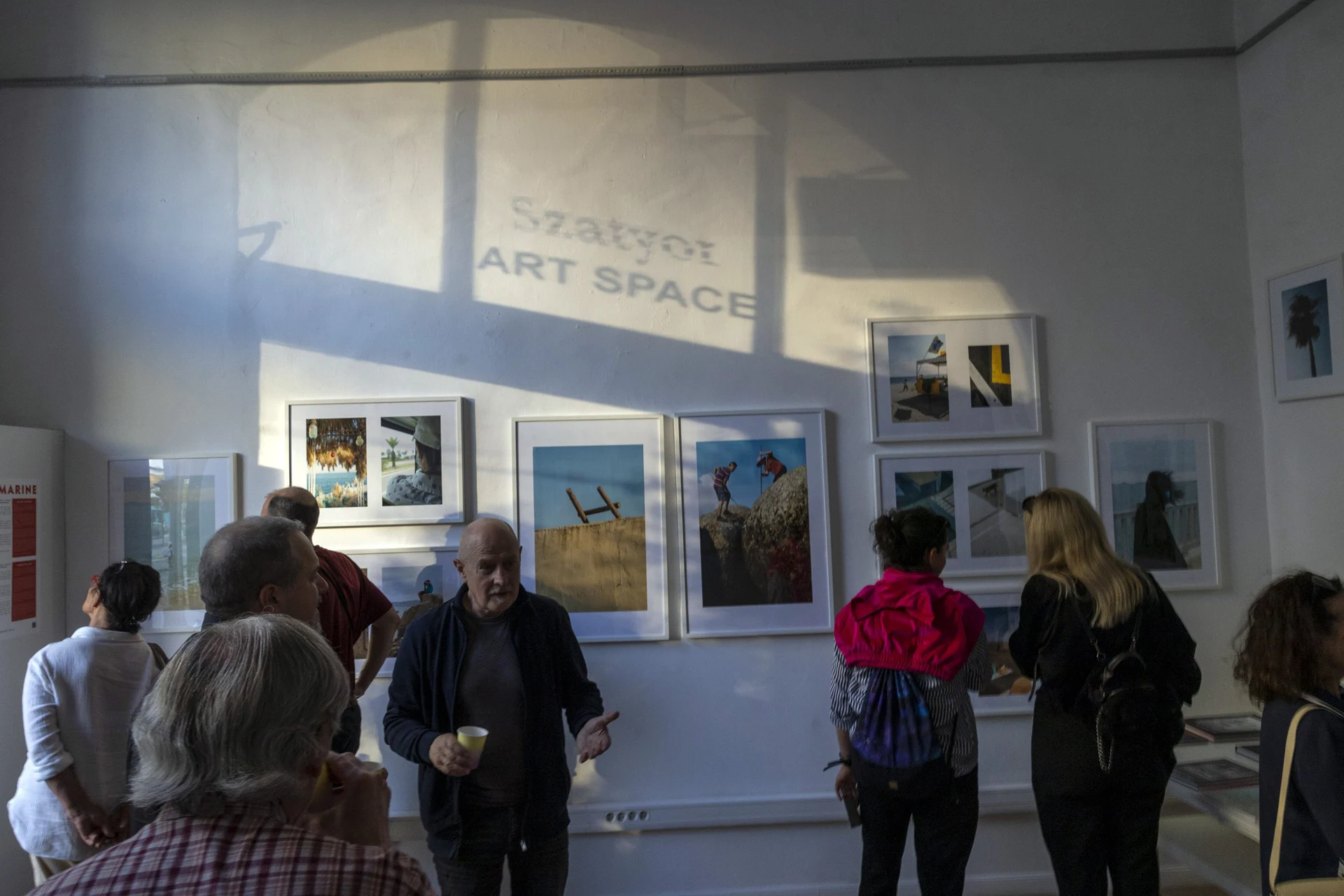
RANDOM's space is intimate. White walls, natural light from a large street window, a compressed but open layout that allows the work to breathe without overwhelming the viewer. We hung 29 frames containing 43 photographs. This density could feel crowded, but it's an experiment to build a cumulative atmosphere, an immersive field of colour.
The curatorial decision that defined the show was the use of diptychs. Fourteen of the frames held paired images, two photographs in conversation within a single frame. The diptych format creates an internal dialogue, a visual rhyme, sometimes a tension. The eye moves between the two halves, finding connections or contrasts.
We worked with multiple scales: seven large pieces at 61cm × 91cm that anchored each of the walls, giving weight and presence. Then fourteen diptychs at 50cm × 70cm, creating a middle register. Three vertical pieces of the same size, and five smaller verticals at 40cm × 50cm. The variation in scale created rhythm: larger images acting as visual punctuation, smaller ones clustering together like phrases in a sentence. Single frames alternated with diptychs, creating visual variety that kept the viewer engaged without overwhelming.
What mattered was how colour moved across the walls. Against the white gallery walls, lit by spring light resurrecting from a deep winter freeze, the saturation became almost physical. The colours projected themselves into the room.
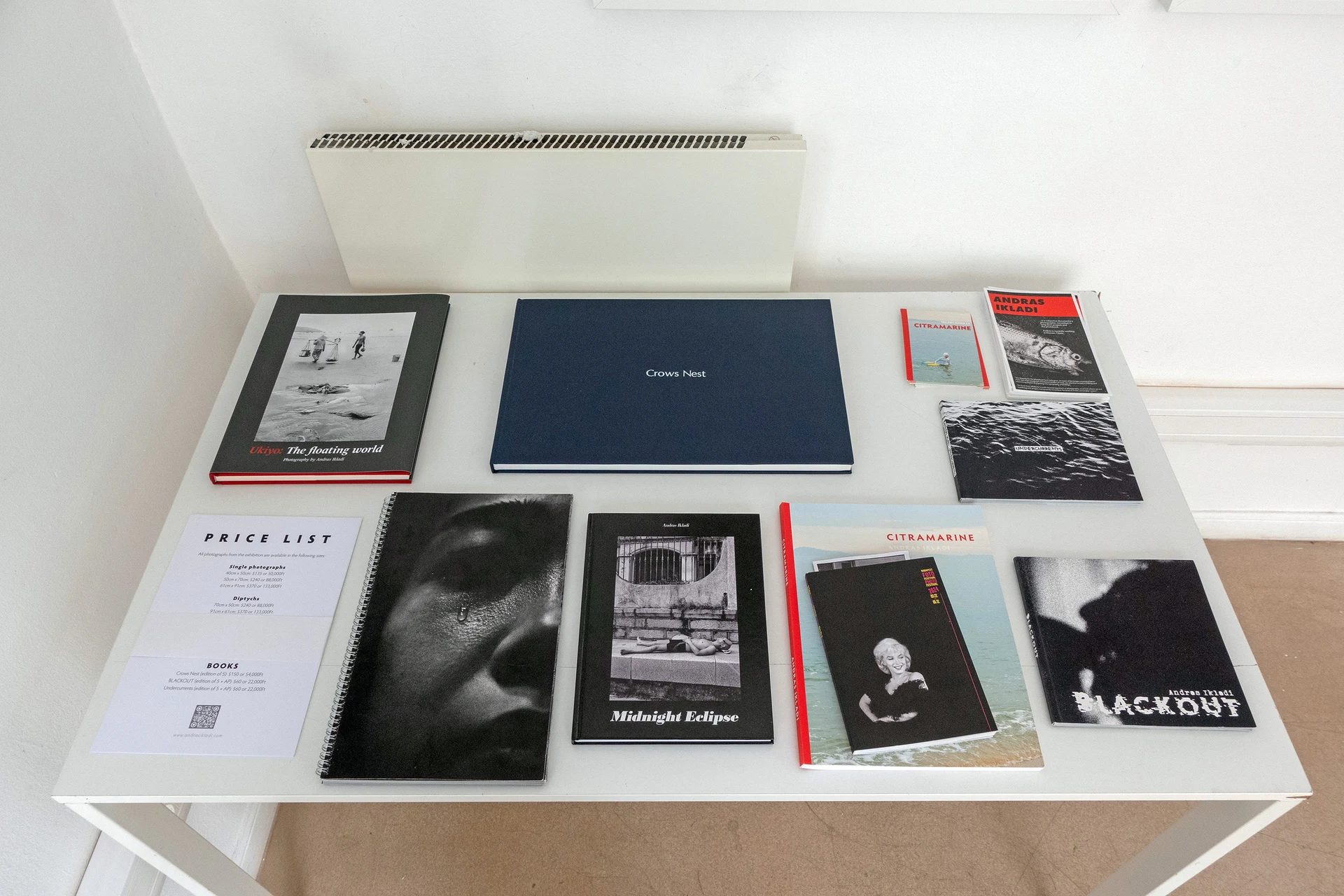
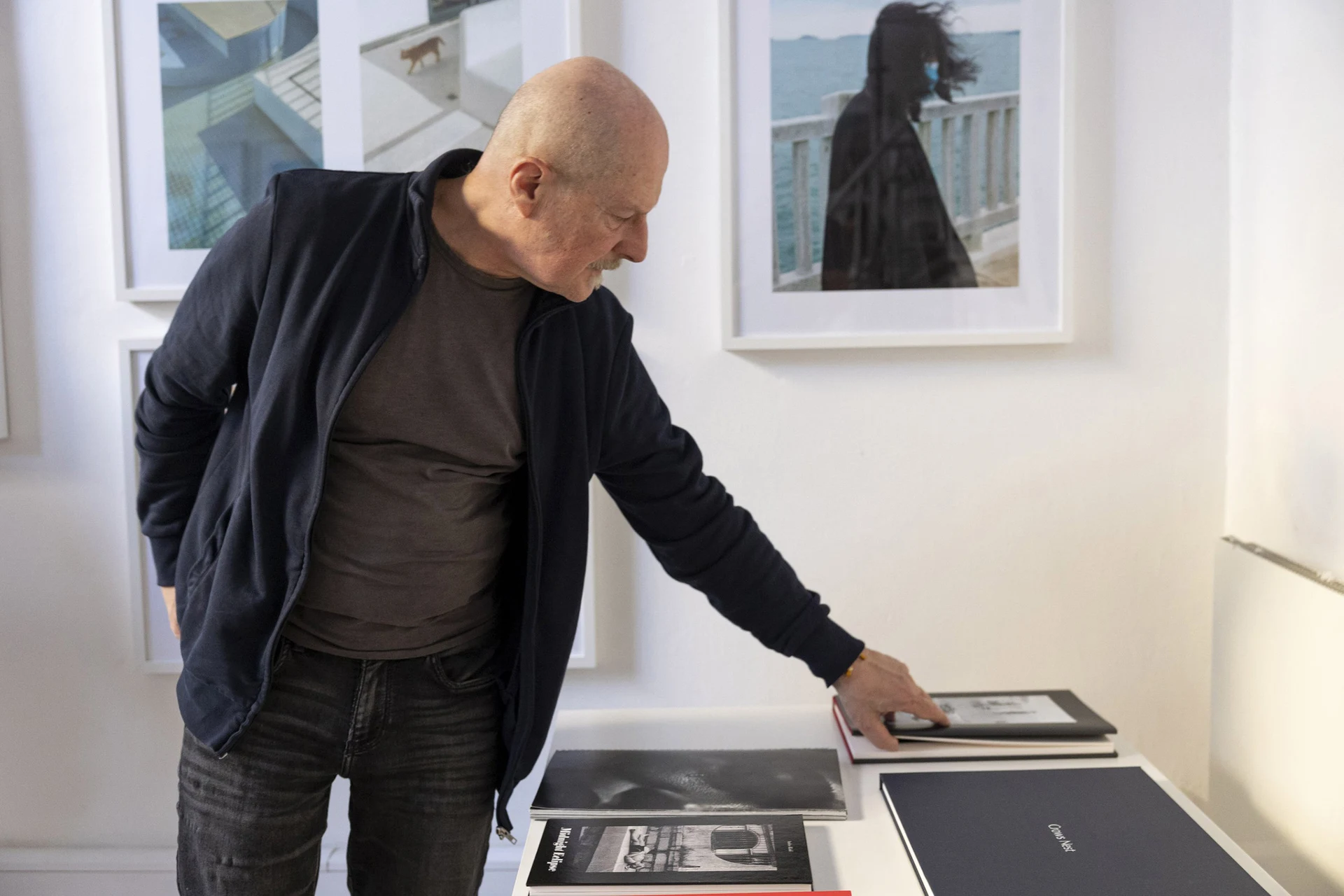
A table held the photobook dummy alongside seven other dummies from my ongoing work, creating a kind of meta-context. The exhibition is a complete ecosystem rather than just framed prints on walls.
The Book
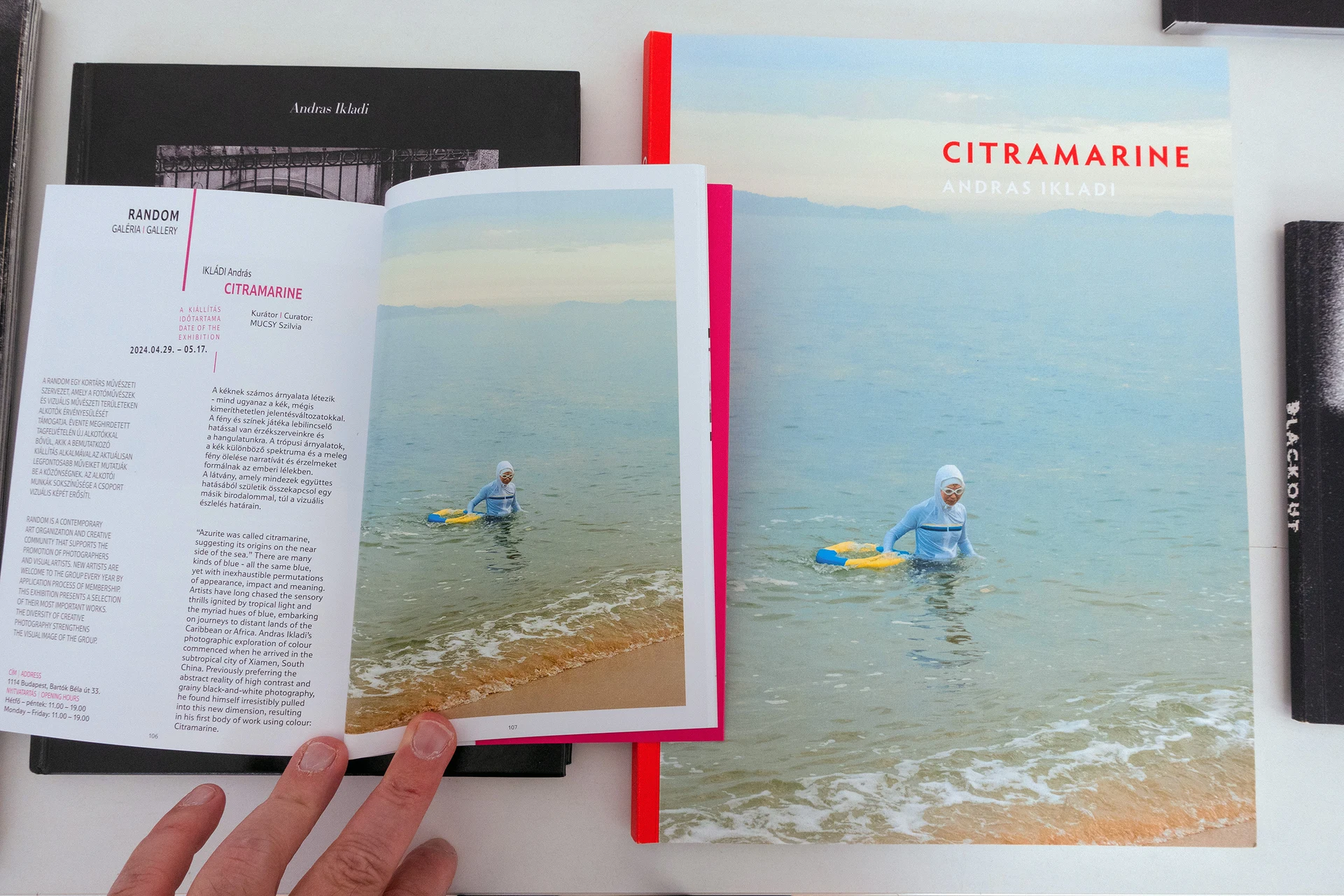
Citramarine exists as a photobook: 9.5" × 12.7", perfect bound softcover, 104 pages, 87 photographs. The dummy was completed not long before the exhibition.
There's a pleasure in the photobook that the gallery can't quite replicate: the ability to control pacing, to turn pages, to experience the work as a private, intimate encounter. But the gallery does something the book cannot: it makes the work collective. People move through the space together. They stand in front of images at different distances. They talk, or don't talk. The work becomes public in a way that changes its meaning.
Budapest
Showing Citramarine in Budapest meant bringing subtropical light into Central European spring. There was something personally meaningful about returning to Hungary with this work, with the exhibition acting as a first introduction to a Hungarian audience. Not as a homecoming to where I started, but as a return carrying what I've found along the way.
Afterword
I'm grateful to RANDOM Gallery and to Szilvia Mucsy for giving this work a home in Budapest. I'm grateful to Miklós Gulyás for his generous words at the opening, to Péter Nagy for his dedication to hanging the exhibition. And I'm grateful to everyone who came through the door during those weeks in the spring of 2024.