This article was originally written for Ephemere Tokyo’s Photo Journal Vol. #2.
The gap as meaning
For years, Ikladi’s photographic practice has been reliant on diptychs, trusting the gap between two images to do what neither image could alone. Moving between his own diptychs, Gibson’s Black Trilogy, and Daguerre’s first photographic triptych, this essay is his reckoning with what is gained and what is lost when a third term enters that space.
Ephemere’s inaugural volume explored the concept of duality, engaging with the foundations of perception. In both the history of art and the contemporary photobook, the diptych has served as a mechanism for catching and holding the ephemeral in suspension.
As the journal embraces Triplicities: The Magic of Three, I’m urged to reexamine the logic of my sequencing. The introduction of a third element fundamentally changes the nature of the inquiry. This essay argues that while the diptych activates ephemerality through tension, the triptych risks stabilising that tension, while also enabling access to temporality and recurrence.
For years, my photographic practice has resided not strictly in the images themselves, but in the space between them. I have worked in diptychs, in the photobook format and on the wall, often paired, occasionally mounted in a single frame. The interval between two images is not a void, but a charged territory in the visual field, the place where content that neither image could contain alone lives, resulting in unsolvable, plural readings, resisting the most stable interpretation. To introduce a third element is to put this at risk, which asks for understanding first what the interval between two images actually does.
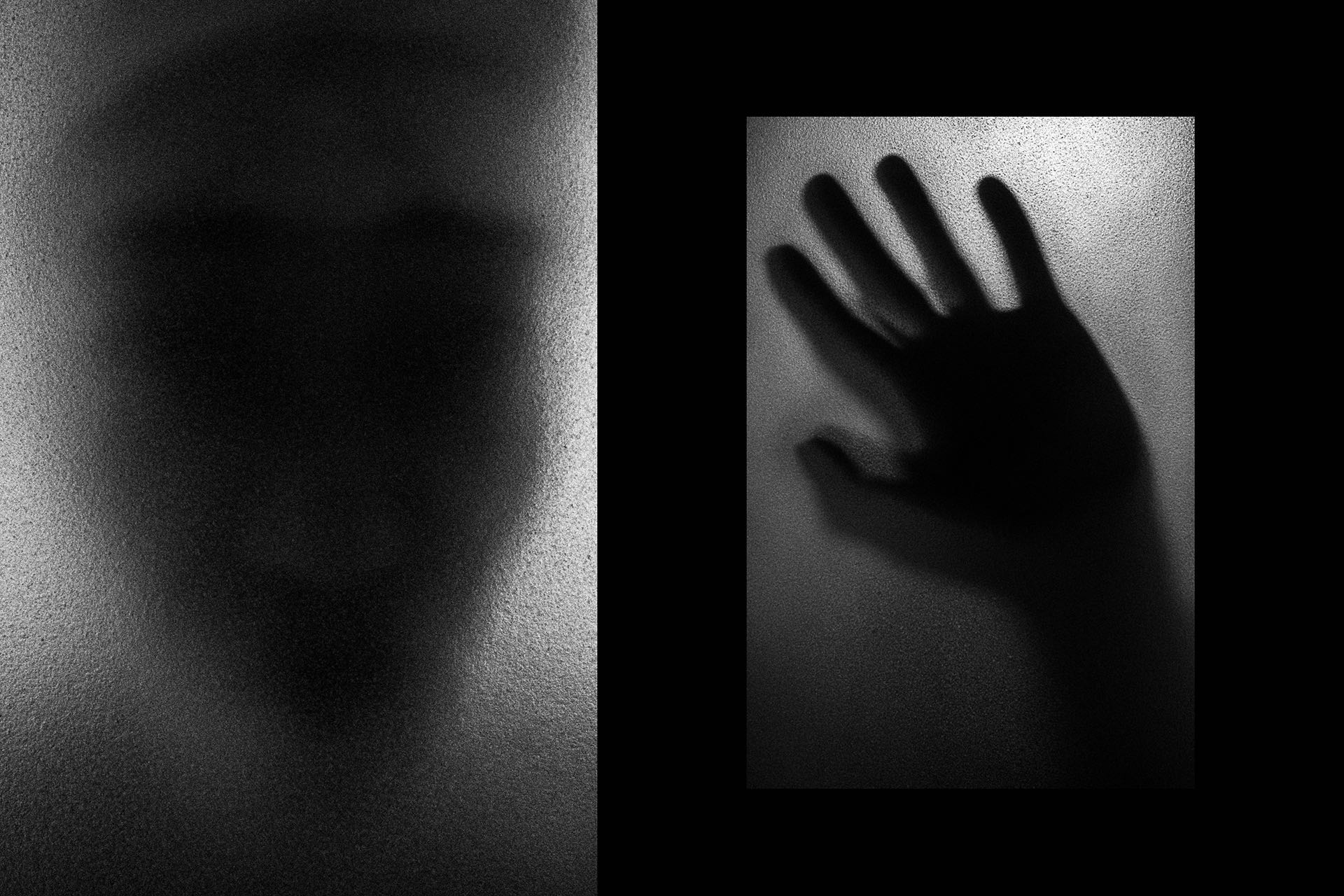
The diptych is a machine of tension, generating meaning through sharp contrasts. Placing two realities into proximity compels the mind to resolve their difference and the physical void between the images. The mind, governed by Gestalt’s Law of Prägnanz (closure), rushes to build a bridge between the two panels.¹ The viewer is presented with a visual thesis and antithesis, and instinctively seeks to reconcile them in a synthesis. In this transaction, the spectator ceases to be a passive observer and becomes an active co-creator.
Eric Dean Wilson has described this dynamic as the viewer’s mind becoming the “third, middle, focal panel,” bridging what is withheld.² Harold Evans, editor of the Sunday Times, argued in Pictures on a Page that the juxtaposition of two images in sequence creates a reading that neither photograph could produce independently.³
The Soviet film theorists had demonstrated this two decades earlier in the famous montage experiments: intercut a neutral face with a bowl of soup, and the audience reads hunger; with a coffin, they read grief. The emotion arose in the cut, between the shots, in the spectator’s mind.⁴
Ralph Gibson’s three volumes of The Black Trilogy (The Somnambulist, Déjà-Vu, and Days at Sea), published through the 1970s, are a compelling argument for Mallarmé’s idea of “the complete book.” The French critic Gilles Mora notes that Gibson, seeking a visual language entirely his own, abandoned the pressures of documentary photography (and his Magnum membership) in favour of a “surrealism of perception,” that renders the ordinary irreducibly strange through adjacency and sequencing alone.⁵
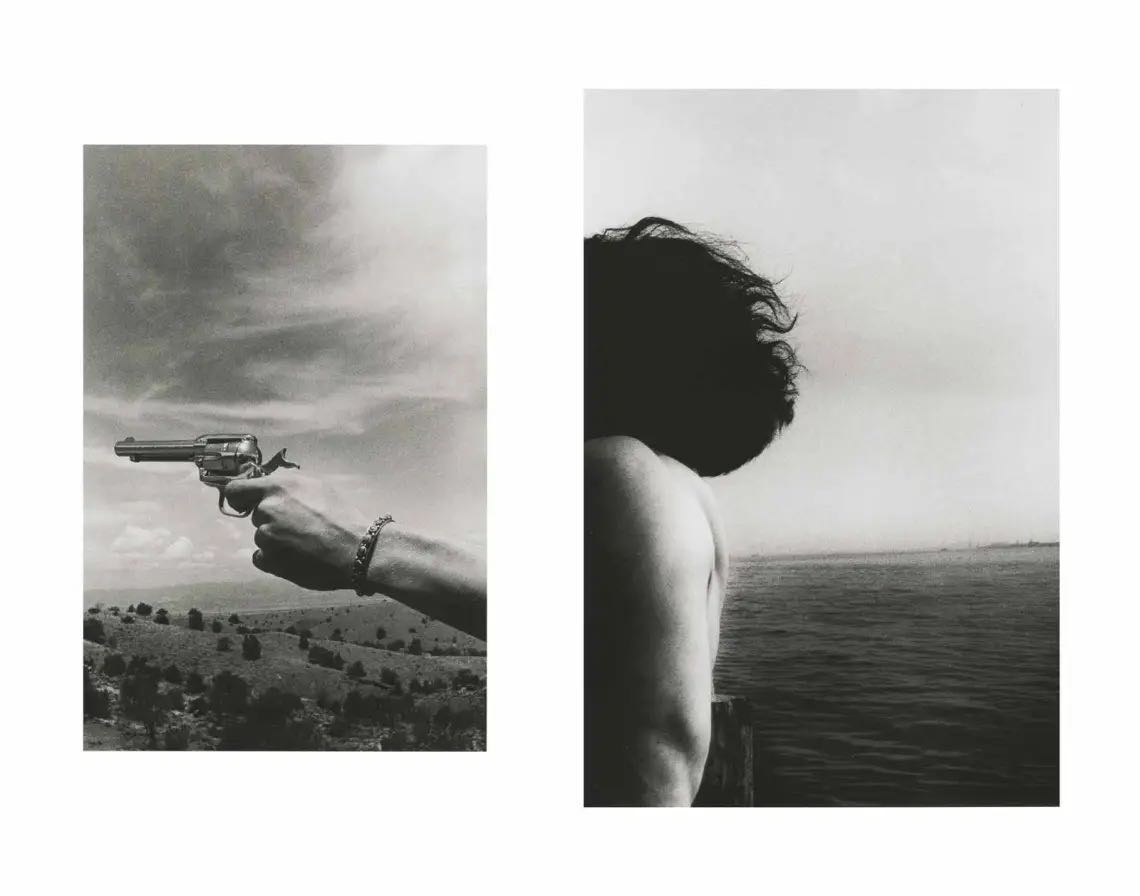
Gibson achieves this through syntax, in the vein of Umberto Eco’s “open work,” refusing to hand the viewer a tidy narrative.⁶ A celebrated spread in Déjà-Vu features a hand holding a revolver opposite the back of a man. The locations are separated by thousands of miles, yet their contents collide violently. Mora identifies this as an asyndeton, a rhetorical figure where a conjunction is deliberately omitted. In the diptych, the viewer is the missing conjunction.
The third volume completes the triadic sequence. The trilogy opens with the artist’s hand holding a pen, paired by an introductory text on the recto, and closes, three books later, with a reader facing a book held against the sea. The dyad of writing and reading frames the project, while the vast, surreal middle is where the transformation occurs. The mastery that Gibson achieved on the elementary level with the two-page spread evolved on the macro-level into a triptych of monographs.
The question I am bringing to my practice is this: what changes when the space I have long treasured between two images becomes a physical middle panel?
The third term is transformative. The Soviet montage theorists understood the difference between a cut and a sequence. Two images collide, but three images move and produce something more sustained: a trajectory, a sense of having been somewhere and arrived somewhere else.
The diptych always feels like a question. Introducing the third panel destabilises the dyad and attempts an answer. But that answer takes more than one form.
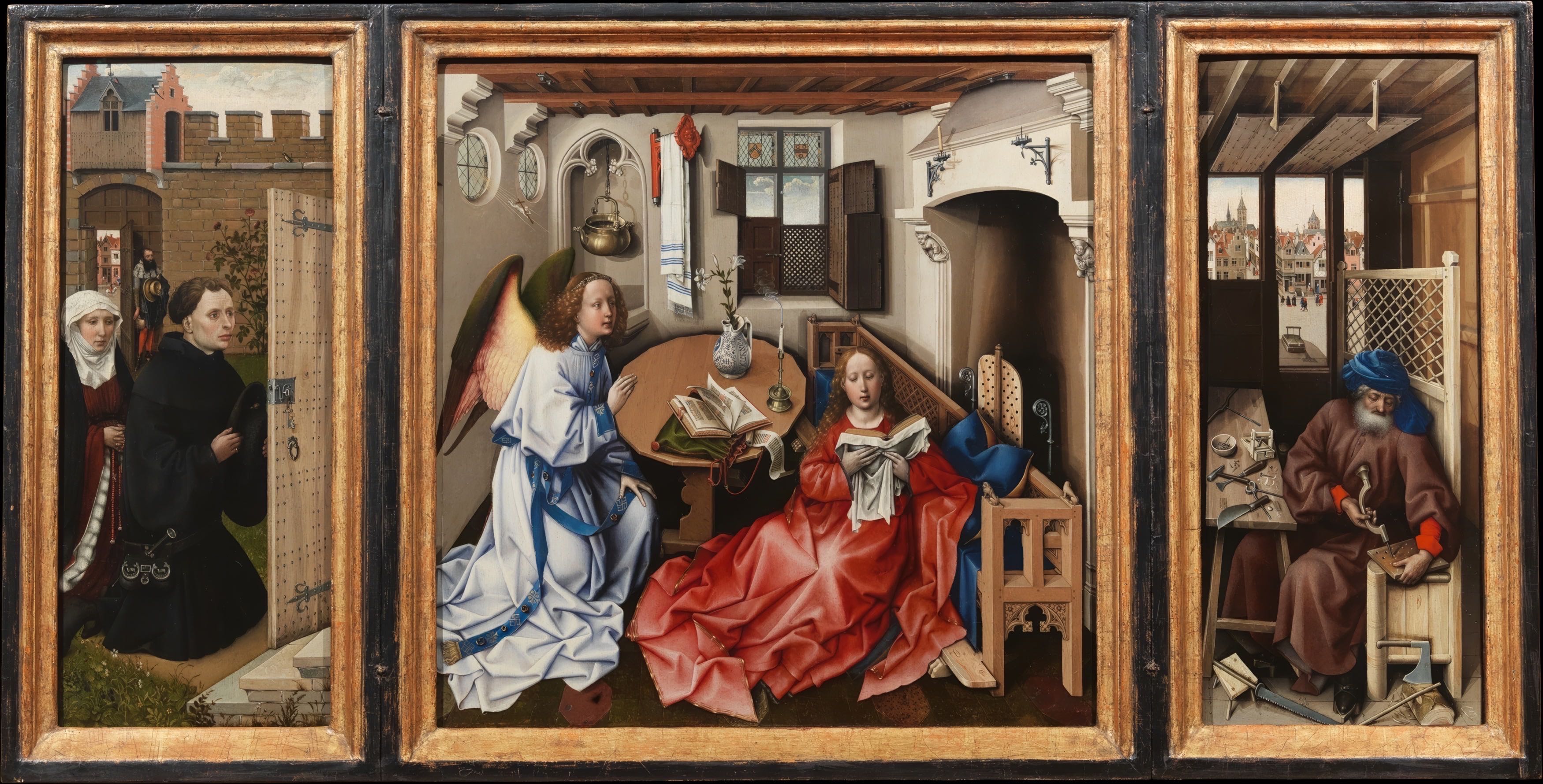
It is no coincidence that the triptych’s most enduring historical form was devotional. Certain transformations were understood, before photography, to require three panels to be witnessed. In the altarpiece tradition, the centre panel was always the event itself, flanked by wings that provided context, prophecy, and consequence. What makes Robert Campin’s Mérode Altarpiece (c. 1427-32) so remarkable is that opening the wings operated as a phenomenological event as much as a devotional one.⁷ Once open, the three panels occupy a continuous space. In the left wing, the donors are peering through an open door into the room where the Annunciation is already underway. In the right wing, Joseph works in his carpenter’s workshop, unaware of the miracle next door. The centre holds the moment of the Angel’s arrival, the candle just extinguished, the Virgin caught between the earthly and the sacred. The centre acts as the anchor and the wings as the liturgical frame.
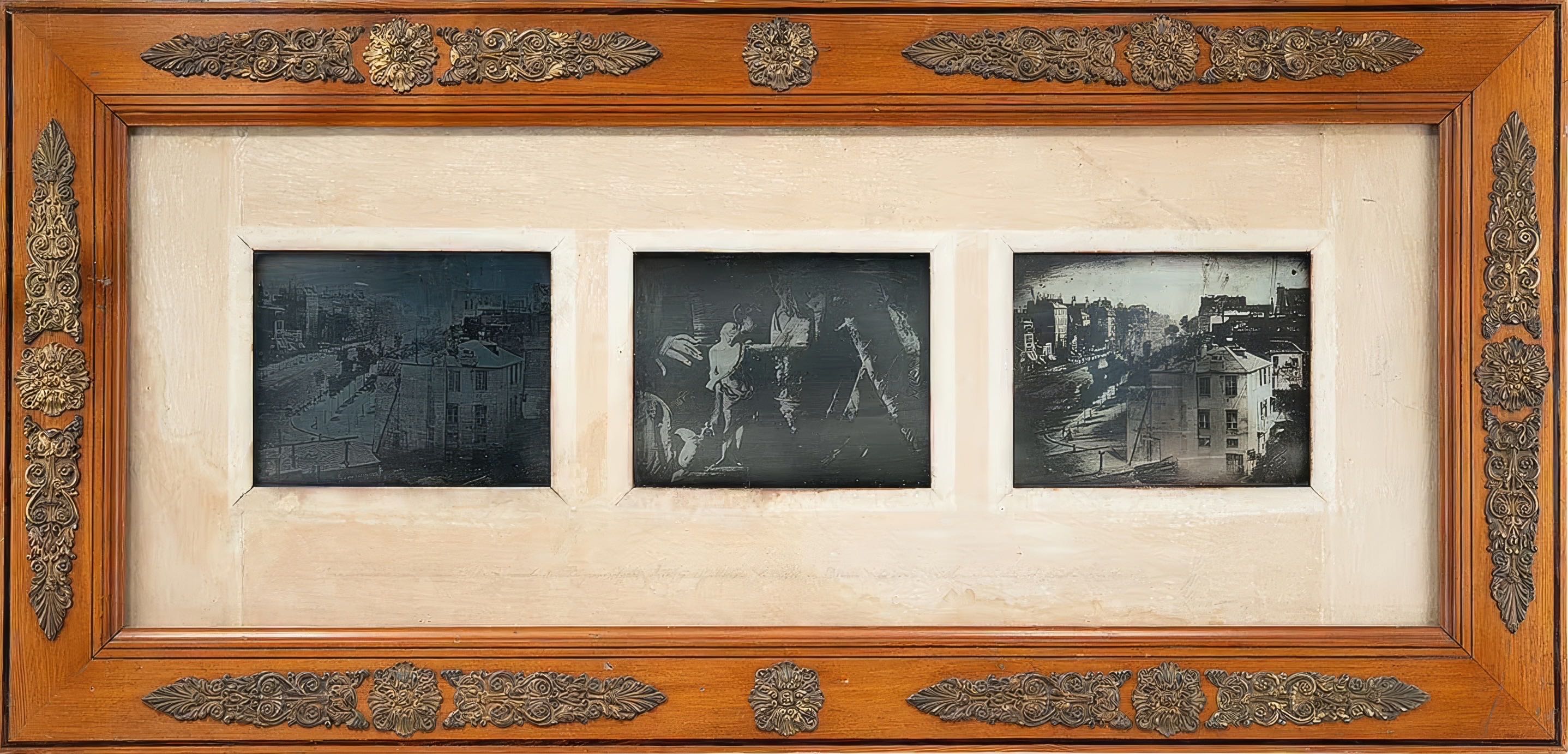
In 1839, Daguerre presented King Ludwig I of Bavaria with a triptych of daguerreotypes. Two of the panels are of the same Parisian scene, shot from the same vantage point at eight in the morning and again at noon, with a still life of plaster statues anchored between them.⁸ The gap between the two street views is not dramatic; it is simply what light does to stone over four hours. But Daguerre did not leave this gap to speak for itself. He annotated the two views directly on the passe-partout as huit heures du matin and midi, urging us to look carefully. The lavishly decorated, meter-wide frame was in effect a reading apparatus as much as a mount.
A single image could not hold this tension. Two might have established an opposition, a before and after, which the eye would resolve too quickly into contrast. But three, with the still life at the centre providing a timeless axis, transformed the exercise into something else: a meditation on ephemerality, structured as an argument. Daguerre was inventing a technique of beholding, requesting his audience a sustained investigation. What this triptych demonstrated was that photography’s miracle was not its fidelity, but its inexhaustible hold on the ephemeral.⁹
By using the triptych, what is gained is access to temporal duration, and ephemerality understood as a cycle. What is at risk is the productive instability that makes the diptych so alive.
Richard D. Zakia describes the decisive gap as a riddle, by quoting Stéphane Mallarmé: “to define is to kill; to suggest is to create.“¹⁰ ¹¹ The triptych, by providing a resolution, risks making too explicit what the diptych leaves beautifully open. The viewer’s mind, no longer required to be the invisible middle panel, may feel less deeply implicated.
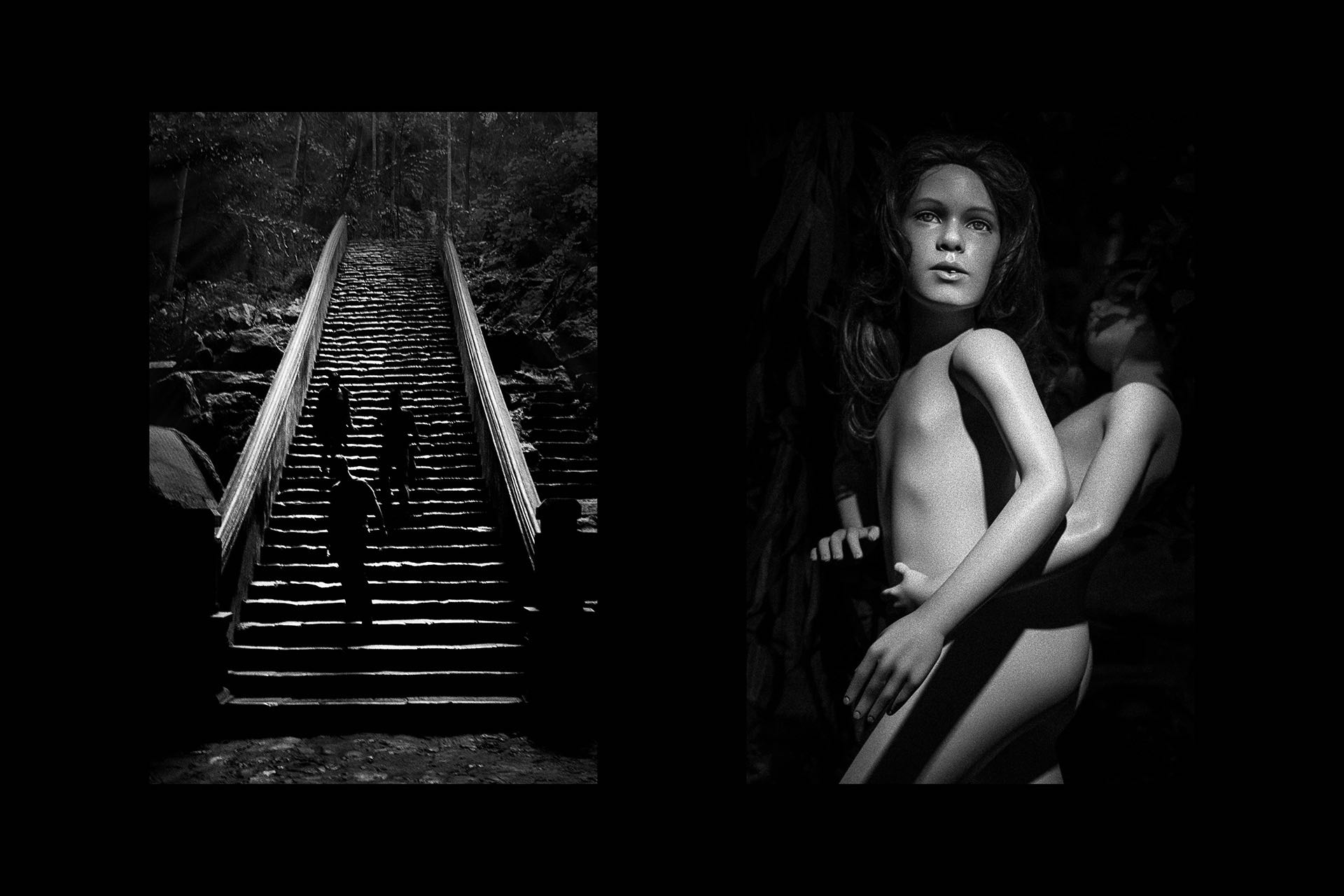
This is why, in exploring “The Magic of Three,” I’m reluctant to surrender what the diptych has given me. But if I were to commit to the triptych, it would not be as a closed narrative. The central panel does not need to be anchored. It has to function as a disturbance, a third image that refuses to settle what the first two began, keeping all three in motion. If the ephemeral lives anywhere, it is not in the moment of resolution but in the oscillation just before it. And that is the only place of interest for my work.
References
- Zakia, Richard D. Perception and Imaging: Photography—A Way of Seeing. Burlington: Focal Press, 2013.
- Wilson, Eric Dean. “Regarding Diptychs.” The American Reader, 2014. theamericanreader.com/regarding-diptychs.
- Evans, Harold. Pictures on a Page: Photo-journalism, Graphics and Picture Editing. London: Heinemann, 1978.
- Kuleshov, Lev. Kuleshov on Film: Writings by Lev Kuleshov. Translated by Ronald Levaco. Berkeley: University of California Press, 1974.
- Mora, Gilles. “‘The Black Trilogy’ by Ralph Gibson: What an Impossible Desire!” In Ralph Gibson: Black Trilogy. Austin: University of Texas Press, 2017.
- Eco, Umberto. The Open Work. Translated by Anna Cancogni. Cambridge, MA: Harvard University Press, 1989.
- Campin, Robert. Mérode Altarpiece. c. 1427-32. Oil on panel. The Metropolitan Museum of Art, New York.
- Daguerre, Louis-Jacques-Mandé. Munich Triptych. 1839. Three daguerreotypes with painted frame. Bayerisches Nationalmuseum, Munich.
- Siegel, Steffen, ed. First Exposures: Writings from the Beginning of Photography. Los Angeles: Getty Publications, 2017.
- Zakia, Richard D. Perception and Imaging. See entry 1.
- Mallarmé, Stéphane. “To define is to kill. To suggest is to create.” Paraphrase from the 1891 interview with Jules Huret, “Enquête sur l’évolution littéraire.”