The Floating World @ Place M Gallery
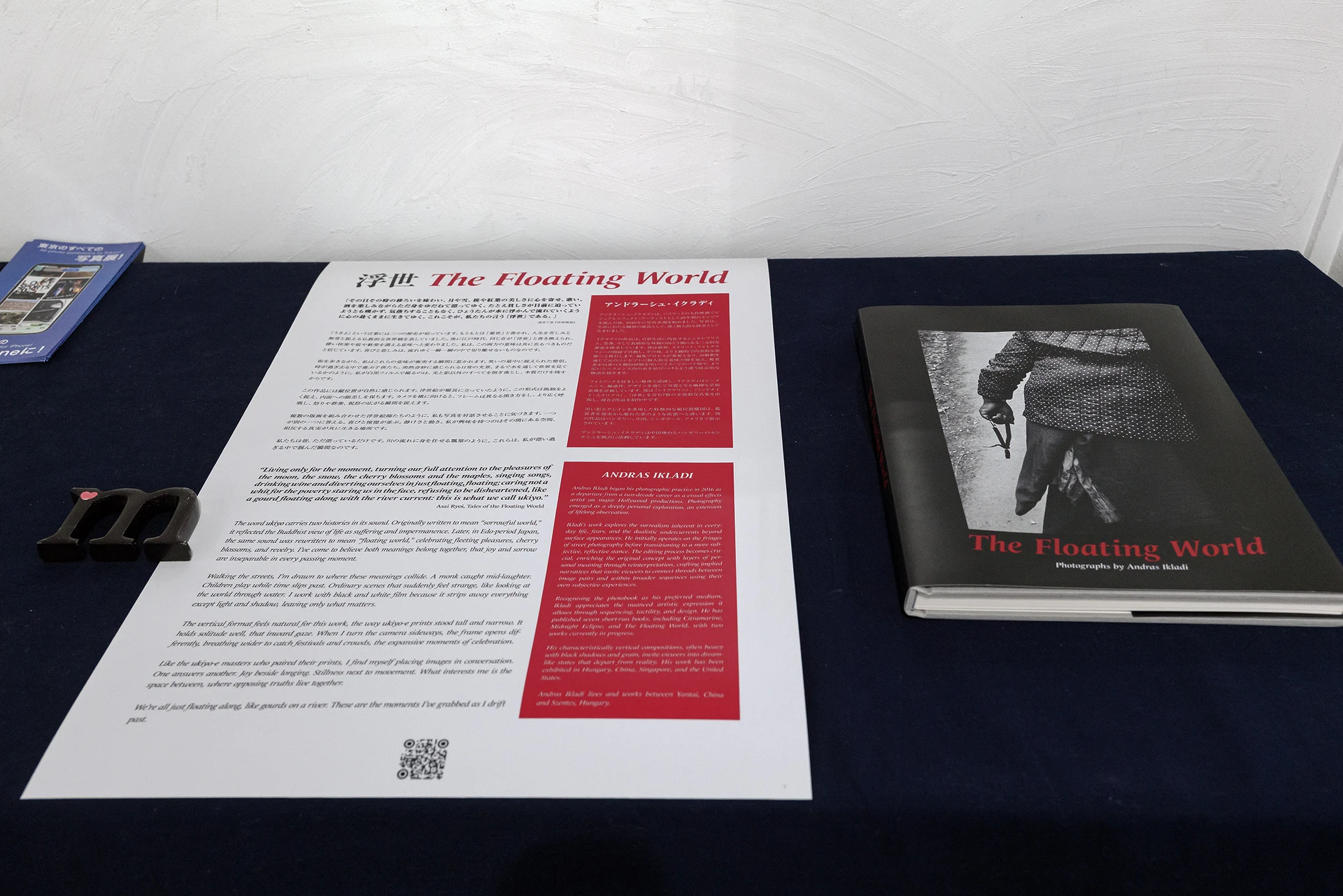
“Living only for the moment, turning our full attention to the pleasures of the moon, the snow, the cherry blossoms and the maples, singing songs, drinking wine and diverting ourselves in just floating, floating; caring not a whit for the poverty staring us in the face, refusing to be disheartened, like a gourd floating along with the river current: this is what we call ukiyo.” — Asai Ryoi, Tales of the Floating World
The word ukiyo carries two histories in its sound. Originally written to mean “sorrowful world,” it reflected the Buddhist view of life as suffering and impermanence. Later, in Edo-period Japan, the same sound was rewritten to mean “floating world,” celebrating fleeting pleasures, cherry blossoms, and revelry. I’ve come to believe both meanings belong together, that joy and sorrow are inseparable in every passing moment.
Walking the streets, I’m drawn to where these meanings collide. A monk caught mid-laughter. Children play while time slips past. Ordinary scenes that suddenly feel strange, like looking at the world through water. I work with black and white film because it strips away everything except light and shadow, leaving only what matters.
The vertical format feels natural for this work, the way ukiyo-e prints stood tall and narrow. It holds solitude well, that inward gaze. When I turn the camera sideways, the frame opens differently, breathing wider to catch festivals and crowds, the expansive moments of celebration.
Like the ukiyo-e masters who paired their prints, I find myself placing images in conversation. One answers another. Joy beside longing. Stillness next to movement. What interests me is the space between, where opposing truths live together.
We’re all just floating along, like gourds on a river. These are the moments I’ve grabbed as I drift past.
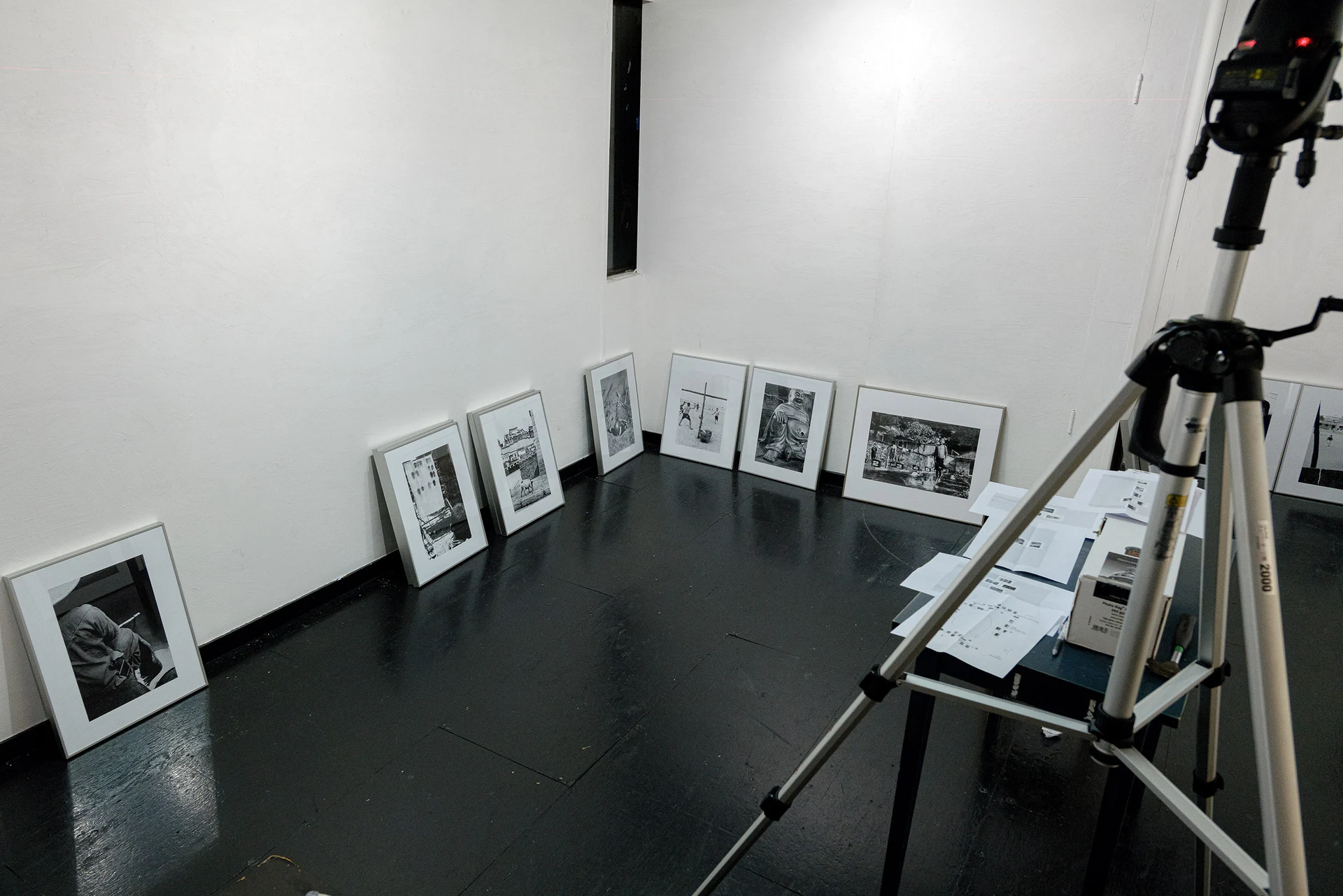
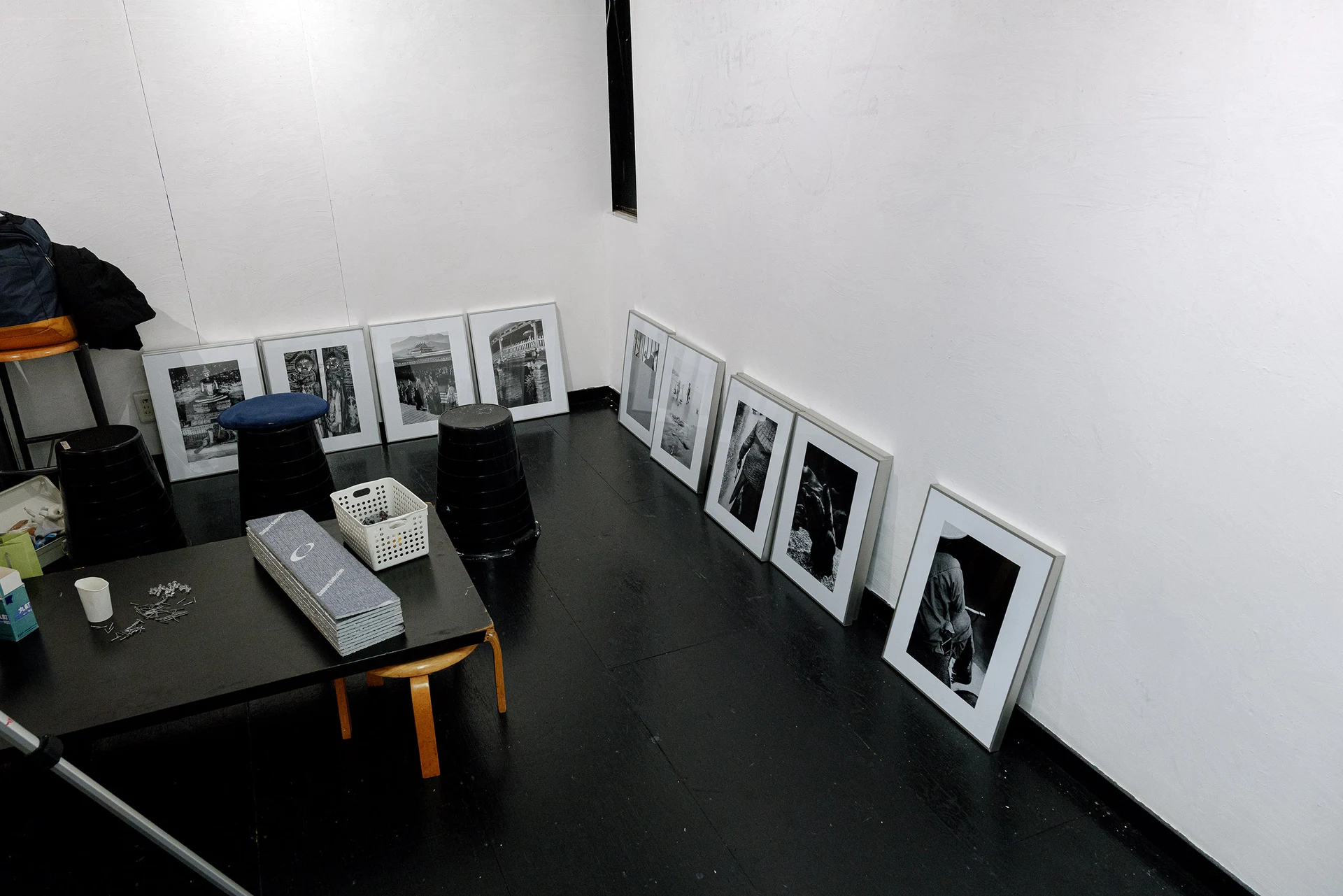
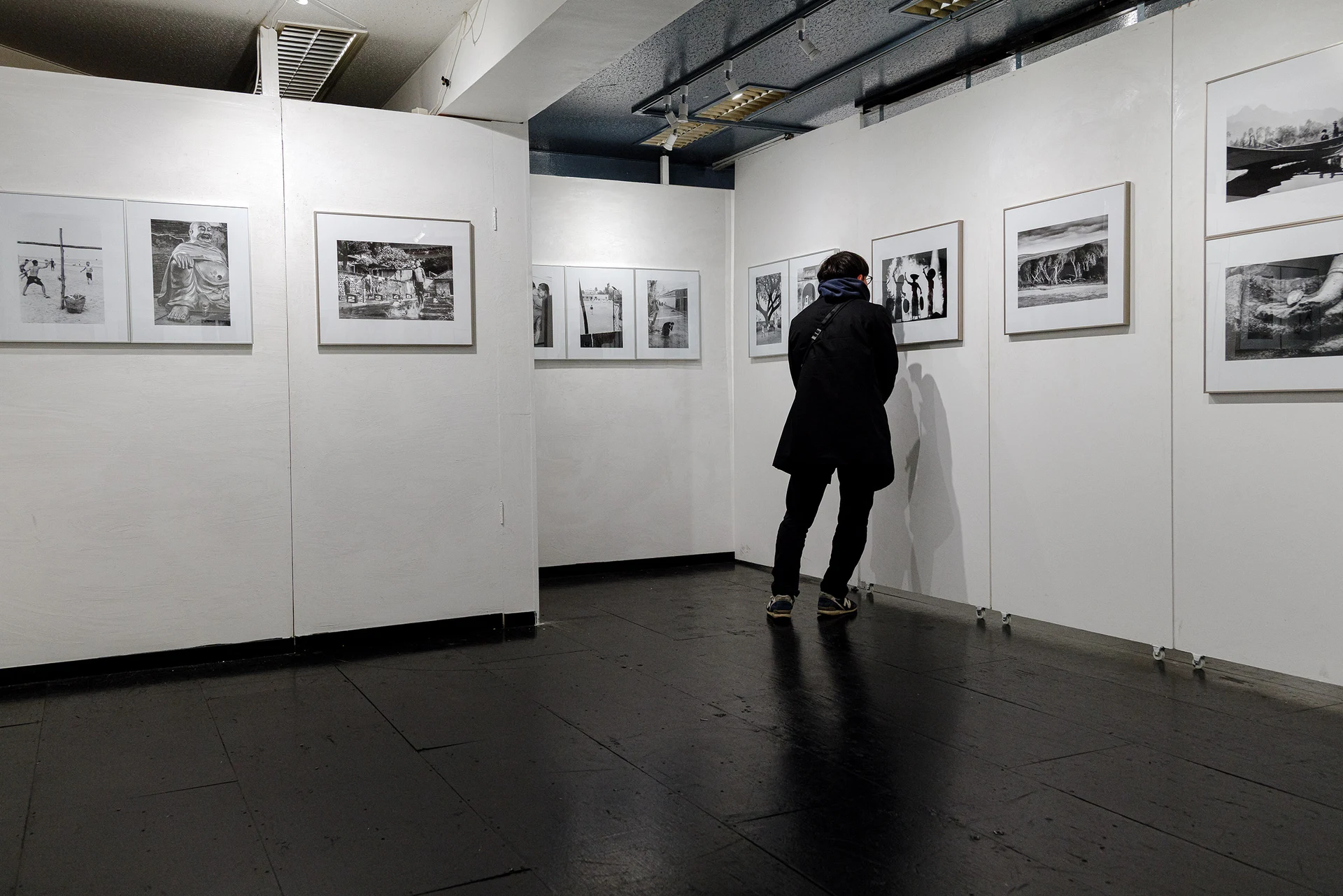
Installation views
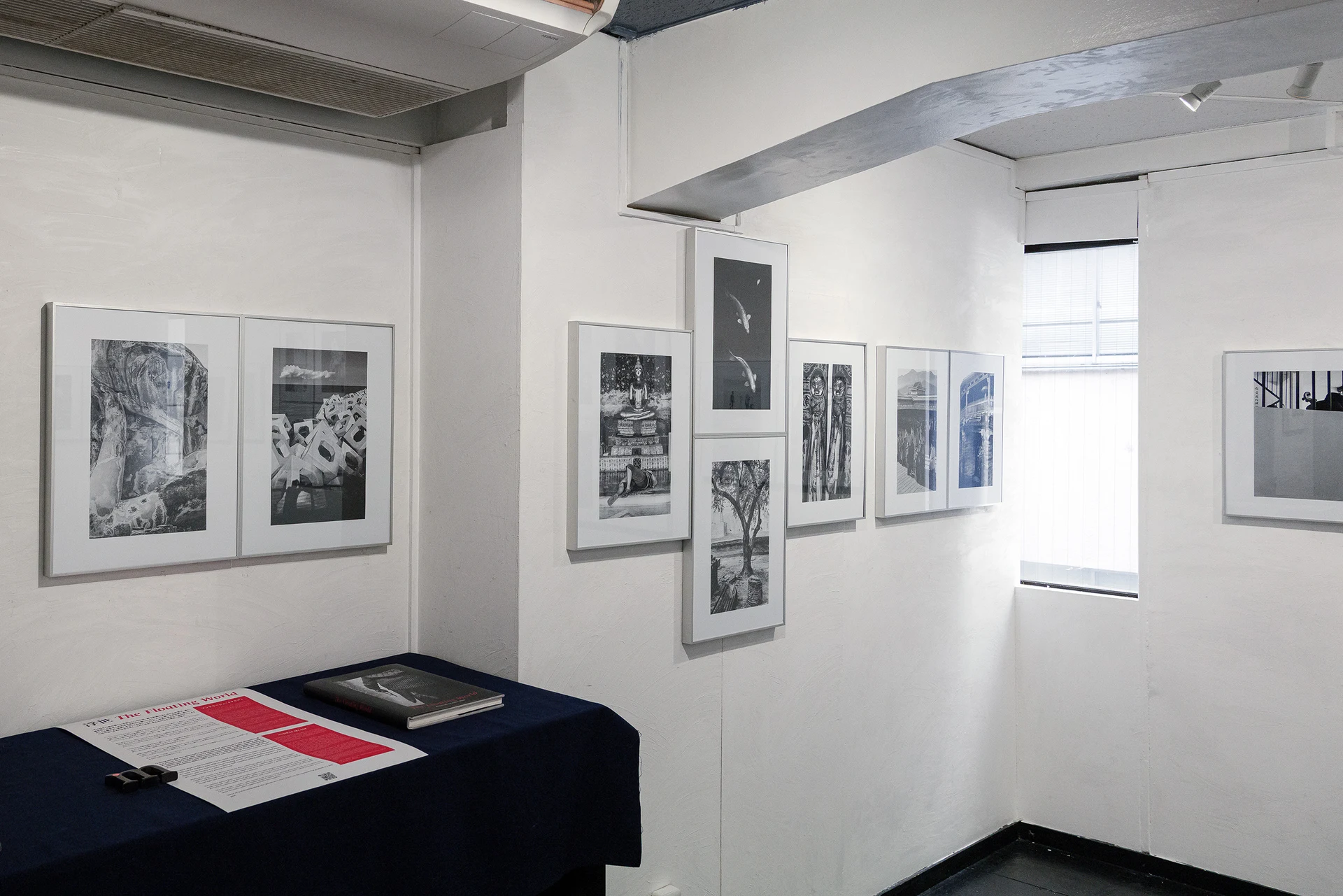
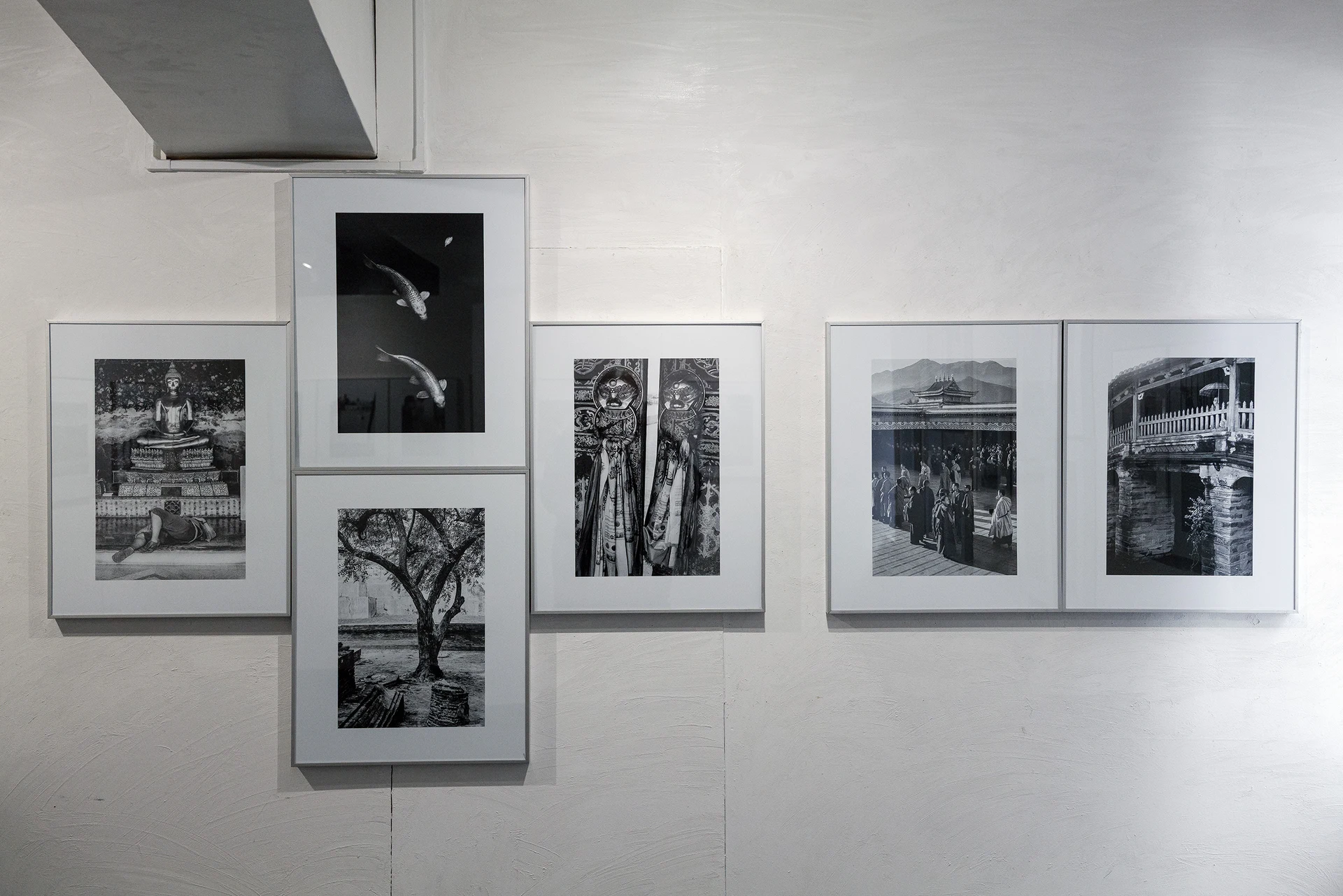
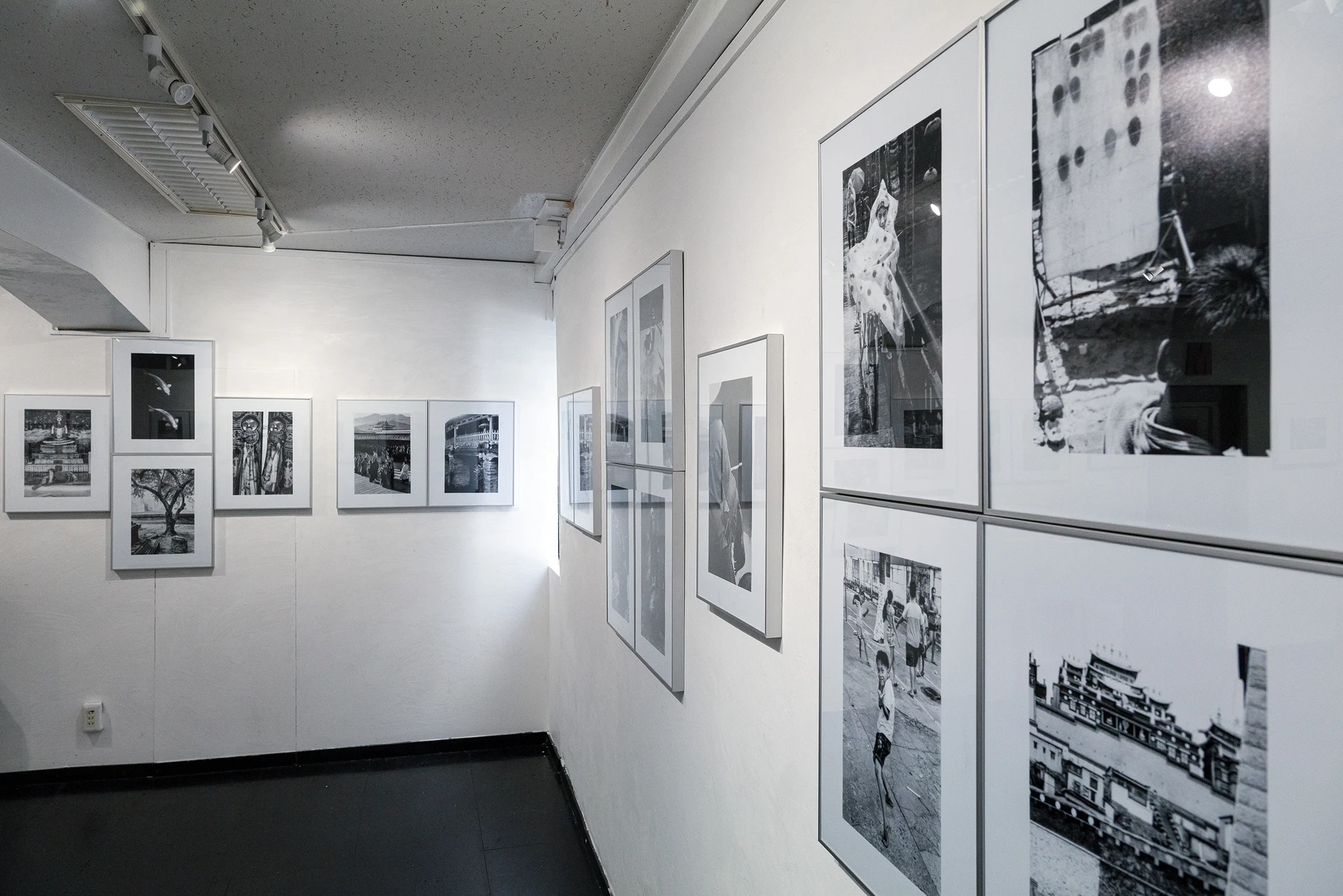
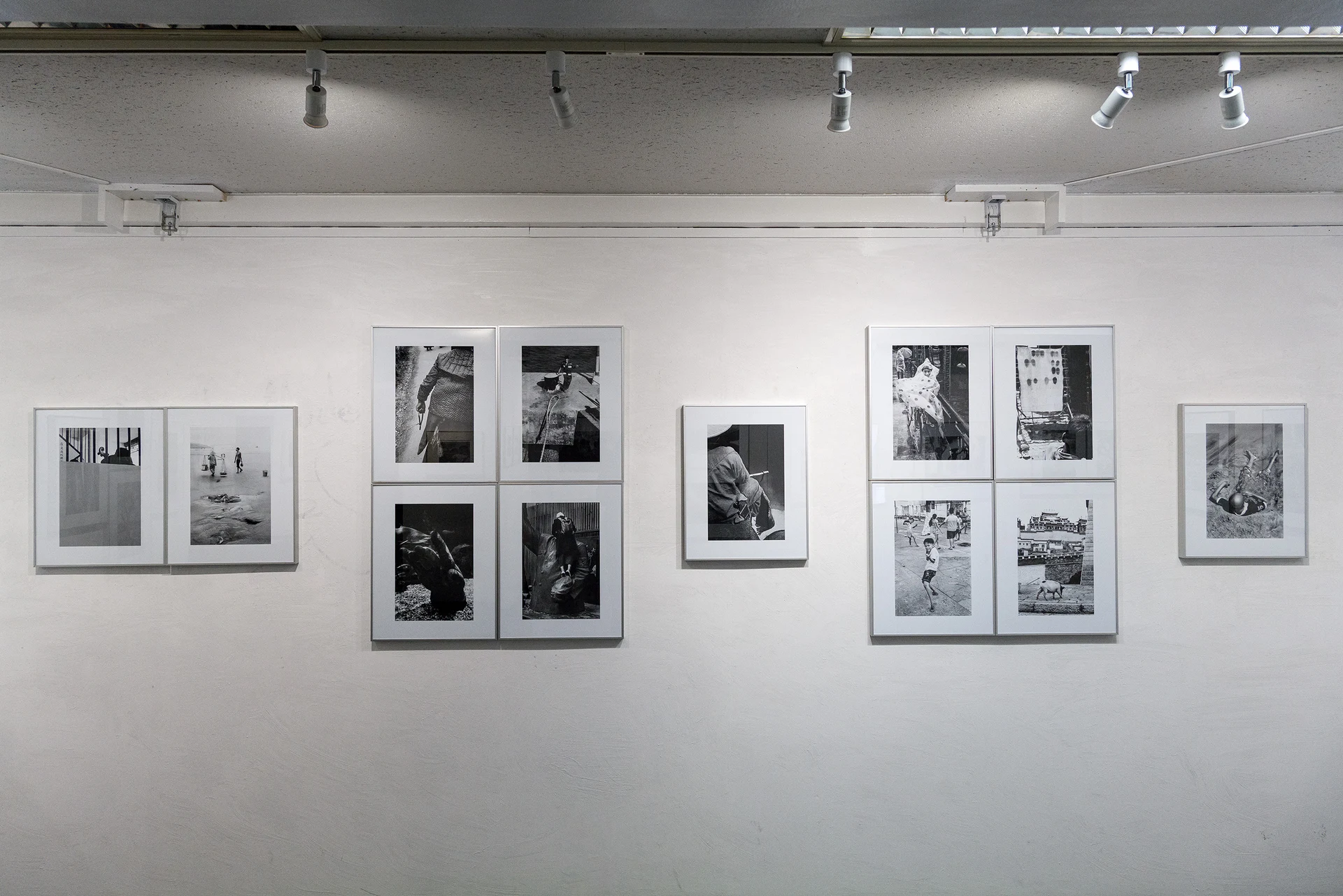
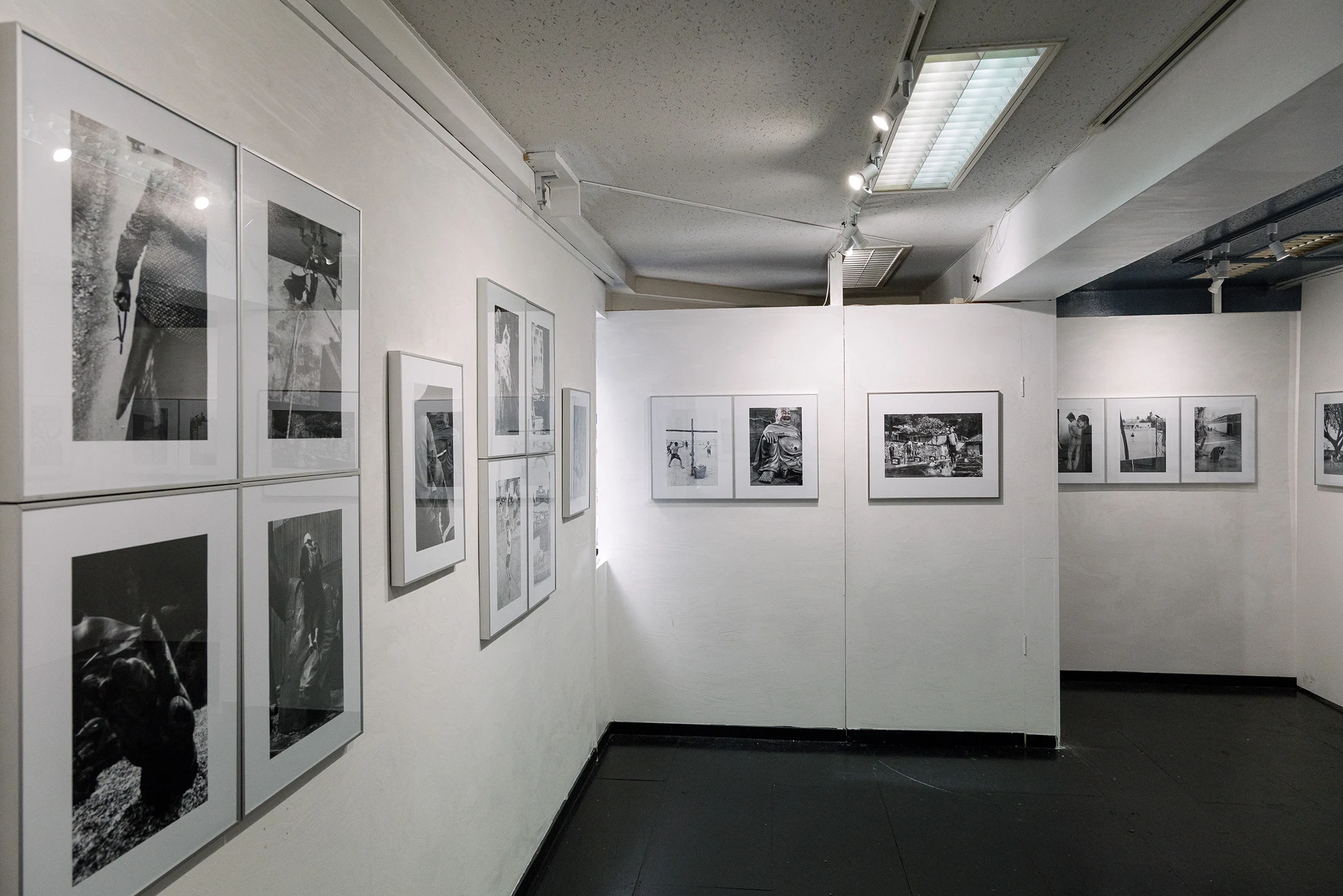
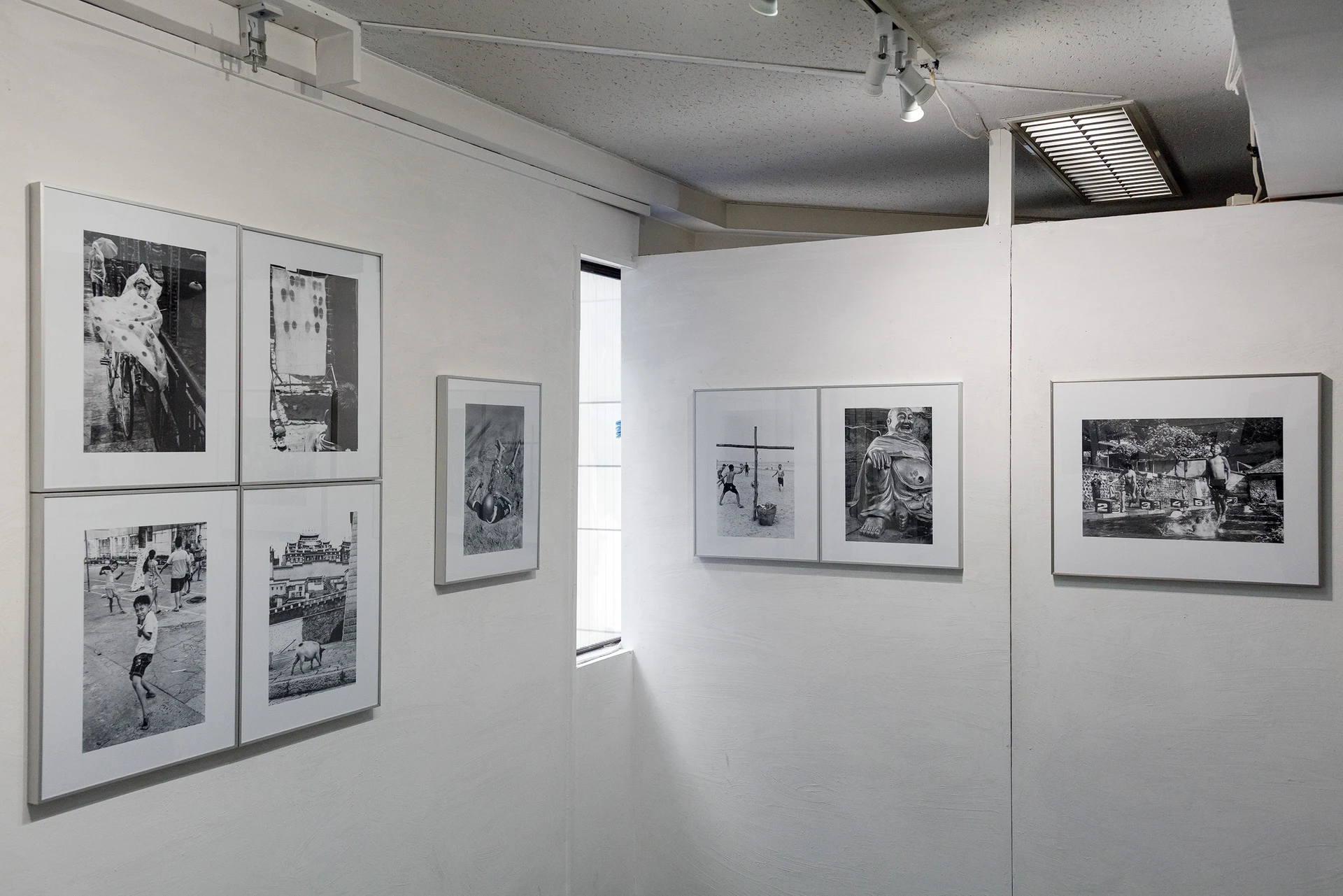
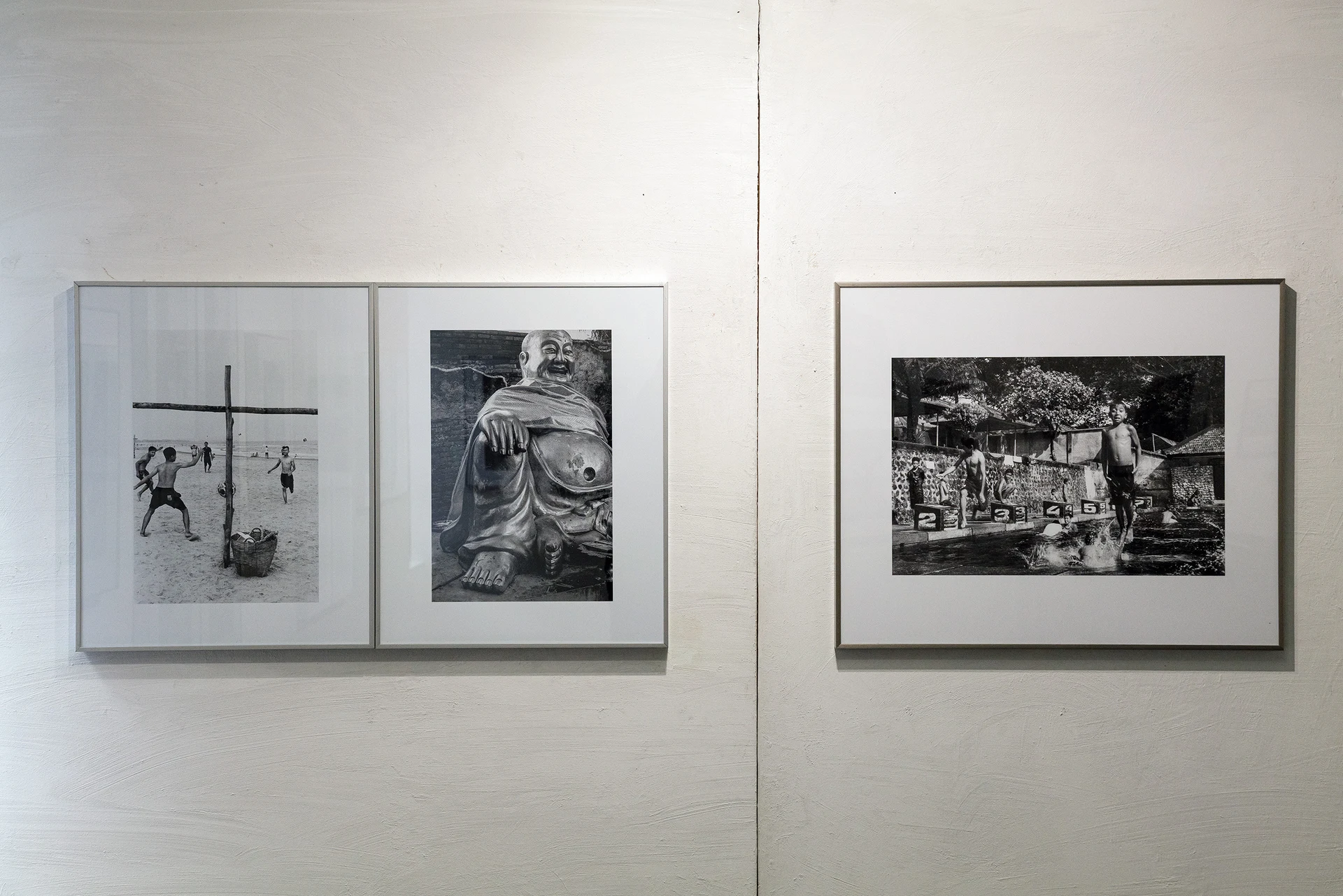
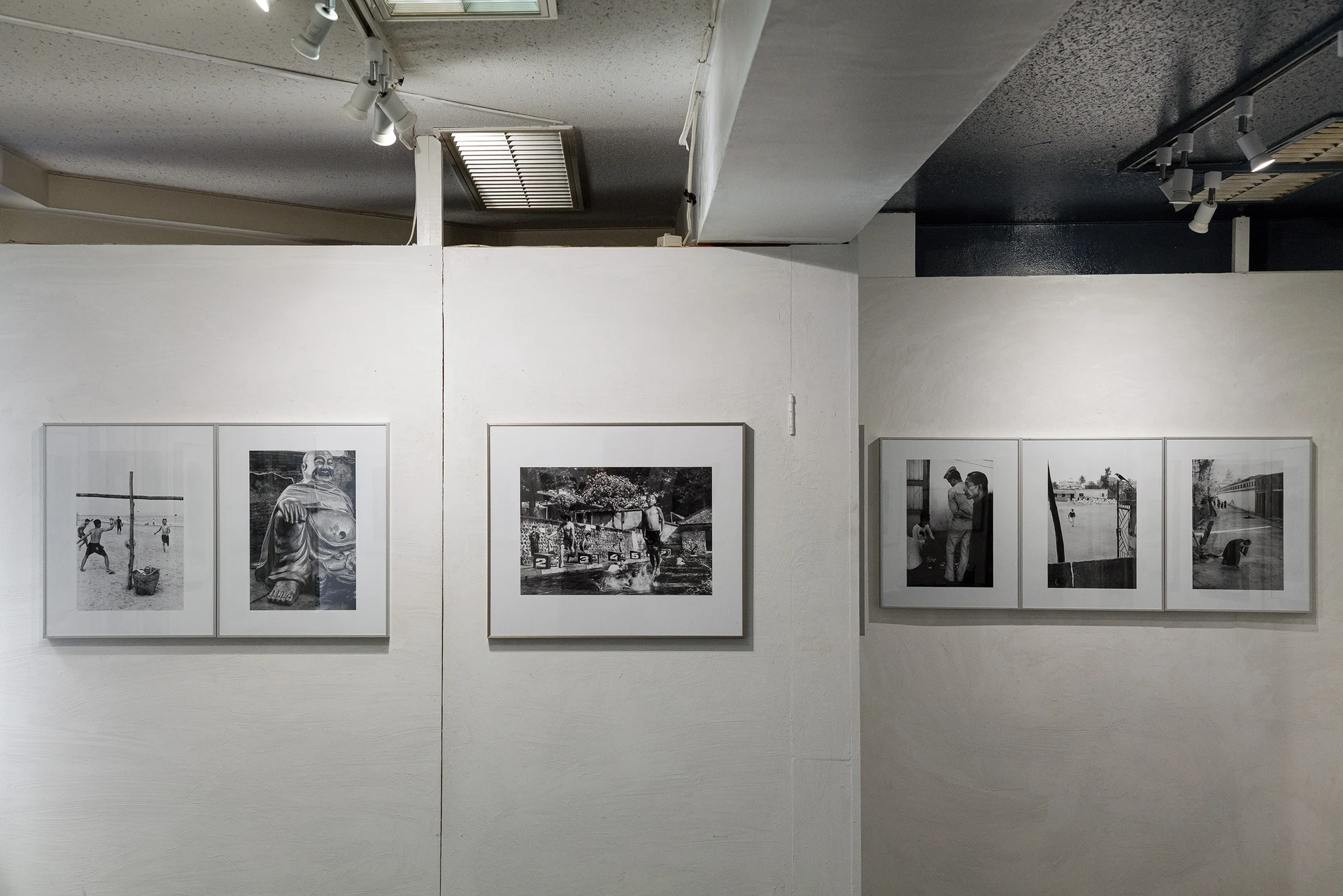
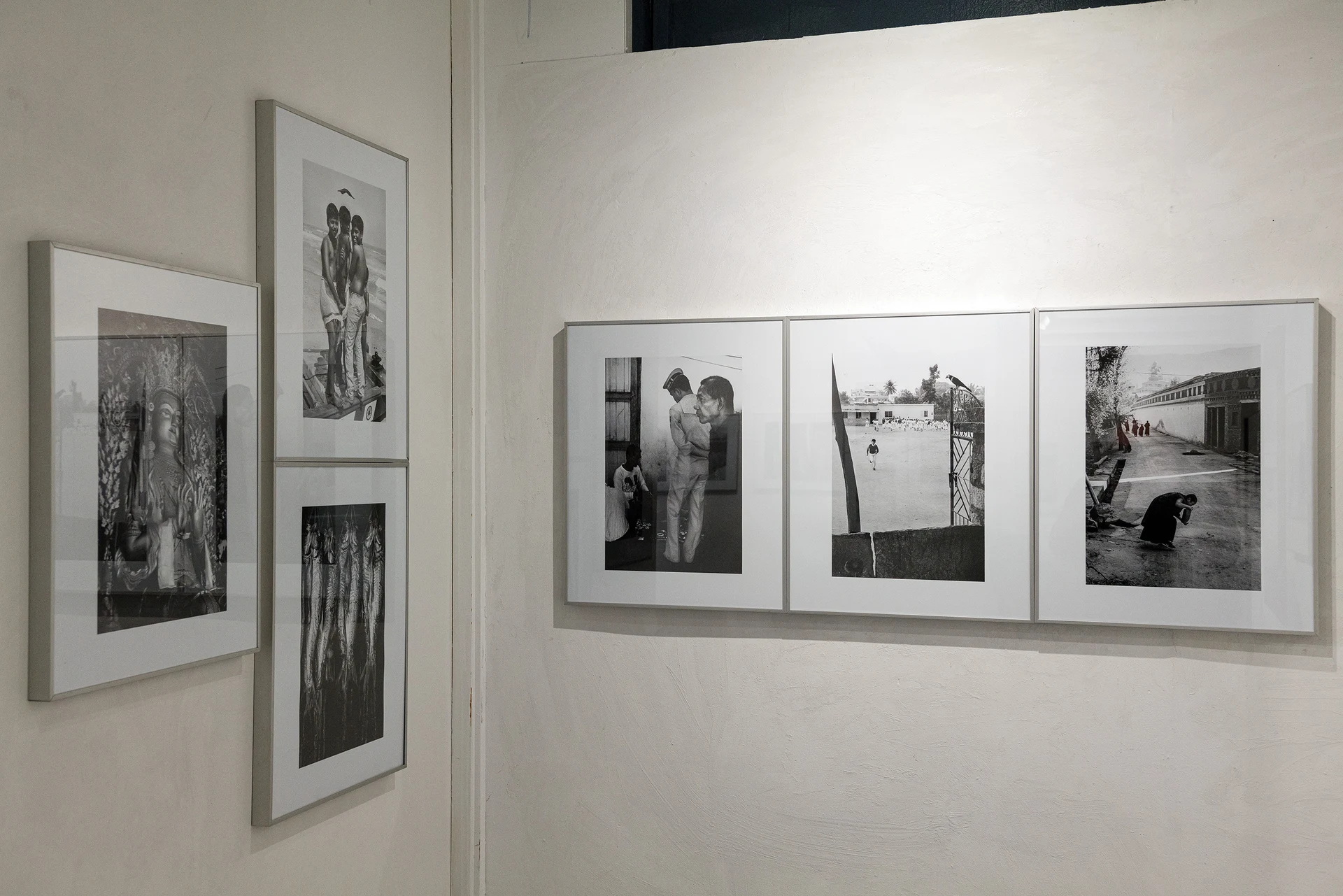
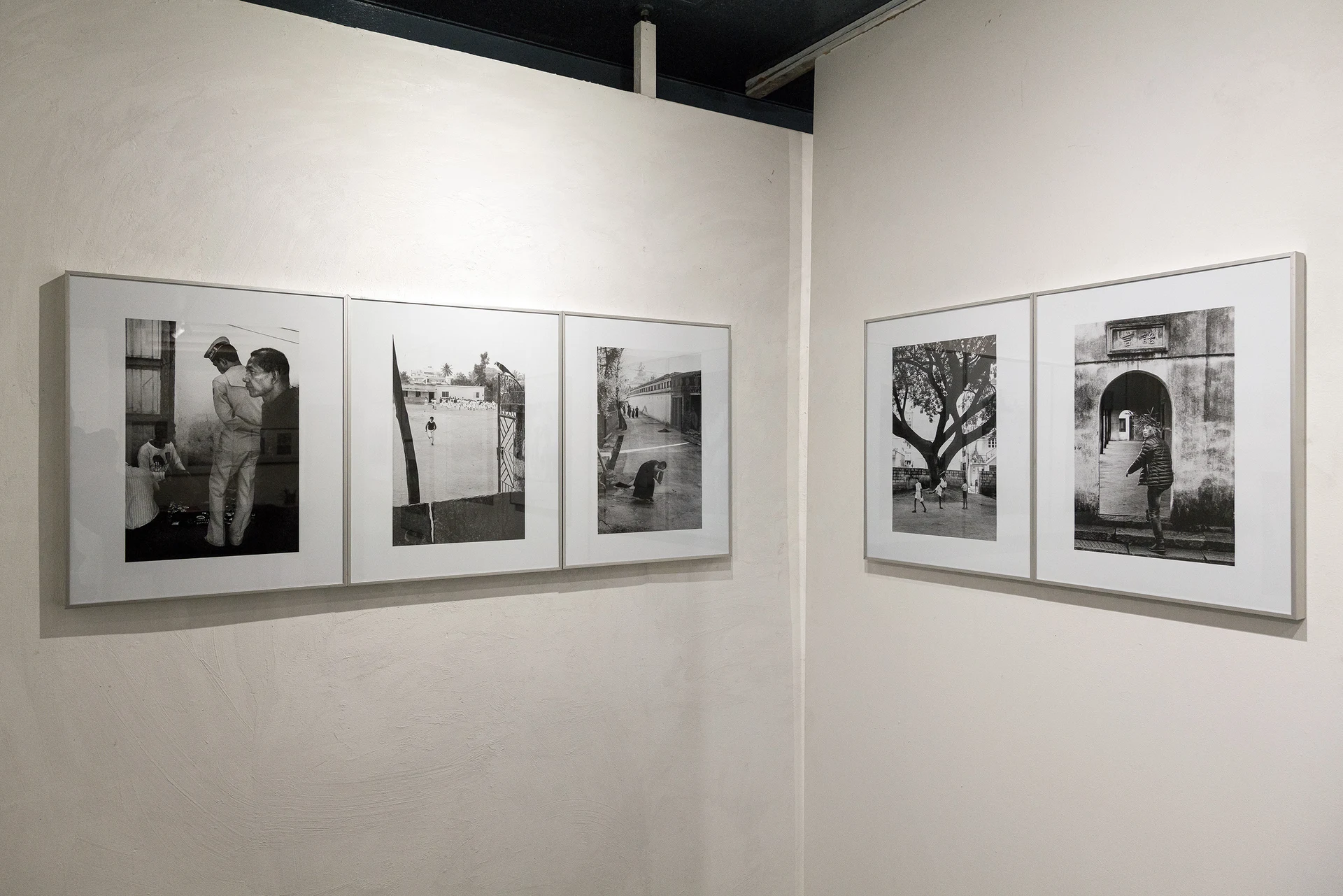
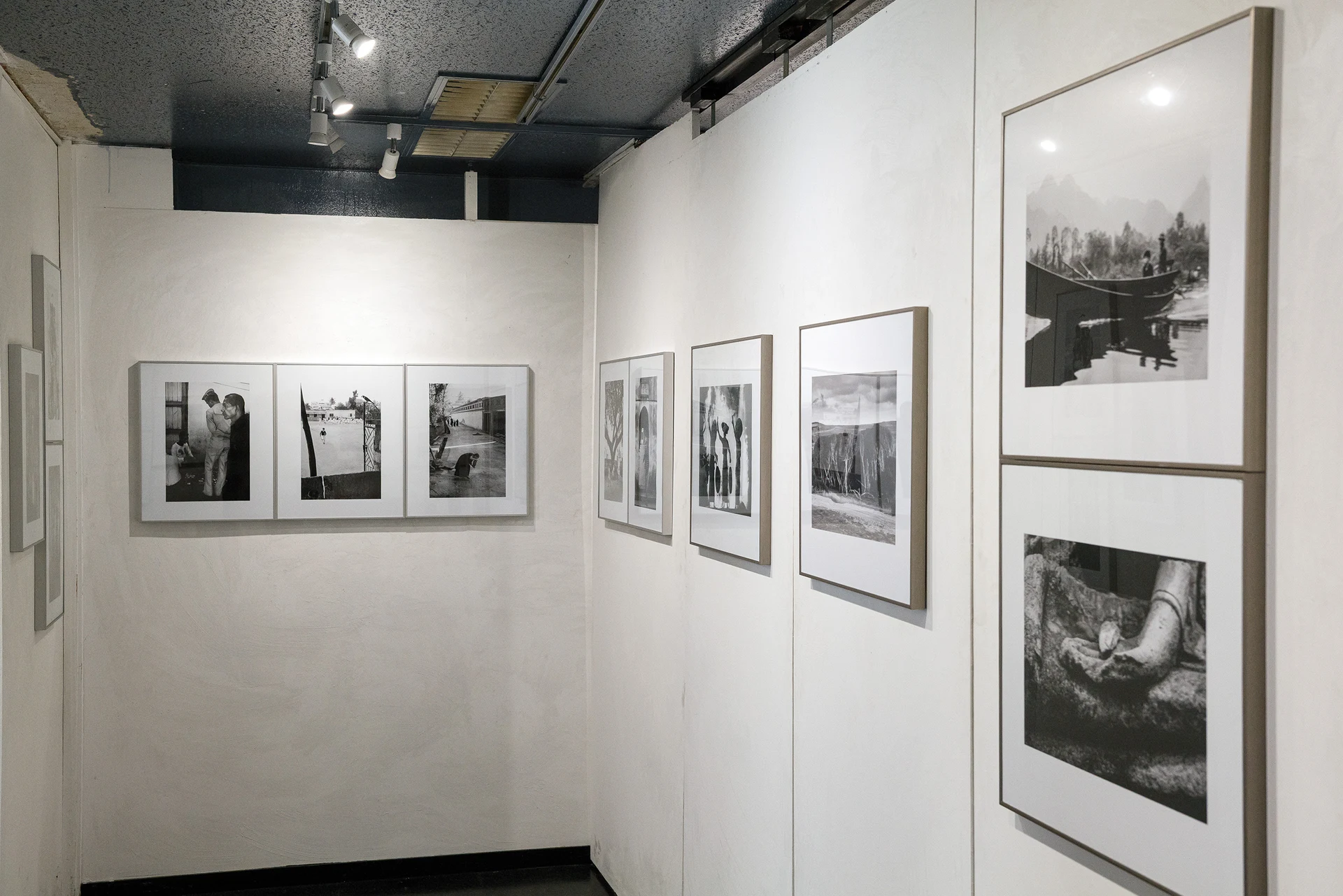
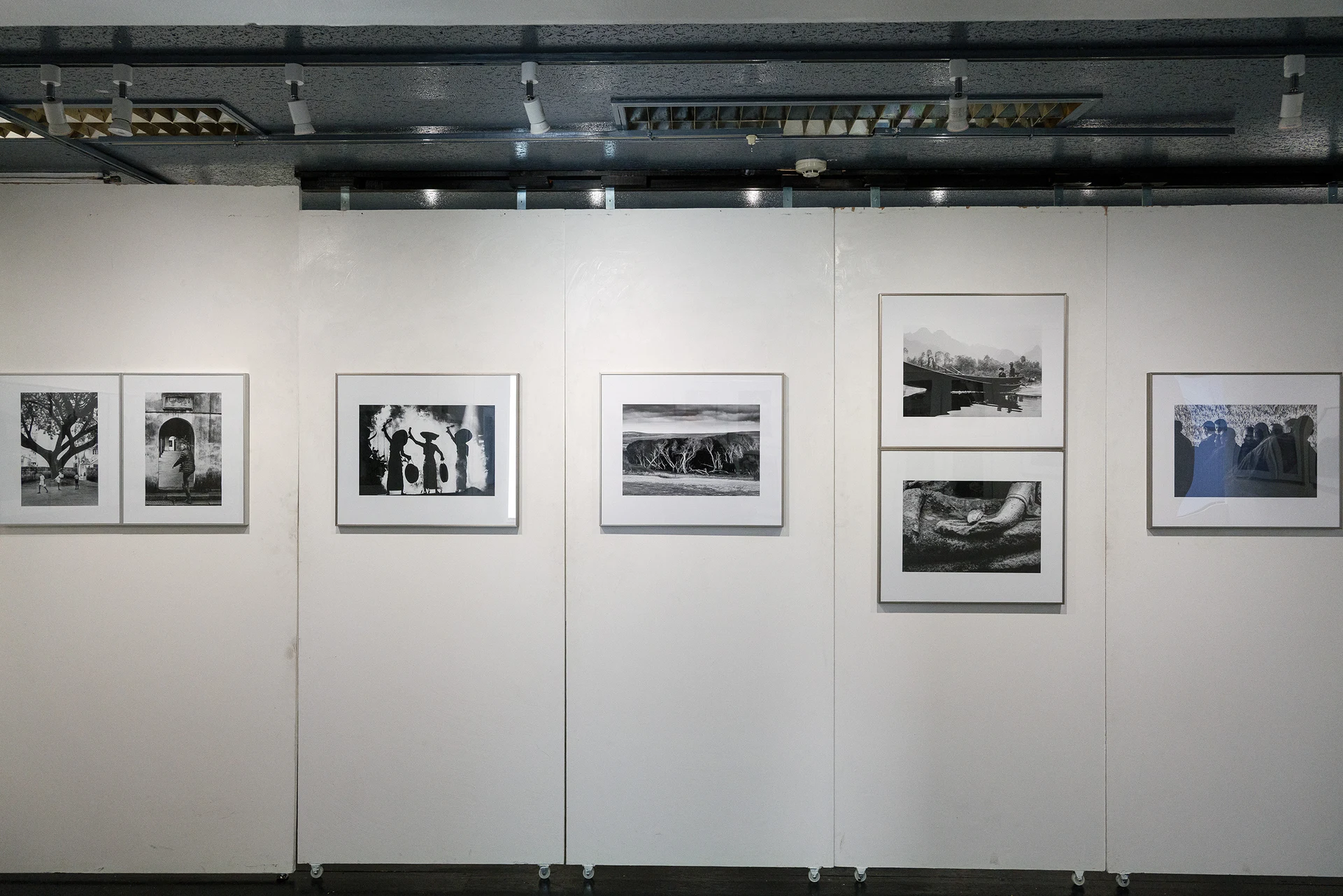
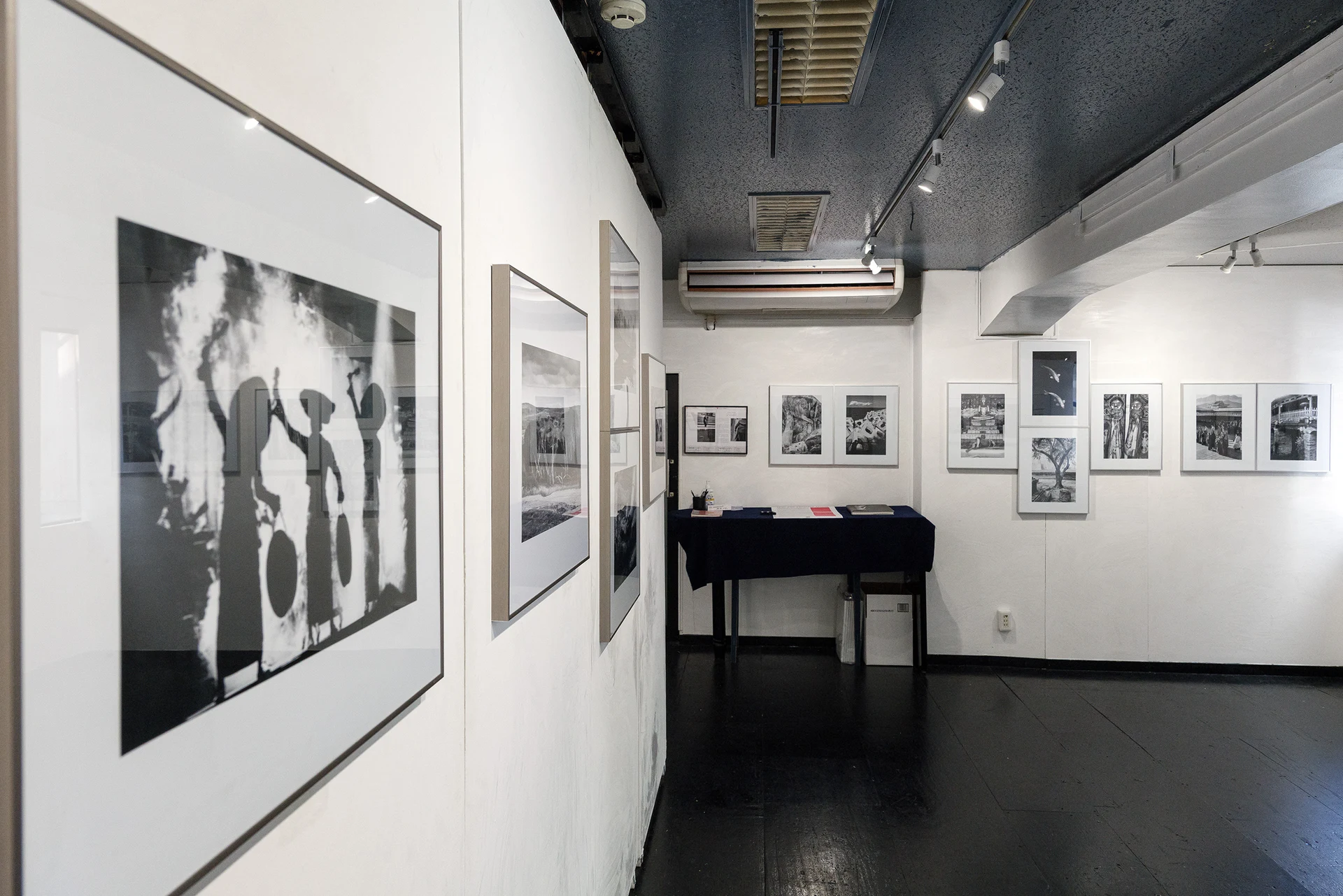
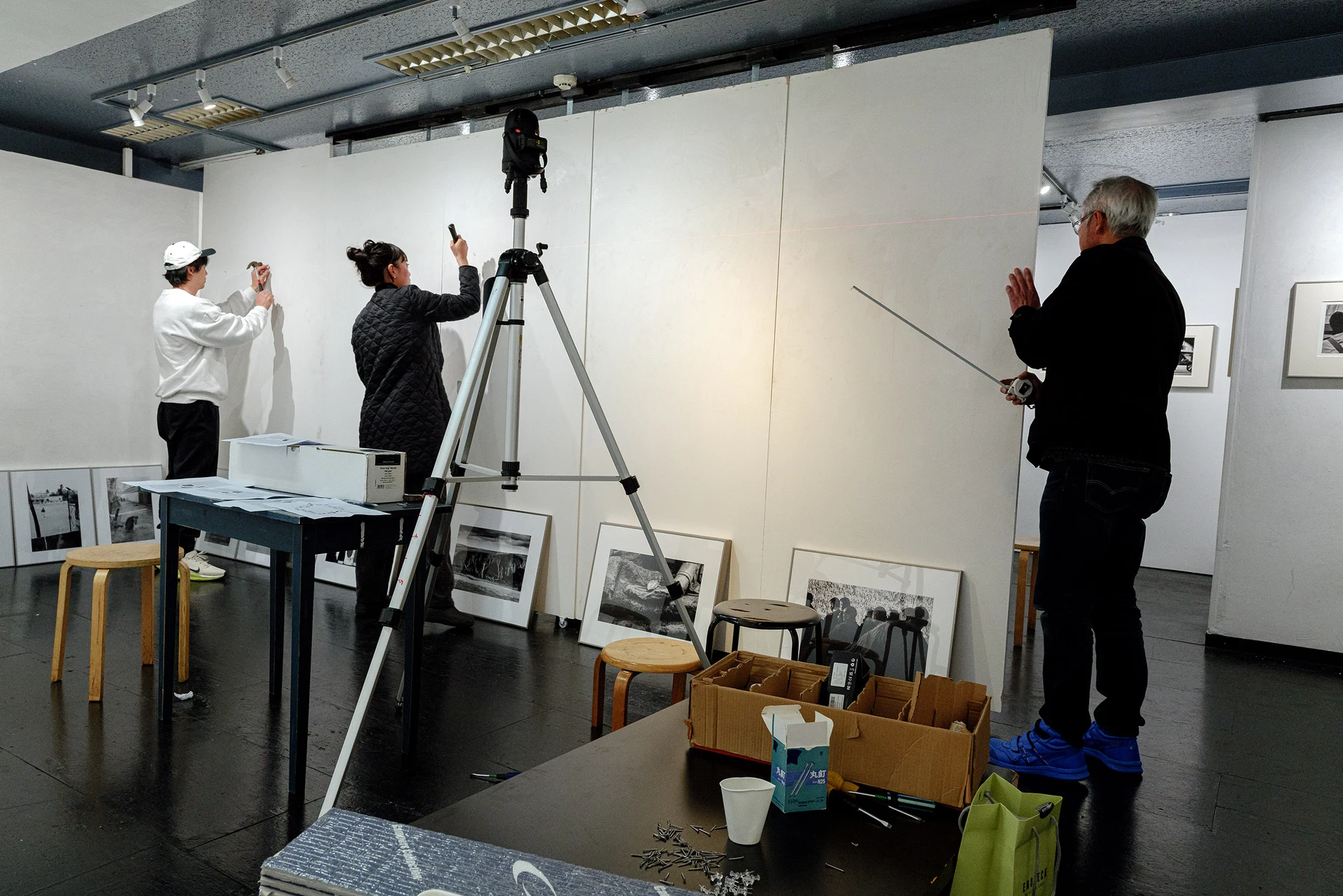
Hang in progress
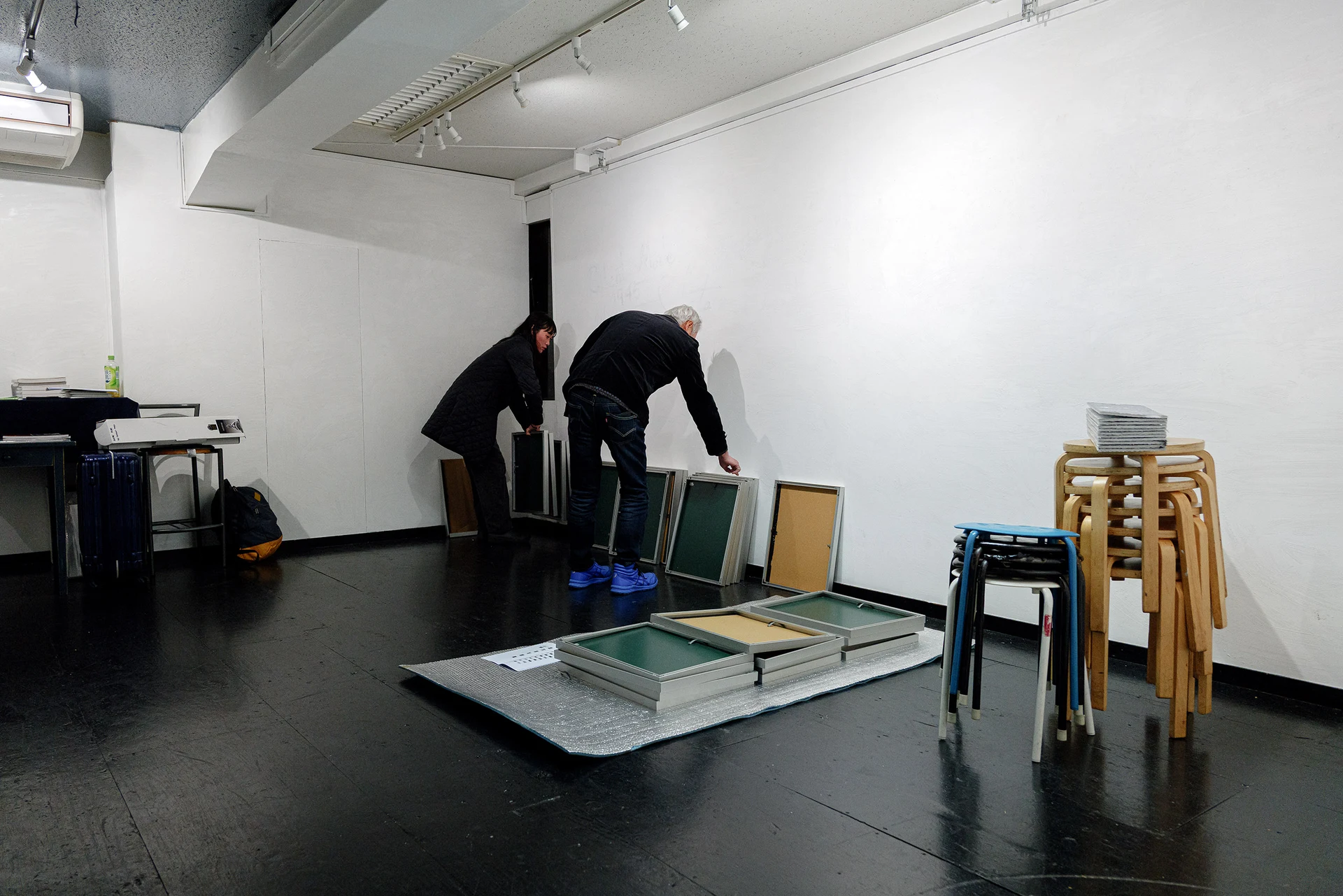
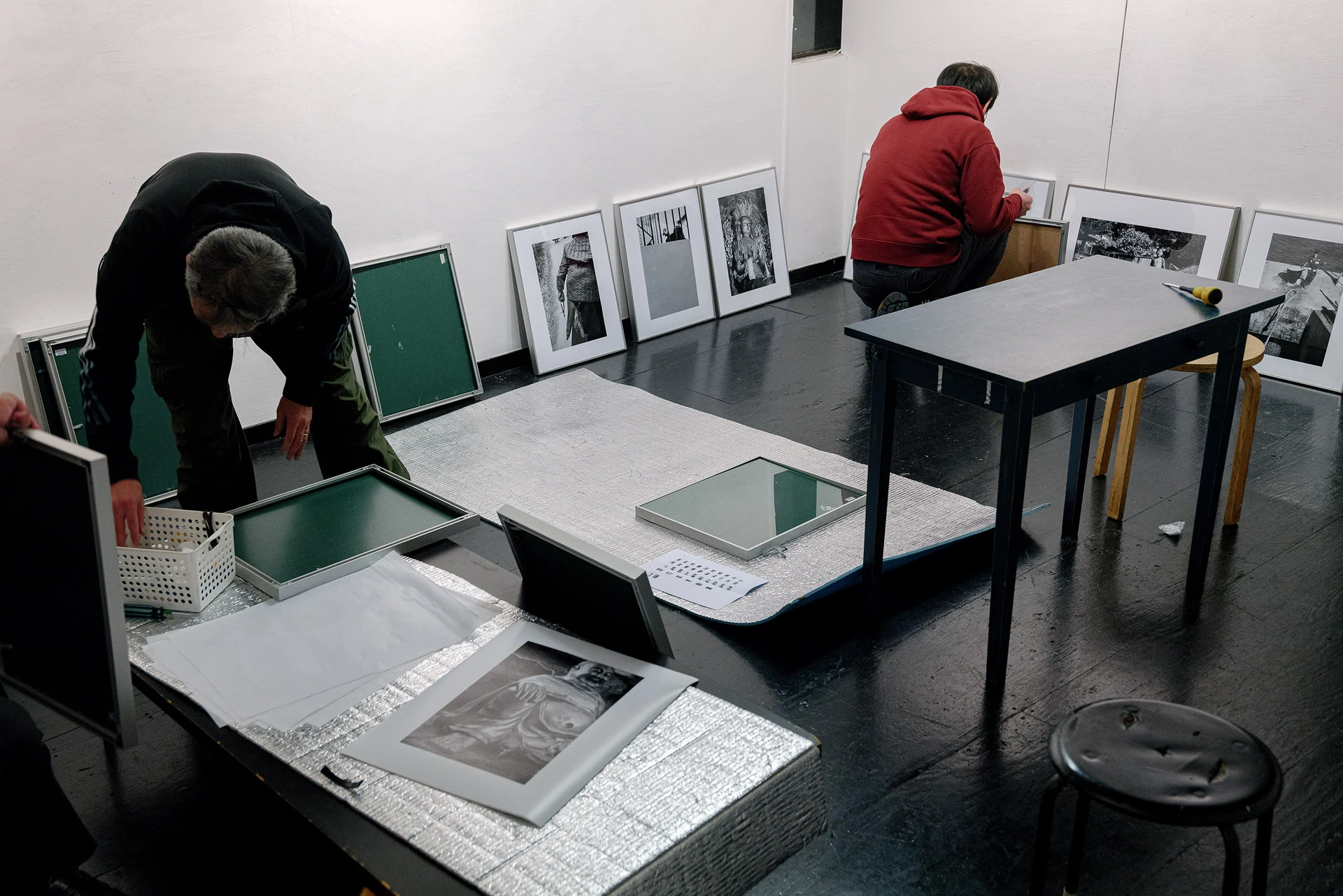
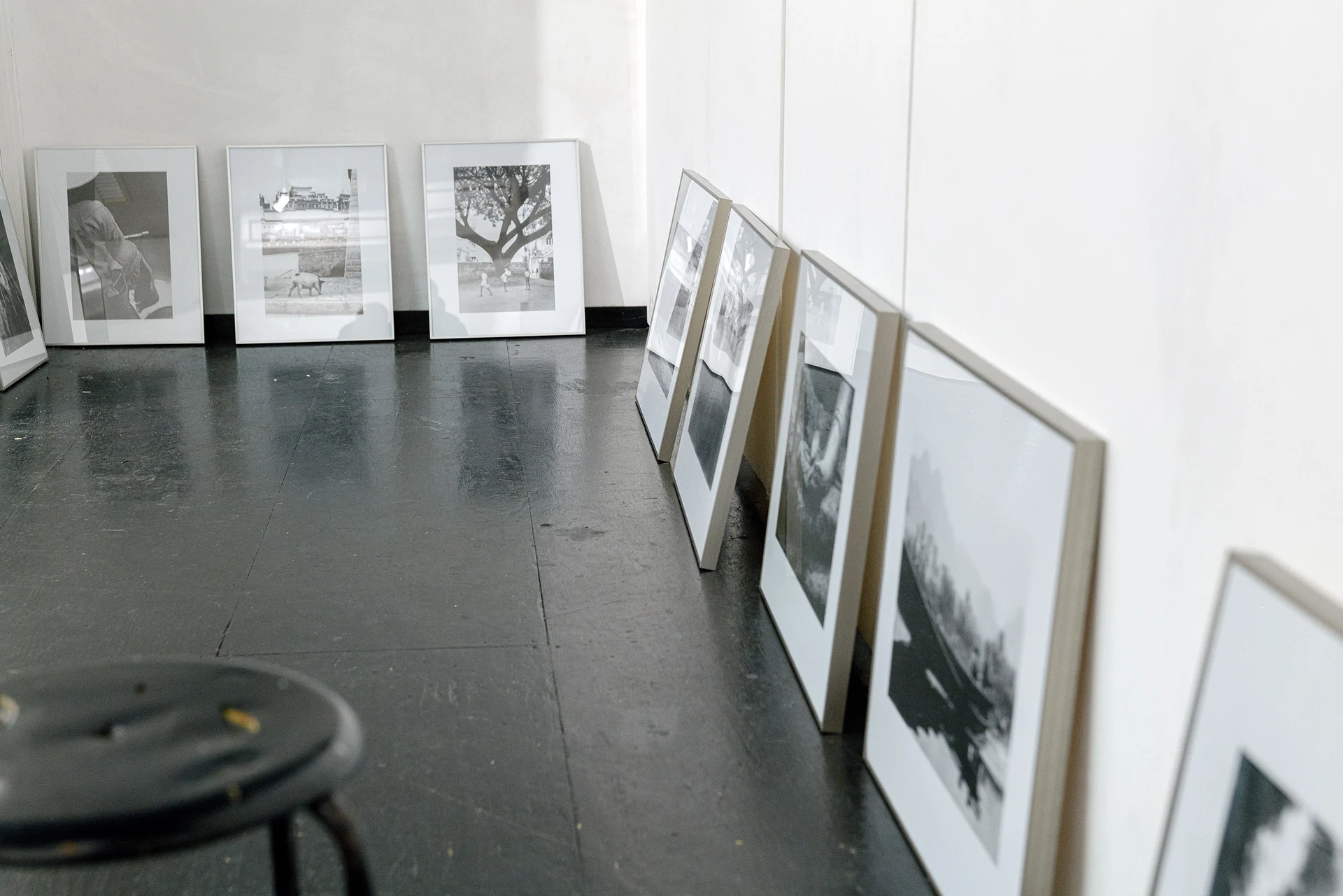
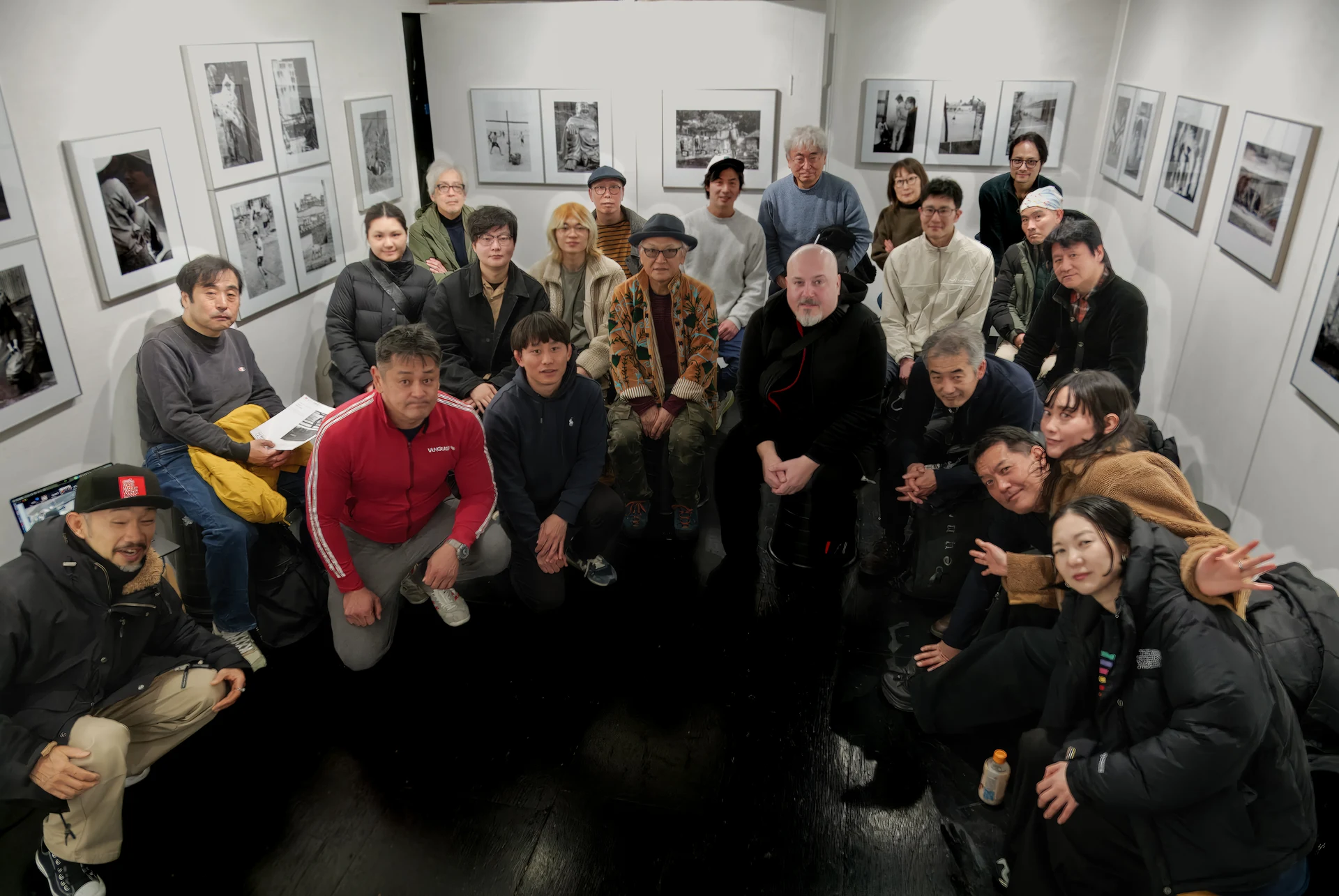
Artist talk
Exhibition Report
Given Japanese photography's contribution to the universe and its plain sight and indirect influences in all, but especially street photography, exhibiting in Tokyo feels surreal. Even though none of the photographs in this body of work was taken in Japan, due to the theme, it seemed right that The Floating World would find its home here, at Place M in Shinjuku, the ground zero of Japanese photography.
I have been living with these images for quite some time; it was my first serious long-term project. They began as a quiet obsession with a single word (ukiyo) and what it carries inside its sound, leading down the rabbit hole of watching multi-hour videos about woodblock printing and studying the greats.
Originally written to mean "sorrowful world," a Buddhist acknowledgement of impermanence and suffering. Later, in Edo-period Japan, the same sound was reinscribed to mean "floating world," a celebration of cherry blossoms, pleasure, and the beauty of passing things. I've come to believe both meanings belong together, inseparably. They are always simultaneous in every moment worth photographing, and perhaps in every moment at all.
Place M
Place M is Tokyo's oldest independent photography gallery, founded in 1987 by a collective of photographers that included Masato Seto and Daido Moriyama, alongside Nobuhiko Ono, Yusuke Nakai and others. It has operated continuously in Shinjuku ever since, which makes it the longest-running photographic space in the city's contemporary art scene. It was built on a belief that photography deserved a place for experimentation and critical dialogue outside institutional walls. That founding spirit is still entirely present when you walk through the door.
I'm not going to pretend this wasn't significant to me. Being shown here, in this specific place, with this specific lineage, was not something I took lightly. The show was curated by Masato Seto, and his understanding of what I was trying to do, the tension, the duality, the quiet strangeness beneath the surface of ordinary scenes shaped how the work was finally presented.
The Work
The Floating World is shot on 35mm black and white film on a Leica with a 50mm lens. It started as a learning experiment, but very soon the choice became obvious. Film strips away colour, and in doing so, removes one of the most immediate signals of time and place. The grain, far from being a limitation, acts like a veil, adding a further step of abstraction from reality, the same way the texture of Japanese rice paper unifies the elements of a woodblock print.
The vertical format dominates the work. It holds solitude well. It echoes the tall, narrow shape of the ukiyo-e prints that originally inspired this series: that sense of a single figure standing alone in the frame, an inward gaze. When the frame turns horizontal, it breathes differently: festivals, crowds, the expansive gesture of celebration. Both orientations exist in the show, and the movement between them is part of the rhythm.
Like the ukiyo-e masters who worked in sequences and pairs, I find myself drawn to putting images in conversation rather than in isolation. One photograph answers another. What interests me is the space between, where opposing truths live together without resolving into each other.
Being in the Room
There is something you can't predict until a body of work is finally on walls: how it behaves as a whole. You spend years living with individual images, editing the book on a screen or spread across the table. And then the prints are hung, and suddenly the conversation between images becomes audible in a way it wasn't before.
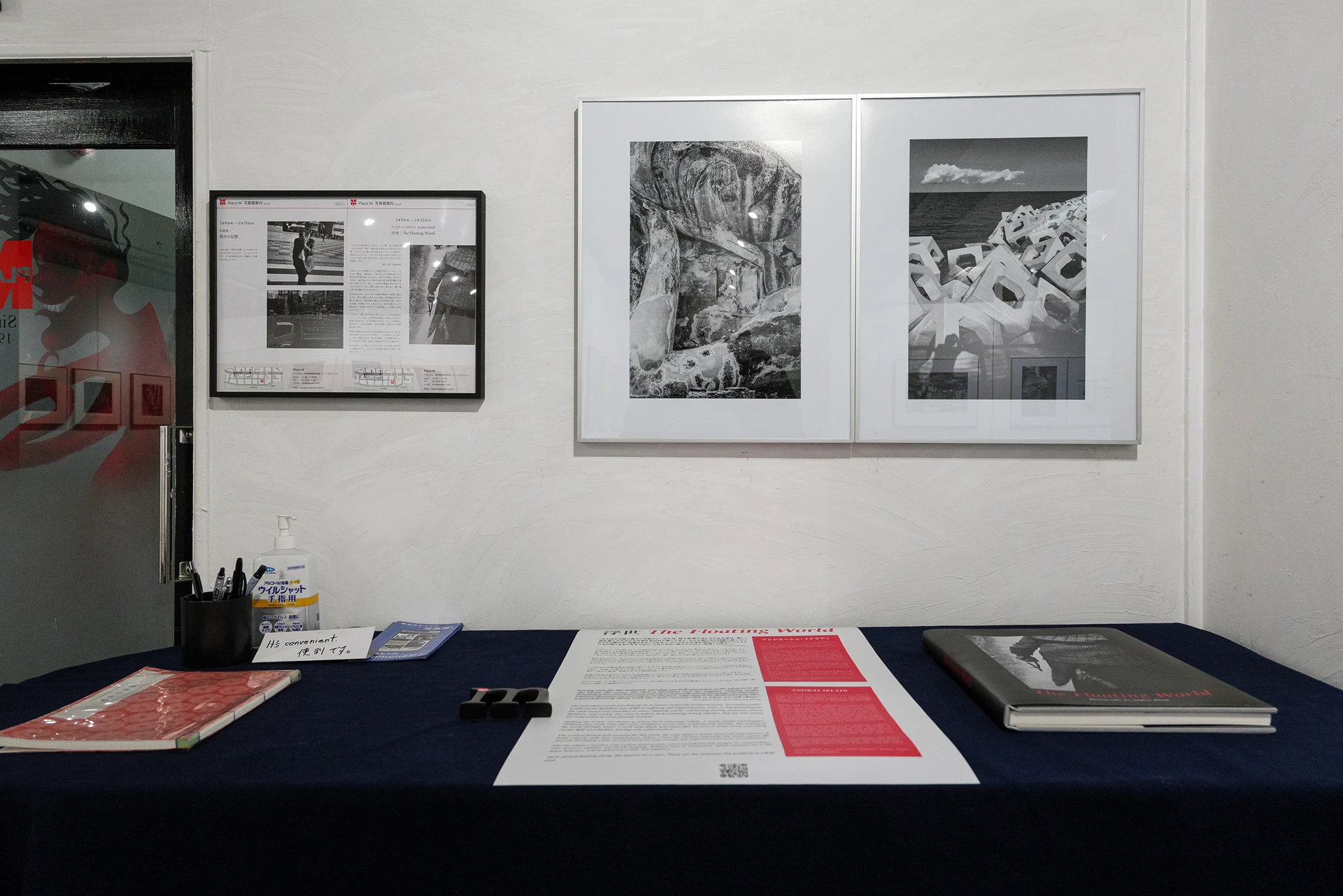
What I noticed, standing in Place M for the first time with the work installed, was how the room itself extended the logic of the project. The gallery has the quality of a slightly compressed space, which made the vertical prints feel taller, more monumental. The sequencing had a different feeling at full scale: slower, more deliberate, the gaps between images wider and more considered. And I hope that the audience can drift through it, as gourds on a river, as Asai Ryoi put it in the 17th century, and pay attention while doing so.
The Book
The exhibition was accompanied by The Floating World (dummy IV, 2025): 120 pages, 58 photographs, 12.7" × 9.5", sewn hardcover with jacket.
The photobook is the form I care about most. It sets the context, controls the unfolding of a sequence, and offers something tactile that a wall cannot. But the wall does something the book cannot: it makes the images public in a different sense. They take up space in a room that other people inhabit.
A Note on Tokyo
During the exhibition period, when not using the opportunity presented by one of the cultural capitals of the world to consume as much art as I possibly can, I walk. Not with the intent of photographing, I feel that would be arrogant to arrive as a visitor for a couple of weeks and try to say something meaningful in a place with this dense photographic history.
Walking the streets, I kept returning to the same feeling that runs through this project: the sense that the floating world is not historical. It is not something that happened in Edo. It is the present moment, continuously. All of it passing, and all of it, in passing, briefly radiant. Ukiyo. Sorrowful world. Floating world. Both, always, at once.
I'm grateful to Place M and to Seto-san for giving this work a home in exactly the right city. And I'm grateful to everyone who helped hang the exhibition or came through the door during these two weeks in February and sat with these images long enough to feel the weight of what floats inside them.